

Highlights
- Keeping documents ready can help reduce loan processing delays.
- Income, identity and address proofs are essential for most applications.
- Different document requirements may apply to salaried and self-employed borrowers.
A personal loan can help individuals meet a variety of financial requirements, from medical emergencies and education expenses to home renovations and travel plans. While lenders have simplified the application process through digital platforms, documentation continues to play a critical role in determining eligibility and loan approval. Having the necessary documents prepared beforehand can help applicants avoid delays and make the verification process more efficient.
Source: Analysis by Kalkine
Identity Verification Comes First
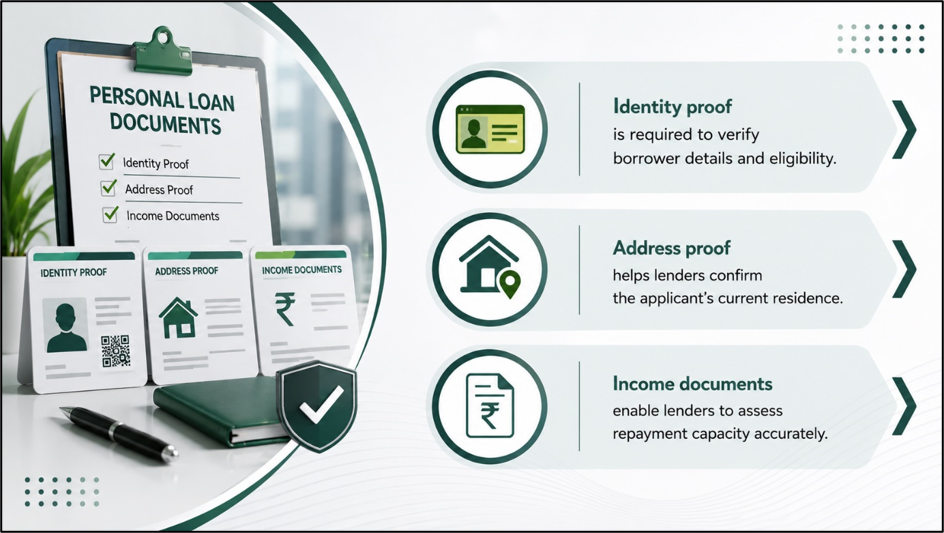
One of the first steps in a personal loan application is identity verification. Financial institutions are required to confirm the identity of borrowers before extending credit. Applicants are generally asked to submit government-issued identification documents such as a PAN card, Aadhaar card, passport, voter ID card, or driving licence. These documents help lenders verify personal details and ensure compliance with regulatory requirements.
Address Proof Helps Establish Residency
Lenders also require proof of residence as part of the verification process. Address verification allows financial institutions to maintain accurate customer records and conduct further checks if required. Documents commonly accepted as address proof include Aadhaar cards, passports, voter ID cards, utility bills, rental agreements, and driving licences. Applicants should ensure that the address mentioned in the submitted documents is current and consistent across records.
Income Documents Influence Eligibility
Income verification is one of the most important aspects of a personal loan application. Lenders assess income levels to determine an applicant's repayment capacity and overall creditworthiness. Salaried individuals are typically required to submit recent salary slips, bank statements, Form 16, and employment-related documents. These records provide lenders with a clearer understanding of income stability and financial commitments before approving a loan.
Self-Employed Applicants Face Additional Checks
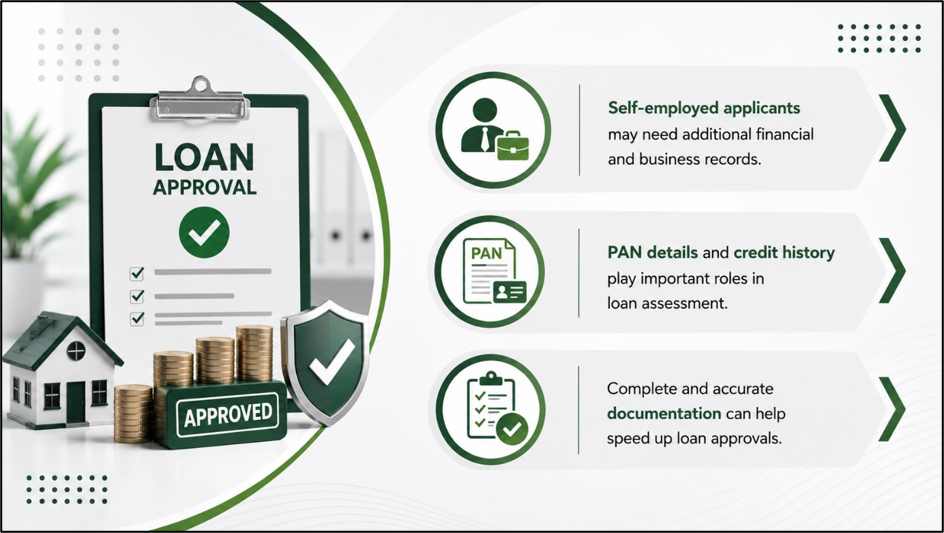
For self-employed individuals, lenders often require a broader set of financial records. Since income may fluctuate depending on business performance, applicants may need to provide Income Tax Returns (ITRs), business registration certificates, bank statements, GST-related documents, and financial statements. These documents help lenders evaluate business income, profitability, and the borrower's ability to repay the loan over time.
PAN and Credit History Also Matter
Apart from identity and income documents, PAN details are usually mandatory during the application process. Lenders use PAN information for financial verification and tax-related checks. Credit history is another important factor considered during loan assessment. A healthy credit score and a strong repayment record can improve approval prospects and may influence the loan terms offered by the lender.
Digital Processes Have Simplified Applications
Many financial institutions now allow applicants to upload documents online through mobile apps and websites. Digital verification systems, including electronic Know Your Customer (e-KYC) processes, have reduced paperwork and accelerated approvals in many cases. However, borrowers should ensure that uploaded documents are clear, accurate, and valid to avoid delays during verification.
Preparation Can Improve Approval Experience
Applicants can make the process smoother by reviewing their documents before applying. Ensuring that identity records are updated, bank statements are available, income documents are complete, and credit records are free from errors can help reduce processing time. Being prepared also minimizes the possibility of repeated document requests from lenders.
 Source: Analysis by Kalkine
Key Risks
- Missing documents can delay loan approval.
- Incorrect information may lead to application rejection.
- Weak credit history can affect loan eligibility.
- Incomplete income records may slow verification.
Summary
Documentation remains a vital part of the personal loan approval process despite increasing digitisation in lending. Lenders rely on identity proofs, address proofs, income records, PAN details, and credit history to assess applicants and determine repayment capability. Salaried and self-employed borrowers may have different documentation requirements, but preparation remains equally important for both. Keeping all necessary records ready can help streamline the application process and improve the overall borrowing experience.
FAQs
Q: What documents are usually required for a personal loan?
A: Most lenders require identity proof, address proof, income documents, PAN details, and recent bank statements.
Q: Why do lenders ask for income-related documents?
A: Income documents help lenders evaluate repayment capacity and determine whether the applicant can manage loan obligations.
Q: Can incomplete documentation affect loan approval?
A: Yes. Missing or inaccurate documents can delay verification and may impact the lender's approval decision.