

Highlights
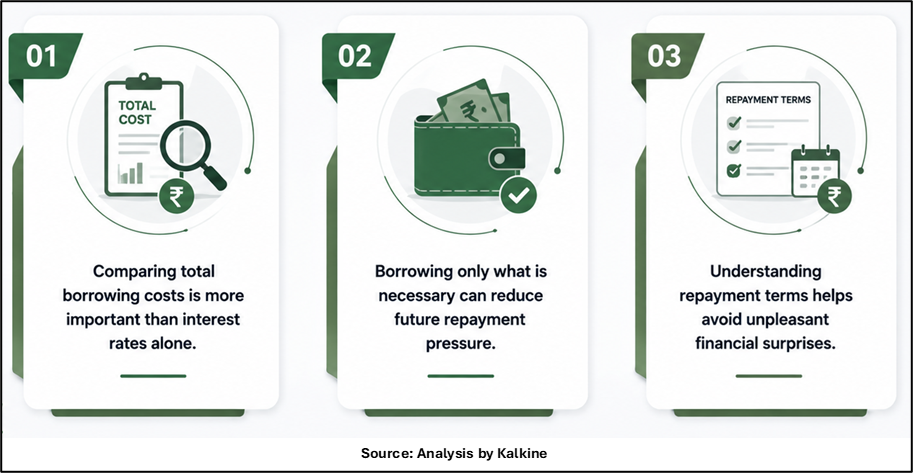
- Comparing lenders carefully can help reduce overall borrowing costs.
- Borrowing more than required may increase future repayment pressure.
- Understanding repayment terms is essential before accepting a loan.
Education loans have become an important financing tool for students pursuing higher education in India and overseas. Rising tuition fees, accommodation costs, travel expenses, and other educational expenditures have made external funding a necessity for many families.
While education loans can make academic opportunities more accessible, mistakes during the borrowing process may create long-term financial challenges. Experts advise students and parents to evaluate loan terms carefully before signing agreements, as even small oversights can increase repayment obligations significantly.
Why Education Loan Decisions Matter
Unlike many other forms of borrowing, education loans are often taken at the beginning of a student's professional journey. Repayment usually starts after course completion and may continue for several years.
As a result, decisions made while selecting a loan can affect financial flexibility long after graduation. Understanding the total borrowing cost and repayment obligations is therefore critical before committing to a lender.
Mistake 1: Borrowing More Than Necessary
Higher Loan Amounts Mean Larger Repayments - One of the most common mistakes is taking a loan amount that exceeds actual educational requirements. Students sometimes borrow additional funds to cover discretionary spending or anticipated future expenses. However, every additional amount borrowed increases the outstanding principal and the interest payable over the life of the loan.
Experts generally recommend preparing a realistic education budget that includes tuition fees, living expenses, books, travel costs, and other necessary expenditures before deciding the required loan amount.
Mistake 2: Focusing Only On Interest Rates
Total Cost Matters More - Many borrowers select lenders solely on the basis of advertised interest rates. While rates are important, they represent only one part of the borrowing cost.
Education loans may also involve processing fees, insurance premiums, documentation charges, legal expenses, and other administrative costs. These expenses can affect the overall cost of financing. Borrowers should compare the complete cost structure rather than focusing exclusively on the headline interest rate.
Mistake 3: Ignoring The Moratorium Period
Understand When Repayment Begins - Most education loans offer a moratorium period during which repayments are deferred while the student completes studies and, in some cases, for a specified period afterward.
However, borrowers should understand whether interest accrues during this phase and how unpaid interest may affect the final repayment obligation. Failing to understand these provisions can lead to repayment amounts that are higher than initially expected.
Mistake 4: Not Understanding Co-Borrower Responsibilities
Liability Extends Beyond The Student - Many education loans require a parent, guardian, or family member to act as a co-borrower. Some applicants assume that repayment responsibility rests entirely with the student after graduation. In reality, co-borrowers typically share legal responsibility for the loan obligation.
Understanding these responsibilities beforehand can help families avoid future misunderstandings.
Mistake 5: Overlooking Repayment Flexibility
Loan Terms Differ Across Lenders - Repayment structures vary among lenders. Some institutions may provide flexibility regarding tenure, prepayment options, or repayment schedules, while others may impose restrictions. Borrowers should review repayment provisions carefully and evaluate how future income uncertainty could affect their ability to meet obligations.
A repayment structure that appears manageable today may become challenging if employment outcomes differ from expectations.
Mistake 6: Failing To Explore Available Assistance
Scholarships And Grants Can Reduce Borrowing - Students sometimes finalise education loans without fully exploring scholarships, grants, fellowships, employer sponsorships, or institutional financial aid programmes. Reducing the loan amount through alternative funding sources can lower future debt obligations and decrease interest costs.
Financial planning should therefore include an assessment of all available funding options before borrowing.
Mistake 7: Not Reading Loan Documents Carefully
Terms And Conditions Matter - Loan agreements contain important details regarding interest calculations, repayment schedules, default provisions, processing charges, and other contractual obligations. Borrowers who skip these details may later discover conditions they did not anticipate.
Reviewing documentation carefully and seeking clarification when required can help ensure that expectations align with actual loan terms.
Planning For Repayment Before Graduation
Education loans should not be viewed solely as a way to finance studies. They also represent a future financial commitment. Students can benefit from understanding potential salary expectations in their chosen field, projected repayment obligations, and realistic timelines for debt repayment. Early planning may help reduce financial stress after graduation.
A disciplined borrowing approach can help students access educational opportunities while maintaining manageable debt levels.
Key Risks
- Excessive borrowing can increase long-term repayment burdens.
- Interest accumulation may raise total loan costs significantly.
- Co-borrowers remain responsible for repayment obligations.
- Unclear repayment terms may create financial difficulties later.
Summary
Education loans can help students pursue higher education when personal resources are insufficient. However, borrowing decisions require careful evaluation. Common mistakes include borrowing more than necessary, focusing only on interest rates, ignoring moratorium conditions, overlooking co-borrower responsibilities, and failing to review repayment terms. Understanding the full cost of borrowing and planning repayments early can help students manage educational debt more effectively.
FAQs
Q: Why should students avoid borrowing more than required through education loans?
A: Larger loan amounts increase both interest costs and long-term repayment obligations after graduation.
Q: Is the interest rate the only factor to compare when choosing a lender?
A: No, borrowers should also evaluate fees, repayment flexibility, and total financing costs.
Q: Are parents responsible for repaying education loans as co-borrowers?
A: Yes, co-borrowers generally share legal responsibility for loan repayment obligations.