

Highlights
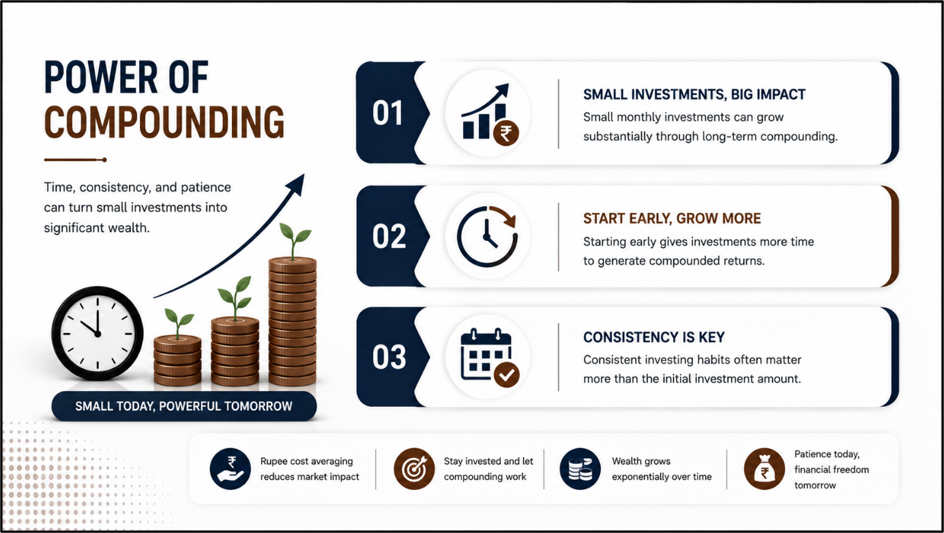
- Small monthly investments can benefit significantly from long-term compounding.
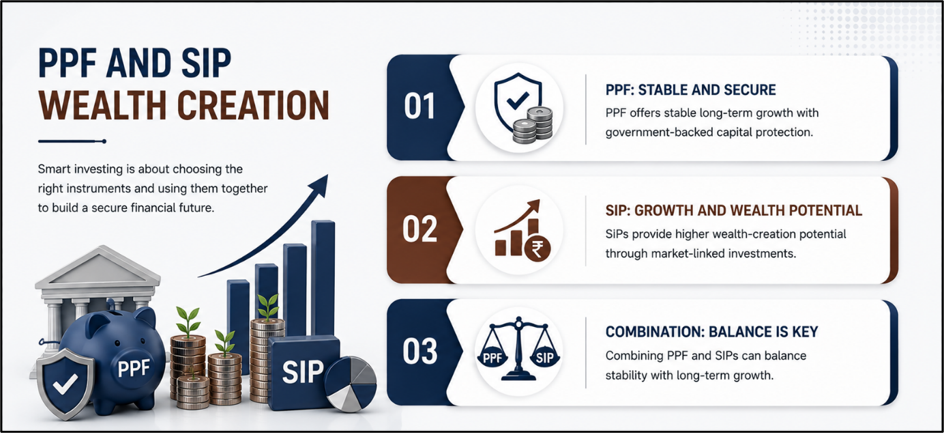
- SIPs and PPF offer different paths toward long-term wealth creation.
- Time in the market often matters more than the initial investment amount.
Many people postpone investing because they believe wealth creation requires large sums of money. However, financial planning experts often point out that consistency and time can be more important than the size of the initial investment.
A monthly investment of Rs 2,000 may appear modest today, but when maintained over decades, it can potentially grow into a sizeable corpus through the power of compounding. The key lies in starting early and remaining disciplined throughout the investment journey.
Source: Analysis by Kalkine
Understanding How Compounding Works
Compounding allows investors to earn returns not only on their original investments but also on the returns accumulated over time. As the investment base expands, future gains are calculated on a larger amount, creating a snowball effect.
This process tends to appear slow during the initial years. However, as the investment horizon lengthens, growth accelerates because earnings themselves begin generating additional returns. Financial experts frequently note that the later years of an investment journey often contribute a disproportionately large share of the final corpus.
PPF: Stability Through Long-Term Savings
The Public Provident Fund (PPF) remains a popular long-term savings option due to its government backing and tax benefits.
Based on current assumptions, investing Rs 2,000 every month in PPF over a 30-year period would result in a total contribution of Rs 7.2 lakh. At an assumed long-term return of around 7.1 percent, the maturity value could grow to approximately Rs 24 lakh to Rs 25 lakh.
For conservative investors, the appeal lies in predictable returns, capital protection, and tax-efficient maturity proceeds. However, the trade-off is relatively lower growth potential compared with market-linked investments.
SIPs Can Deliver Different Outcomes
Systematic Investment Plans (SIPs) in equity mutual funds are linked to market performance and therefore carry higher risk. Unlike PPF, returns are not guaranteed and may fluctuate depending on market conditions.
However, long-term historical trends indicate that equity-oriented investments have delivered higher returns than many traditional savings instruments. According to illustrative calculations, a Rs 2,000 monthly SIP over 30 years could potentially grow to around Rs 70 lakh at a 12 percent annualised return. At 15 percent annualised returns, the corpus could approach Rs 1.3 crore.
While actual returns can vary, the example highlights the impact that even a few percentage points of additional return can have over long periods.
Why Time Matters More Than Amount
One of the most important lessons in investing is that starting early can often outweigh investing larger amounts later.
Financial planners frequently emphasise that the first few years provide investments with valuable time to compound. Delaying investments while waiting for a higher income can reduce the overall wealth-building potential significantly.
A small SIP initiated in one's twenties may ultimately outperform a larger investment started much later because of the additional years available for growth.
Building Wealth Through Consistency
Successful investing is often driven by habits rather than market timing. Regular contributions, staying invested during market fluctuations, and gradually increasing investment amounts as income grows can improve long-term outcomes.
Many investors also adopt a balanced approach by combining stable instruments such as PPF with growth-oriented SIP investments. This strategy allows them to pursue long-term wealth creation while maintaining a degree of financial stability.
A Long-Term Perspective Matters
Wealth creation rarely happens overnight. Instead, it is often the result of disciplined investing maintained across decades. Even a relatively small monthly contribution can accumulate into a meaningful corpus when supported by consistency, patience, and the benefits of compounding.
The broader takeaway is that the habit of investing may be more important than the initial amount invested. Starting early and staying committed can have a significant impact on long-term financial outcomes.
 Source: Analysis by Kalkine
Key Risks
- Market volatility can affect SIP returns significantly.
- Inflation may reduce the future purchasing power of wealth.
- Delayed investing can limit compounding benefits.
- Premature withdrawals may disrupt long-term growth.
Summary
A monthly investment of Rs 2,000 may seem modest, but over long periods it can grow into substantial wealth through compounding. While PPF offers stability and predictable returns, equity mutual fund SIPs provide higher growth potential with greater market risk. The most important factors remain consistency, patience, and starting early. Over decades, even small contributions can accumulate into a meaningful financial corpus.
FAQs
Q: Can Rs 2,000 per month really create meaningful wealth over time?
A: Yes. Long-term compounding can significantly increase the value of regular monthly investments over several decades.
Q: Which offers higher growth potential, PPF or SIPs?
A: SIPs generally offer higher growth potential but involve market-linked risks, unlike the relatively stable PPF.
Q: Why is starting early important for wealth creation?
A: Early investing provides more time for compounding, which can significantly enhance long-term investment outcomes.