

Highlights
- A one-day delay in credit card payment may trigger charges depending on the issuer's policies.
- Interest costs can rise if outstanding balances are not cleared within the applicable period.
- Timely payments remain important for maintaining financial discipline and credit health.
Missing a credit card payment deadline by a single day can be stressful, particularly for cardholders concerned about penalties and their credit profile. However, the impact of a one-day delay is not always the same across issuers.
Banks and card providers generally specify a payment due date by which the minimum amount due or the full outstanding balance must be paid. While a brief delay may appear insignificant, the consequences depend on the card issuer's terms, payment processing timelines, and the duration of the delay.
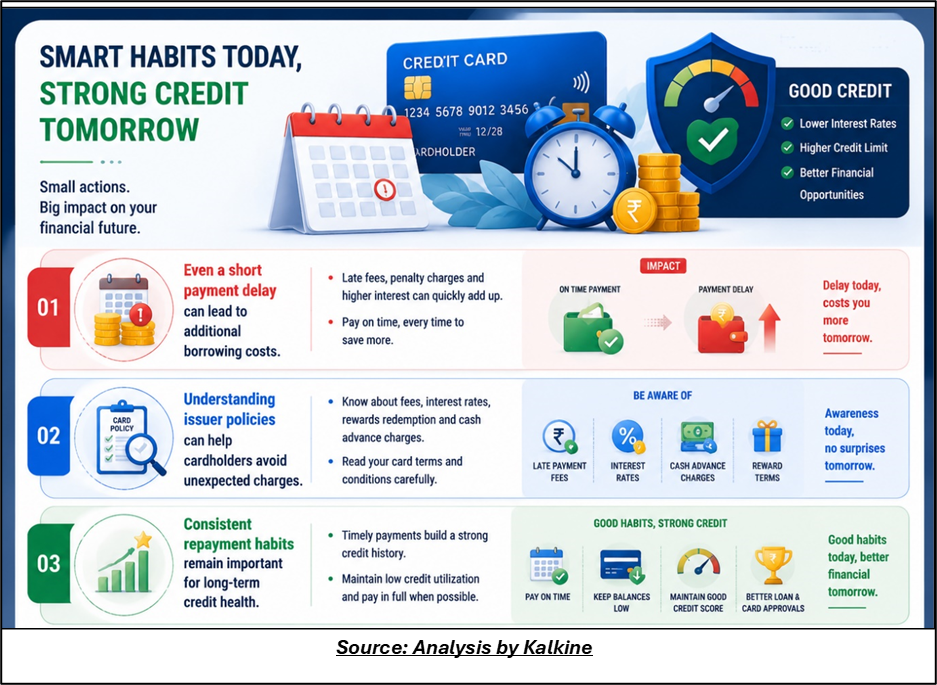
Understanding What Happens After The Due Date
Once the due date passes, the account may be treated as unpaid until the payment is successfully credited. Depending on the issuer's policies, a delayed payment could result in late-payment charges or interest on outstanding balances.
The actual impact often depends on whether the payment was initiated before the deadline, the payment method used, and when the transaction is reflected in the card account. Processing delays can occasionally affect payment recognition even when the cardholder has acted on time.
The Difference Between A Late Fee And Interest Charges
Many cardholders assume that a late fee and interest are the same thing, but they serve different purposes.
A late fee is a penalty that may be imposed for missing the due date. Interest charges, on the other hand, can apply to unpaid balances that remain outstanding beyond the applicable billing cycle.
In some situations, even if the delay is short, interest calculations may affect the unpaid amount depending on the issuer's terms and the cardholder's repayment behaviour.
Will A One-Day Delay Affect Your Credit Score?
Credit scores are generally influenced by repayment behaviour reported to credit bureaus. A single-day delay may not immediately translate into a negative credit score impact if the payment is completed quickly and the account does not cross reporting thresholds.
However, repeated delays or prolonged non-payment can affect repayment history, which is a significant factor in credit assessments. Maintaining a consistent repayment record remains important for long-term creditworthiness.
Why Payment Timing Matters
Credit card payments can be made through multiple channels, including internet banking, mobile applications, automatic debit instructions, and payment gateways.
Since processing timelines vary, waiting until the final hours before the due date may increase the risk of technical or settlement delays. Scheduling payments in advance can help avoid unintended missed deadlines.
How Cardholders Can Reduce The Risk Of Missing Payments
Managing payment dates effectively can help avoid penalties and administrative issues. Some commonly used strategies include:
- Setting reminders before the due date.
- Using auto-debit facilities where appropriate.
- Monitoring monthly statements regularly.
- Keeping sufficient funds available for scheduled payments.
- Tracking multiple credit card due dates through a centralized system.
These practices can help reduce the likelihood of accidental delays.
Why Consistency Matters More Than An Isolated Delay
Financial institutions generally evaluate repayment behaviour over time rather than focusing solely on a single event. An isolated one-day delay may have a different impact compared to a pattern of repeated late payments.
For borrowers who regularly pay on time, maintaining consistency can help support a healthy credit profile and reduce the risk of additional borrowing costs.
Key Risks
- Late fees may apply depending on card issuer policies.
- Outstanding balances can attract interest charges.
- Repeated delays may affect creditworthiness.
- Processing delays can lead to unintended missed deadlines.
Summary
A credit card payment missed by a single day does not necessarily result in severe consequences, but it can lead to fees, interest charges, or administrative complications depending on the issuer's rules. The overall impact often depends on how quickly the payment is completed and whether delays become a recurring pattern. Maintaining timely payments and allowing sufficient processing time can help cardholders avoid unnecessary costs and protect their credit profile.
FAQs
Q: Will a one-day delay automatically damage my credit score?
A: Not necessarily. The impact depends on reporting practices and how quickly the outstanding amount is paid.
Q: Can a credit card issuer charge a fee for a one-day delay?
A: Yes. The applicability of charges depends on the card issuer's terms and conditions.
Q: How can I avoid accidentally missing a due date?
A: Payment reminders, auto-debit facilities, and advance scheduling can help reduce missed-payment risks.