

Highlights
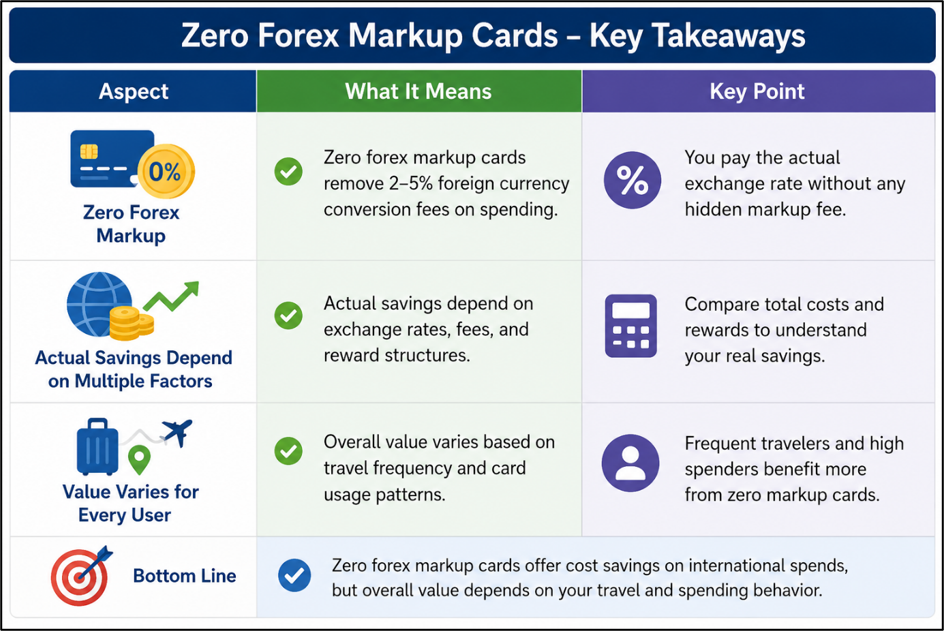
- Zero forex markup cards remove 2–5% foreign currency conversion fee on spends.
- Actual savings depend on exchange rates, rewards, and hidden transaction costs.
- Experts say overall value depends on travel habits and card usage patterns.
Zero markup forex credit cards are increasingly promoted as a cost-saving option for international travellers. These cards claim to eliminate foreign currency conversion charges on overseas transactions, making global spending appear cheaper. However, while the promise of “zero markup” sounds attractive, the actual savings depend on multiple factors beyond just the absence of a fee.
Source: Analysis by Kalkine
What Does Zero Forex Markup Mean?
Zero forex markup refers to the removal of the additional currency conversion fee that banks usually charge on international transactions. In most traditional credit cards, this fee can range between 2% and 5% of the transaction value. With zero markup cards, this charge is waived, and the conversion is done at the network exchange rate applied at the time of settlement.
This means if a user spends abroad, the amount billed in INR does not include the extra markup fee that would otherwise increase the cost of each transaction.
How Zero Markup Cards Work in Practice
When a transaction is made in a foreign currency, the card network such as Visa or Mastercard converts it into INR. In zero markup cards, the issuing bank does not add its own conversion fee on top of this rate. However, the final amount still depends on the network’s exchange rate, which may vary daily.
Additionally, the transaction is often settled later, meaning the exchange rate used may differ slightly from the time of purchase. This can lead to small variations in the final billed amount even without any explicit markup fee.
Are There Hidden or Indirect Costs?
Even with zero forex markup, several indirect costs may still apply. Dynamic currency conversion (DCC) is one such factor, where merchants offer to convert the payment into INR at the point of sale, often at less favorable rates. Annual fees, ATM withdrawal charges, and interest on cash advances can also increase the total cost of using the card abroad.
Some cards may also offer lower reward rates on international spending, which can reduce overall benefits compared to standard domestic usage.
When Zero Forex Cards Offer Real Value
Zero markup cards tend to offer clear benefits for frequent international travellers or users making regular foreign currency payments. For such users, removing the 2–5% markup can result in meaningful savings over time, especially on large transactions such as hotel bookings, flights, or overseas education payments.
However, for occasional travellers, the benefit may be limited if annual fees or reduced rewards offset the savings from waived markup charges.
Zero Markup vs Overall Card Value
Experts often suggest evaluating credit cards based on overall value rather than just forex markup. A card with zero forex fees but low rewards, fewer travel benefits, or high annual charges may not always be better than a card with a small markup but stronger cashback, lounge access, or insurance benefits.
The real cost of using a forex credit card includes exchange rate spread, network conversion timing, and additional fees beyond the visible markup.
Key Factors That Influence Actual Savings
The benefit of a zero markup card depends on spending pattern, transaction size, and travel frequency. Users who spend more abroad or make frequent online international payments are more likely to benefit. Those who travel occasionally may not experience significant savings after accounting for other charges.
Risks to Watch
- Exchange rate fluctuations can still affect final billing amount.
- Merchant-side currency conversion may lead to higher costs.
- Annual fees may offset savings from zero markup benefits.
- Reduced reward rates on international spends can limit value.
Summary
Zero forex markup credit cards remove the standard currency conversion fee on international transactions, which can help reduce overseas spending costs. However, they are not entirely “free” from additional charges or exchange rate impacts. The true benefit depends on usage patterns, card features, and overall fee structure rather than the zero markup feature alone.
FAQs
Q: Does zero forex markup mean no charges on foreign transactions?
A: It removes the bank’s conversion fee, but exchange rates and other charges may still apply.
Q: Are zero forex credit cards always cheaper for travel?
A: Not always. Total cost depends on fees, rewards, and exchange rate variations.
Q: What hidden costs should travellers watch for?
A: Dynamic currency conversion, ATM withdrawal fees, annual charges, and lower rewards can affect total cost.