

Highlights
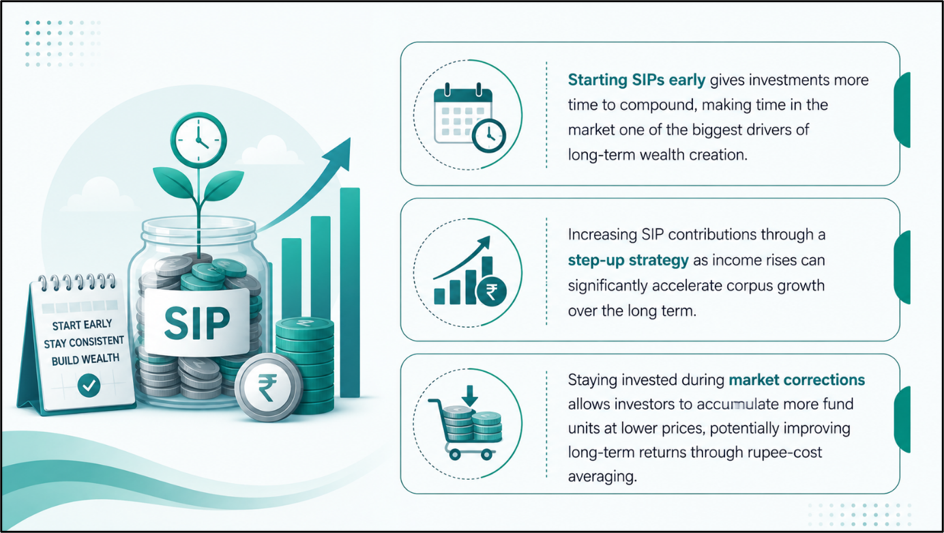
- Starting early gives investments more time to benefit from compounding.
- Increasing SIP contributions periodically can accelerate corpus growth.
- Staying invested during market declines may improve long-term outcomes.
Systematic Investment Plans (SIPs) have become one of the most widely used investment methods for mutual fund investors. Their popularity stems from simplicity, disciplined investing, and the ability to participate in financial markets without requiring large lump-sum investments.
However, the difference between an average SIP portfolio and a larger long-term corpus often comes down to investor behaviour rather than market timing. Small decisions taken consistently over many years can have a significant impact on eventual wealth creation. According to a recent analysis, factors such as starting early, increasing contributions over time, and maintaining discipline during market volatility can materially influence long-term outcomes.
Source: Analysis by Kalkine
Why Starting Early Matters
One of the biggest advantages available to SIP investors is time. Many investors postpone investing because they believe the amount available for investment is too small to make a difference. However, even modest contributions can accumulate substantially when given enough years to compound.
The primary advantage of beginning early is not necessarily higher returns but a longer period during which investments can grow. Investors who start in their twenties often benefit from decades of compounding, allowing accumulated gains to generate additional gains over time. The longer the investment horizon, the greater the impact of compounding on the final corpus.
The Value of Increasing SIP Contributions
While many investors start SIPs successfully, they often overlook the importance of increasing contributions as income rises.
As salaries grow, lifestyle expenses frequently increase as well. Yet investment contributions may remain unchanged for years. This can limit long-term wealth accumulation potential.
A step-up SIP strategy addresses this issue by automatically increasing investment amounts at predetermined intervals. Even modest annual increases can significantly affect the final corpus over long investment periods. Financial experts often highlight step-up SIPs as an effective way to align investments with rising income levels and inflation.
Market Corrections Can Create Opportunities
Periods of market weakness often create discomfort among investors. Portfolio values may decline, leading some individuals to consider pausing or stopping their SIPs.
However, SIPs are designed to function across different market cycles. When markets decline, the same investment amount purchases more units of a mutual fund. This process, commonly referred to as rupee-cost averaging, can lower the average acquisition cost over time.
Although market corrections may appear negative in the short term, units accumulated during downturns can contribute meaningfully to portfolio growth when markets recover. Consistency during uncertain periods remains one of the defining characteristics of successful long-term investors.
Avoid Excessive Focus on Short-Term Performance
Frequent monitoring of short-term returns can sometimes work against long-term investing goals.
Equity markets naturally experience phases of volatility, consolidation, and correction. Evaluating SIP performance over weeks or a few months may create unnecessary anxiety and lead to emotional decisions.
SIPs generally work best when linked to long-term financial objectives such as retirement planning, children's education, home ownership, or financial independence. Investors who maintain focus on these goals are often better positioned to stay invested through changing market conditions.
Discipline Often Matters More Than Market Timing
Many successful SIP investors do not necessarily achieve results through frequent portfolio changes or attempts to predict market movements.
Instead, they typically follow a disciplined approach that includes regular investing, periodic contribution increases, and patience during market fluctuations. Over extended periods, consistency can become a more important contributor to wealth creation than short-term market forecasts.
Additional Ways to Improve SIP Outcomes
Investors seeking to improve SIP effectiveness may also consider:
- Reviewing financial goals periodically.
- Selecting funds aligned with investment objectives.
- Maintaining diversification across asset classes.
- Increasing contributions after salary increments.
- Staying invested through complete market cycles.
- Avoiding frequent portfolio changes based on short-term market sentiment.
Key Risks
- Market volatility can affect short-term portfolio values.
- Stopping SIPs during corrections may reduce long-term gains.
- Inflation can reduce future purchasing power.
- Inadequate diversification may increase portfolio risk.
Summary
The effectiveness of a SIP depends on more than simply investing every month. Starting early, increasing contributions as income grows, staying invested during market declines, and focusing on long-term goals can significantly improve wealth creation outcomes. Investors who remain disciplined through changing market conditions often benefit most from the compounding and averaging advantages that SIPs offer.
FAQs
Q: Why is starting a SIP early considered important?
A: Early investing provides a longer compounding period, allowing investments more time to grow and accumulate wealth.
Q: What is a step-up SIP?
A: A step-up SIP automatically increases investment contributions periodically, helping investors align savings with income growth.
Q: Should investors stop SIPs during market corrections?
A: Many long-term investors continue SIPs during declines because lower prices can increase accumulated fund units.