

Highlights
- Falling gold prices are prompting households to borrow against jewellery instead of selling it.
- Gold loans are gaining traction as families prefer retaining ownership of assets.
- Financial planners advise evaluating repayment ability before pledging jewellery.
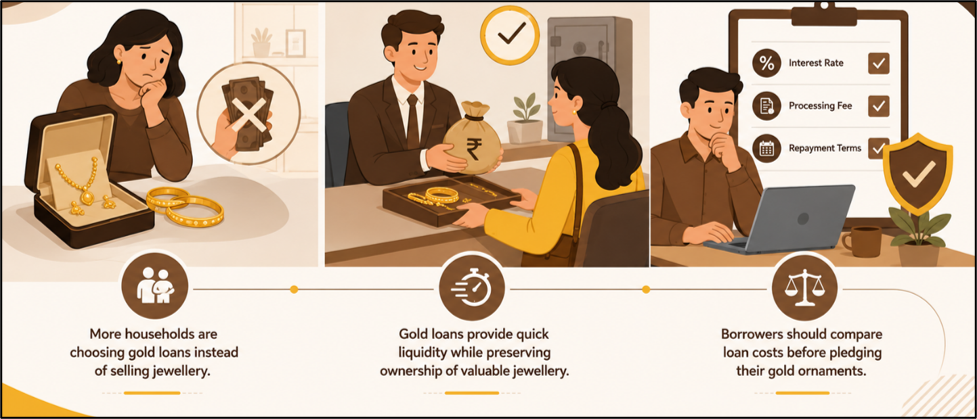
Gold prices have declined from recent highs, leading to a noticeable shift in how households manage their jewellery assets. Instead of selling gold during a price correction, many individuals are opting to take loans against old jewellery. This approach allows borrowers to access immediate funds while continuing to hold their gold, which is often viewed as both a financial reserve and an emotional asset.
Source: Analysis by Kalkine
Why Households Are Preferring Gold Loans
The decline in gold prices has made outright selling less appealing for many families. Selling jewellery at lower market values is often seen as a loss, especially when there is an expectation that prices may stabilise or rise in the future. As a result, households are increasingly choosing to pledge gold for short-term liquidity needs instead of permanently parting with it. This shift reflects a more cautious approach to asset liquidation during price fluctuations.
How Gold Loans Provide Liquidity Without Selling Assets
Gold loans allow individuals to use their jewellery as collateral to access funds from banks or financial institutions. The loan amount is determined based on the weight and purity of the gold, along with prevailing market rates. Borrowers retain ownership of the jewellery while repaying the loan over a defined period through structured repayment options. Once the loan is fully repaid, the pledged gold is returned to the borrower.
Why Selling Gold Is Becoming Less Common
Gold has traditionally been considered a long-term store of value and a financial safety net in Indian households. Beyond monetary worth, jewellery often carries cultural and emotional significance, making it difficult to sell during temporary financial needs. With price volatility in the market, many households prefer to retain their gold holdings rather than convert them into cash at reduced valuations.
Changing Borrowing Behaviour in a Volatile Market
Fluctuations in gold prices are closely linked to global economic conditions, inflation trends, and currency movements. During periods of price decline, households tend to delay selling decisions and instead opt for secured borrowing. This behaviour reflects the expectation that gold prices may recover over time, making temporary borrowing a more attractive option compared to permanent liquidation.
Financial Considerations Before Taking a Gold Loan
While gold loans offer quick access to funds, borrowers must carefully assess repayment obligations. Interest costs, processing fees, and repayment timelines can affect the overall borrowing burden. It is important to ensure that repayment capacity aligns with the loan tenure to avoid additional financial stress. Comparing terms offered by different lenders can also help in making a more informed decision.
Risks to Watch
- Declining gold prices may reduce the loan amount available against jewellery.
- Delayed repayment can increase overall borrowing costs significantly.
- Non-repayment may result in loss of pledged jewellery.
- Differences in lender terms can affect total repayment burden.
Summary
The decline in gold prices has led many households to prefer gold loans over selling jewellery, allowing them to access short-term liquidity while retaining ownership of their assets. This trend reflects both financial caution and emotional attachment to gold. While gold loans provide flexibility, borrowers must carefully evaluate repayment ability, costs, and risks before pledging jewellery.
FAQs
Q: Why are households choosing gold loans instead of selling jewellery?
A: Households prefer to retain ownership of gold and expect prices to recover in the future, making borrowing more attractive than selling.
Q: How does a gold loan work?
A: Borrowers pledge jewellery as collateral and receive funds based on its value, repaying the loan to reclaim the gold after settlement.
Q: What risks are associated with gold loans?
A: Risks include possible loss of jewellery on default, higher interest costs over time, and reduced borrowing value if gold prices fall further.