

Highlights
- Large cash withdrawals can attract tax compliance and reporting requirements.
- PAN disclosure may be required for high-value banking transactions.
- Frequent cash transactions can invite additional scrutiny from authorities.
Cash transactions continue to play a role in personal and business finances despite the growing adoption of digital payments. However, withdrawing substantial amounts of cash from bank accounts can trigger reporting obligations and tax-related considerations.
Individuals planning to withdraw more than Rs 10 lakh in cash should understand the applicable regulations, documentation requirements, and potential tax implications before initiating the transaction. Awareness of these rules can help prevent compliance issues and unnecessary scrutiny.
 Source: Analysis by Kalkine
Is Cash Withdrawal Above Rs 10 Lakh Illegal?
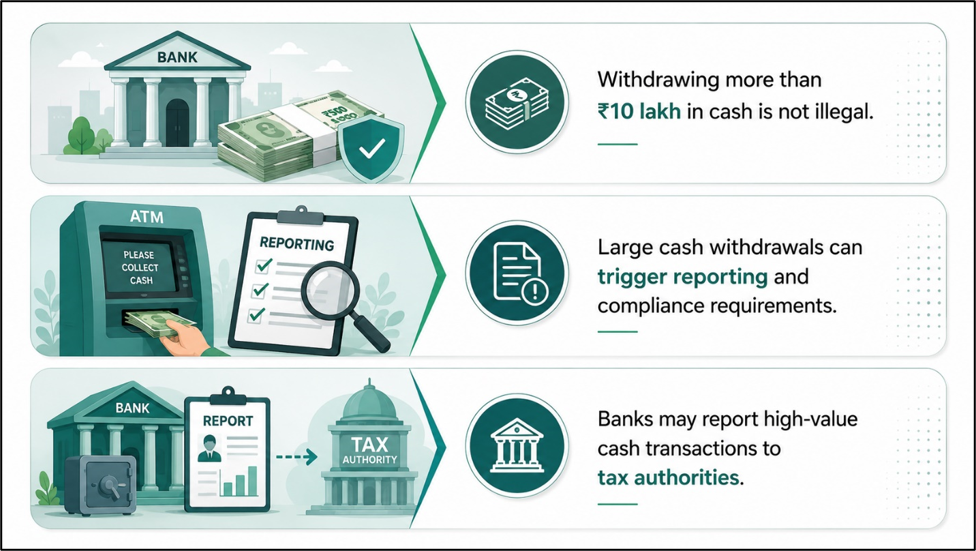
Withdrawing more than Rs 10 lakh in cash is not prohibited under Indian law. Individuals can access their funds as needed, provided the money originates from legitimate and properly disclosed sources.
However, high-value cash transactions are monitored under reporting frameworks designed to track large financial movements and strengthen transparency within the financial system.
Banks and financial institutions are required to report specified transactions to regulatory authorities under applicable rules. Consequently, large cash withdrawals may become part of official records and can be reviewed if necessary.
Understanding Reporting Requirements
Financial institutions monitor substantial cash transactions and submit reports for specified high-value activities.
Cash withdrawals crossing prescribed thresholds may be reported to tax authorities through established reporting mechanisms. The objective is not to restrict withdrawals but to improve transparency and detect potential tax evasion or undisclosed financial activity.
Individuals making large withdrawals should therefore maintain proper documentation supporting the purpose and source of funds.
TDS Rules on Cash Withdrawals
One of the most important provisions relating to large cash withdrawals is Section 194N of the Income Tax Act.
Under this provision, banks, cooperative banks, and post offices may deduct Tax Deducted at Source (TDS) when cash withdrawals exceed specified thresholds during a financial year. The applicable threshold and deduction rate depend on factors such as income tax return filing history and other prescribed conditions.
As a result, individuals who regularly withdraw large amounts of cash should monitor cumulative withdrawals during the financial year to understand whether TDS provisions could apply.
Importance of PAN and Record Keeping
Maintaining accurate financial records becomes increasingly important when dealing with high-value transactions.
Tax authorities may seek clarification regarding the source, purpose, or utilization of large cash withdrawals if required during assessments or verification proceedings. Supporting documentation can help demonstrate that transactions were undertaken for legitimate purposes and from disclosed income sources.
PAN-linked banking records also assist authorities in tracking financial transactions across multiple accounts and institutions.
Businesses Face Additional Considerations
Businesses relying heavily on cash transactions should exercise additional caution.
Large cash withdrawals used for operational requirements may still require adequate accounting records and supporting documentation. Failure to maintain proper records can create challenges during audits, assessments, or financial reviews.
Businesses should also be aware that certain cash expenditures may face restrictions under income tax provisions governing allowable deductions.
Digital Alternatives Continue to Gain Ground
As banking infrastructure and digital payment systems expand, many individuals and businesses increasingly rely on electronic transfers, UPI, RTGS, NEFT, and other non-cash methods for high-value transactions.
Digital transactions create clearer audit trails and can reduce some of the compliance concerns associated with substantial cash movements. Nevertheless, cash remains necessary in certain situations, making awareness of applicable regulations important.
When Should You Be Concerned?
A single cash withdrawal above Rs 10 lakh does not automatically create a tax liability or imply wrongdoing.
The key concern arises when transactions are inconsistent with reported income, lack supporting records, or trigger provisions relating to TDS and financial reporting. Individuals should therefore ensure that withdrawals are properly documented and align with disclosed financial information.
Key Risks
- Large withdrawals may trigger reporting requirements.
- TDS provisions can apply beyond prescribed thresholds.
- Poor documentation may create tax scrutiny risks.
- Cash-heavy transactions can complicate financial audits.
Summary
Withdrawing more than Rs 10 lakh in cash is not illegal, but it can attract reporting obligations and compliance requirements. Banks monitor high-value transactions and may report specified activities to authorities. Section 194N of the Income Tax Act may also trigger TDS on cash withdrawals above certain thresholds. Proper documentation, transparent financial records, and awareness of applicable regulations are essential when undertaking large cash transactions.
FAQs
Q: Is it legal to withdraw more than Rs 10 lakh in cash?
A: Yes, large cash withdrawals are permitted if the funds originate from legitimate and properly disclosed sources.
Q: Can tax be deducted on large cash withdrawals?
A: Yes, Section 194N may require TDS on withdrawals exceeding specified thresholds during a financial year.
Q: Why do authorities monitor high-value cash withdrawals?
A: Monitoring helps improve transparency, track financial activity, and identify potential cases of tax non-compliance.