

Highlights
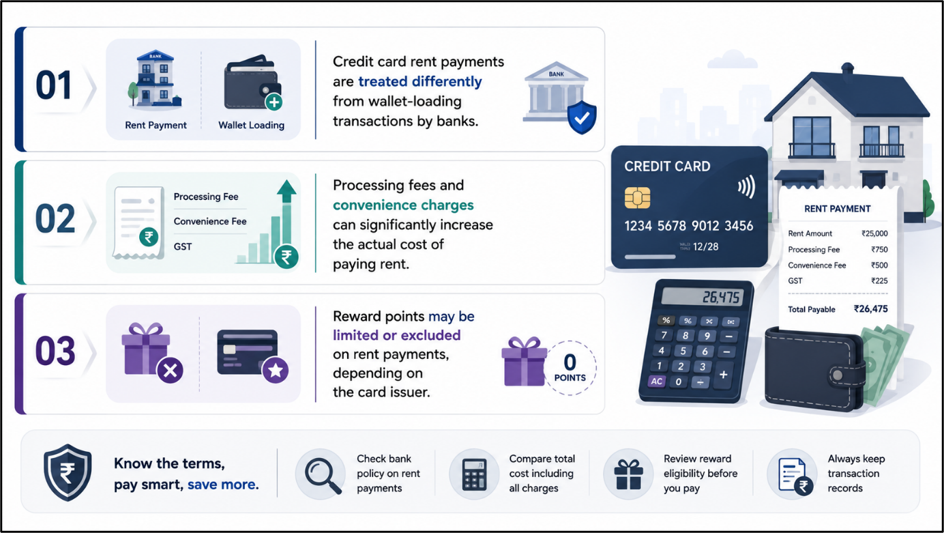
- Rent payments through credit cards are treated differently from wallet loading transactions.
- Processing charges can influence the overall cost of paying rent by credit card.
- Understanding transaction classification can help avoid unexpected expenses.
Many individuals have started using credit cards to pay rent in an effort to manage cash flow, earn reward points, or extend payment timelines. Several fintech platforms facilitate these transactions by enabling rent transfers from a credit card to a landlord's bank account.
However, paying rent through a credit card is not the same as loading money into a digital wallet, even though both involve transferring funds electronically. Understanding this distinction is important because transaction treatment can affect costs, rewards and overall financial planning.
Source: Analysis by Kalkine
How Rent Payments Through Credit Cards Work
In a typical rent payment transaction, the tenant initiates payment using a credit card through an authorised platform. The platform then transfers the amount to the landlord's bank account after processing the transaction.
Unlike wallet loading, where funds are first stored in a prepaid account, rent payments are generally classified as merchant or service transactions, depending on the platform and payment structure.
As a result, banks and card issuers may apply different rules to rent transactions than those applicable to wallet funding.
Why Rent Payments Are Different From Wallet Loading
When money is loaded into a digital wallet, the transaction often involves transferring funds into a prepaid instrument that can later be used for multiple purposes.
Rent payments, on the other hand, are intended to settle a specific obligation directly with a landlord. Since the nature of the transaction differs, banks may assign separate fee structures, reward eligibility criteria and transaction classifications.
This distinction becomes important because some card issuers have revised their policies regarding rent payments in recent years.
Charges Can Affect the Overall Cost
One factor borrowers and tenants should consider is the processing fee associated with rent payments made through credit cards. While the convenience of using a credit card may be attractive, transaction charges can increase the effective cost of the payment. Depending on the platform and card issuer, these charges can vary.
Therefore, users should compare:
- Processing fees.
- Convenience charges.
- Applicable taxes.
- Reward benefits, if any.
- Interest costs if dues are not repaid on time.
A transaction that appears beneficial because of reward points may become more expensive after accounting for associated fees.
Impact on Reward Points and Benefits
Not all rent transactions qualify for the same rewards as retail purchases. Some banks have modified reward structures for rent-related payments, while others may impose separate limits or exclusions.
As a result, cardholders should review the latest terms and conditions associated with their credit cards before assuming that rent payments will generate standard reward benefits. Understanding these rules can help avoid disappointment and support better financial planning.
Things Tenants Should Evaluate
Before choosing to pay rent via a credit card, individuals may consider:
- Total transaction cost.
- Reward eligibility.
- Credit utilisation impact.
- Repayment ability.
- Available alternatives.
Using a credit card responsibly can provide flexibility, but recurring rent payments should be assessed in the context of overall financial obligations.
Managing Credit Card Rent Payments Wisely
Rent is typically one of the largest monthly household expenses. Consequently, repeated use of credit cards for rent payments can increase outstanding balances if not repaid promptly.
Cardholders who rely on credit cards for rent should ensure that payments fit within their repayment capacity and do not lead to revolving debt or additional interest charges.
Key Risks to Watch
- Processing fees can increase the effective cost of rent payments.
- Reward points may be restricted on certain rent transactions.
- High credit utilisation can affect credit profiles.
- Delayed repayment may lead to interest and penalty charges.
Summary
Paying rent through a credit card differs from loading money into a digital wallet because the transactions are classified differently by payment platforms and card issuers. This distinction can affect fees, rewards and overall costs. While credit card rent payments may offer convenience and short-term cash-flow flexibility, users should evaluate processing charges, reward eligibility and repayment capacity before adopting this payment method regularly.
FAQs
Q: Is paying rent with a credit card the same as wallet loading?
A: No. Rent payments and wallet loading transactions are generally treated differently by payment providers and card issuers.
Q: Do credit card rent payments involve additional charges?
A: Yes. Many platforms impose processing or convenience fees that can increase the overall transaction cost.
Q: Can rent payments earn credit card rewards?
A: Reward eligibility varies by card issuer, and some banks may restrict benefits on rent transactions.