

How Small Financial Errors Can Prevent Wealth Creation and Long-Term Financial Security
Achieving financial success is not solely about earning a higher income. In many cases, long-term wealth creation depends more on avoiding costly financial mistakes than on generating additional earnings. Despite increasing financial awareness and access to investment opportunities, many Indians continue to make avoidable financial decisions that negatively impact their savings, investments, and overall financial well-being.
From neglecting emergency funds and delaying investments to accumulating high-interest debt and inadequate insurance coverage, these mistakes can significantly hinder financial progress. Understanding and addressing these common pitfalls can help individuals improve financial stability and achieve their long-term goals.
This article explores some of the most common personal finance mistakes that cost Indians money and offers insights into how they can be avoided.
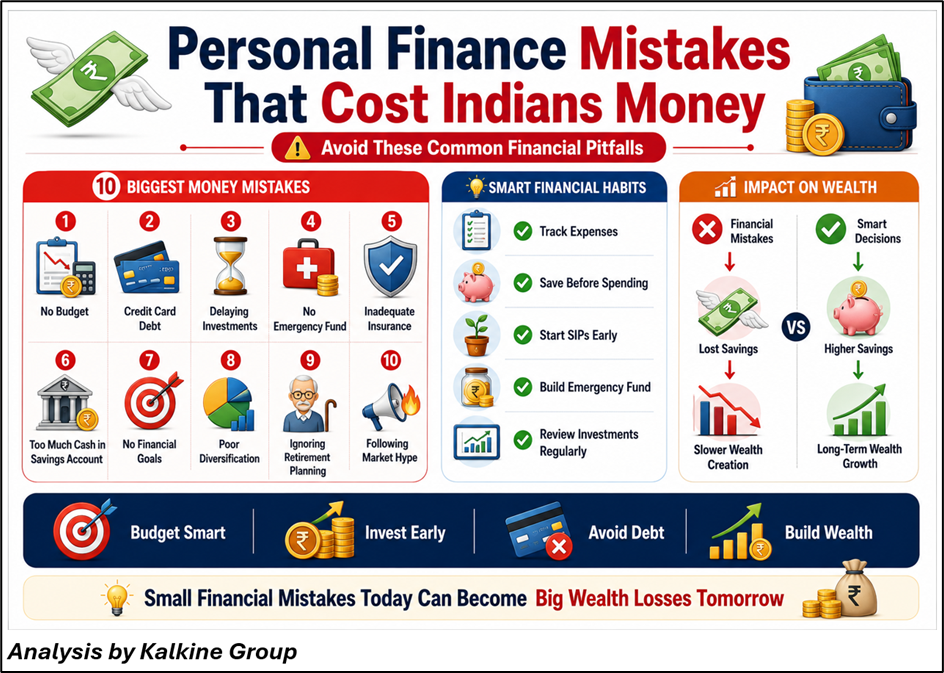
- Not Creating a Monthly Budget- One of the most common financial mistakes is managing money without a clear budget. Without tracking income and expenses, individuals often underestimate their spending and struggle to identify areas where savings can be increased.
A budget provides visibility into spending habits and ensures that financial resources are allocated effectively. It also helps prevent overspending and supports better financial decision-making.
Individuals who regularly monitor their finances are generally better positioned to achieve savings and investment goals.
- Living Beyond Your Means- Lifestyle inflation occurs when spending increases in line with income growth. While salary increments often lead to improved lifestyles, excessive spending can prevent wealth accumulation.
Many individuals increase discretionary expenses such as dining, travel, gadgets, and luxury purchases without proportionately increasing savings or investments.
Sustainable financial growth requires maintaining a balance between enjoying income today and preparing for future financial needs.
- Delaying Investments- One of the costliest financial mistakes is postponing investing. Many people wait until they earn more money or believe they have sufficient capital before beginning their investment journey.
However, delaying investments reduces the benefits of compounding and shortens the time available for wealth accumulation.
Even modest investments started early can potentially generate substantial long-term returns compared to larger investments initiated later in life.
- Ignoring the Importance of an Emergency Fund- Unexpected financial events can occur at any time. Medical emergencies, job loss, business disruptions, and major repairs often create financial stress when adequate reserves are unavailable.
Without an emergency fund, individuals may be forced to rely on high-interest loans or liquidate long-term investments prematurely.
Financial experts generally recommend maintaining an emergency fund equivalent to six to twelve months of essential living expenses to provide financial security during uncertain periods.
- Relying Excessively on Credit Cards- Credit cards can be useful financial tools when used responsibly. However, carrying unpaid balances and relying heavily on credit card debt can become extremely expensive due to high interest charges.
Many individuals fall into the habit of financing lifestyle expenses through credit cards, leading to debt accumulation and increased financial pressure.
Using credit responsibly and paying outstanding balances in full can help avoid unnecessary interest costs.
- Inadequate Insurance Coverage- Insurance plays a critical role in protecting financial stability. Yet many individuals either remain uninsured or purchase insufficient coverage.
Two essential forms of protection often overlooked include:
- Health Insurance- Rising healthcare costs can significantly impact household finances. Adequate health insurance can help mitigate the financial burden of medical emergencies.
- Term Life Insurance- Individuals with financial dependents should ensure that adequate life insurance coverage is available to support their family's future financial needs.
Failing to secure appropriate insurance can result in substantial financial setbacks during unforeseen events.
- Keeping Excessive Money in Savings Accounts- While maintaining liquidity is important, keeping a large proportion of long-term savings in low-yield savings accounts can reduce wealth creation potential.
Inflation gradually erodes purchasing power, meaning money may lose real value over time if it is not invested appropriately.
A balanced financial strategy typically involves maintaining sufficient liquidity while allocating surplus funds toward investments aligned with long-term goals.
- Lack of Diversification- Concentrating investments in a single asset class, stock, sector, or investment product increases financial risk.
Market conditions can change unexpectedly, and overexposure to a single investment theme may lead to significant losses.
Diversification across different asset classes such as equities, fixed income instruments, gold, and international investments can help improve portfolio resilience and risk management.
- Investing Without Clear Financial Goals- Many individuals begin investing without defining specific objectives. As a result, investment decisions may become inconsistent and lack direction.
Clearly defined financial goals help determine:
- Investment horizon
- Risk tolerance
- Asset allocation strategy
- Expected returns
Goal-based investing can improve discipline and increase the likelihood of achieving desired financial outcomes.
- Neglecting Retirement Planning- Retirement planning is often postponed because it appears distant and less urgent than current financial needs.
However, increasing life expectancy and rising living costs make retirement planning a critical component of long-term financial security.
Starting retirement investments early can reduce the financial burden of building a sufficient retirement corpus and maximize the benefits of compounding.
- Frequently Chasing Investment Trends- Many investors make the mistake of investing based on market hype, social media trends, or short-term performance.
Buying investments solely because they have recently performed well often leads to poor decision-making and increased portfolio risk.
Successful investing typically requires a disciplined approach based on financial goals, risk tolerance, and long-term planning rather than speculation.
- Ignoring Financial Education- Financial literacy remains one of the most valuable long-term investments. Individuals who fail to improve their understanding of financial products, taxation, investments, and risk management may struggle to make informed decisions.
Continuously enhancing financial knowledge can help individuals avoid costly mistakes and identify opportunities to improve financial outcomes.
Conclusion
Financial success is often determined not only by the decisions individuals make but also by the mistakes they avoid. Common errors such as living beyond one's means, delaying investments, neglecting insurance, accumulating high-interest debt, and failing to plan for retirement can significantly impact long-term financial well-being.
By adopting disciplined financial habits, maintaining a long-term perspective, and continuously improving financial knowledge, individuals can strengthen their financial foundation and improve their chances of achieving lasting financial security and wealth creation.
Frequently Asked Questions (FAQs)
- What is the biggest personal finance mistake people make?
One of the most common mistakes is delaying investments. Starting late reduces the benefits of compounding and may require significantly higher future contributions to achieve financial goals.
- Why is an emergency fund important?
An emergency fund provides financial protection during unexpected events such as medical emergencies, job loss, or major repairs, reducing reliance on loans and debt.
- How can I avoid common financial mistakes?
Creating a budget, investing consistently, maintaining adequate insurance, building an emergency fund, avoiding unnecessary debt, and continuously improving financial literacy can help minimize financial mistakes.