

Highlights
- Keeping essential documents ready can help simplify the personal loan application process.
- Lenders generally verify identity, income and repayment capacity before approving a loan.
- Complete documentation may help reduce delays during application processing.
A personal loan can be used for a variety of financial needs, including medical expenses, education, travel, home improvement or emergency situations. Since these loans are usually unsecured, lenders rely heavily on the applicant's financial profile before making a lending decision.
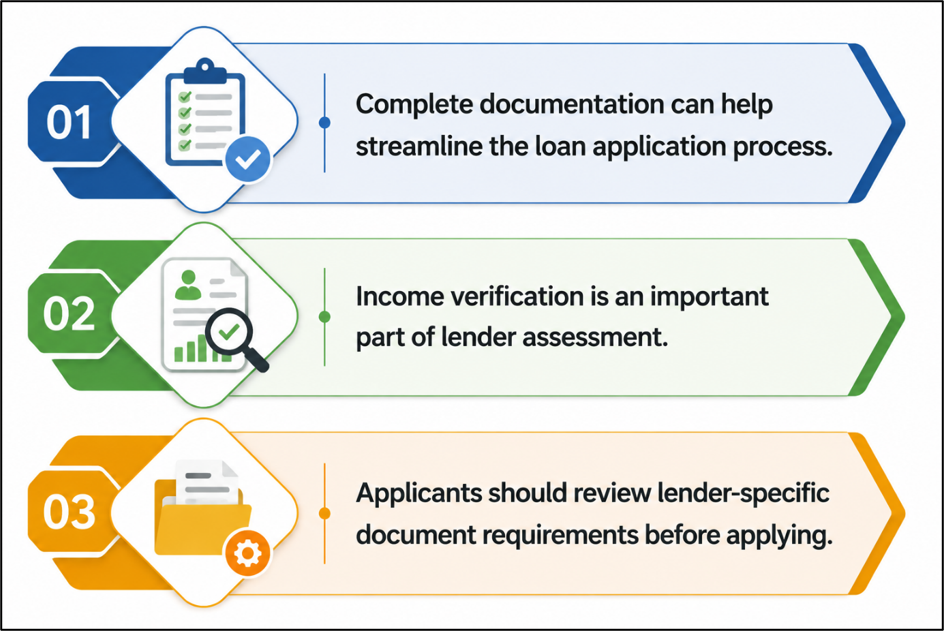
One of the first steps in the evaluation process is document verification. Submitting complete and accurate documents allows lenders to confirm an applicant's identity, financial stability and repayment capability. Incomplete documentation, on the other hand, may slow down the assessment process or require additional verification.
Source: Analysis by Kalkine
Identity and Address Proof
Lenders require proof of identity and residential address as part of the Know Your Customer (KYC) process. These documents help establish the applicant's identity and confirm that the information provided in the application is accurate.
Commonly accepted documents may include Aadhaar, PAN, passport, voter identity card, driving licence or other officially recognised identification documents, depending on the lender's requirements.
Applicants should ensure that the information across these documents is consistent to avoid delays during verification.
Proof of Income
Since repayment capacity plays a significant role in loan approval, lenders generally ask applicants to provide documents demonstrating their income.
For salaried individuals, salary slips for recent months and Form 16 are commonly requested. Self-employed applicants may instead be required to submit income tax returns, audited financial statements or other business-related financial records that reflect earnings.
These documents assist lenders in assessing the applicant's ability to service the proposed loan.
Bank Account Statements
Recent bank statements are often requested to provide lenders with an overview of income credits, regular expenses and existing financial commitments.
The statements also help verify salary deposits or business receipts while allowing lenders to assess the applicant's cash flow patterns and banking behaviour.
Applicants should ensure that the statements submitted cover the period specified by the lending institution.
Employment or Business Information
Lenders may request additional documents that establish employment or business continuity.
Salaried applicants may be asked to provide an employment certificate, employee identification card or appointment letter where required. Business owners and professionals may need to submit business registration documents, licences or proof of professional practice depending on the lender's internal policies.
Such information helps lenders understand the stability of the applicant's source of income.
Photographs and Application Forms
Most lenders require applicants to submit recent passport-sized photographs along with a duly completed loan application form.
Although many digital lending platforms now allow online submissions, applicants should ensure that all mandatory fields are completed accurately before final submission.
Providing incomplete information may lead to additional verification requests.
Why Preparing Documents in Advance Can Help
Organising the required paperwork before starting the application can make the loan process more efficient. When all requested documents are readily available, lenders may complete verification more quickly, reducing the need for repeated follow-ups.
Applicants may also find it easier to compare loan offers from different financial institutions when documentation is already prepared.
Key Risks to Consider
- Incorrect information may delay loan verification.
- Missing documents can extend application processing time.
- Existing debt may influence loan eligibility.
- Loan approval remains subject to lender assessment.
Summary
Applying for a personal loan involves more than meeting eligibility requirements. Lenders also evaluate supporting documents to verify identity, income, banking history and repayment capacity. Preparing these documents in advance can make the application process more organised and reduce unnecessary delays. Since documentation requirements may vary among financial institutions, applicants should review the lender's specific requirements before submitting their application.
FAQs
Q: Why do lenders ask for income documents when processing a personal loan?
A: Income documents help lenders assess whether an applicant has sufficient repayment capacity for the proposed loan.
Q: Are bank statements commonly required for personal loan applications?
A: Yes. Lenders often review bank statements to understand income patterns, financial commitments and account activity.
Q: Do all lenders require the same set of documents?
A: No. Documentation requirements may differ depending on the lender, applicant profile and loan product.