

India’s economic growth and expanding credit ecosystem have improved purchasing power for millions of households. Easier access to loans, digital payments, and consumer financing has encouraged families to spend more confidently on homes, vehicles, education, travel, and lifestyle upgrades. Yet financial experts believe that beneath this growing consumption trend, many households may still lack adequate financial protection against unexpected disruptions.
Although income levels have improved in recent years, rising debt commitments and insufficient savings are becoming major concerns for long-term financial security.
Analysis by Klakine Group
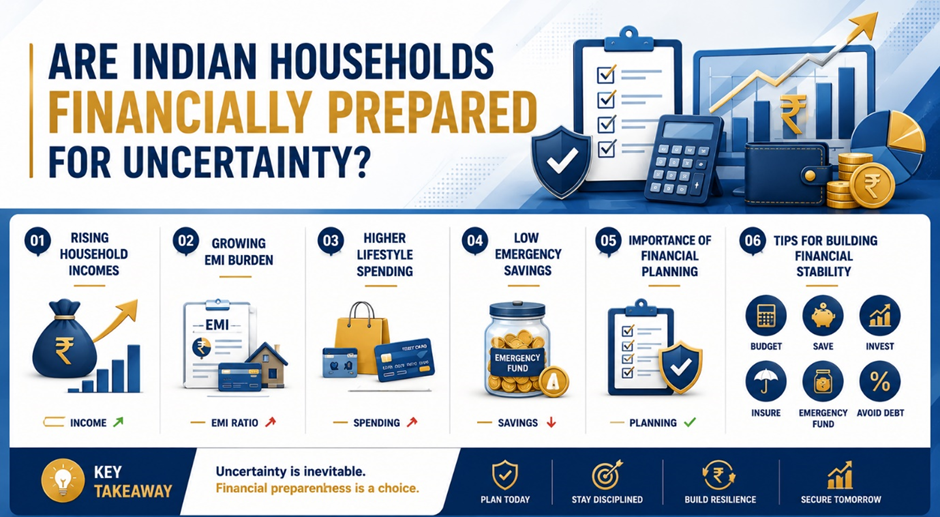
Lifestyle Expansion Is Driving Household Spending
Growing urbanisation, salary growth, and improved financing availability have significantly changed consumer behaviour across India. Many families are increasingly comfortable using loans and EMI-based purchases to fund major expenses and lifestyle aspirations.
From smartphones and electronics to housing and personal travel, spending patterns have become more consumption-oriented. Digital lending platforms and simplified loan approvals have also accelerated borrowing among younger consumers.
However, experts caution that rising expenditure without parallel growth in savings can weaken a family’s financial stability over time.
Debt Commitments Are Increasing Across Income Groups
A major concern among financial planners is the steady rise in fixed monthly liabilities. Housing loans, car financing, personal loans, education loans, and credit card repayments are consuming a larger share of household income for many families.
As monthly obligations increase, households may find it harder to manage emergencies such as sudden medical expenses, employment uncertainty, or economic slowdowns. High dependence on borrowed money can also reduce financial flexibility during periods of stress.
Experts believe households should avoid stretching finances excessively merely to maintain upgraded lifestyles or consumption trends.
Emergency Savings Remain a Weak Area
Financial advisors continue to highlight the lack of emergency preparedness among many Indian households. While earnings may have improved, savings discipline has not always kept pace with spending habits.
Experts generally advise families to maintain emergency reserves capable of covering at least several months of essential expenses. However, many consumers continue to operate with limited liquid savings, making them vulnerable during unforeseen events.
Without adequate financial buffers, households may be forced to rely further on loans or credit cards during emergencies, potentially increasing repayment pressure and financial instability.
Financial Stability Depends on More Than Income
A higher salary alone does not automatically guarantee financial strength. Experts emphasize that true financial preparedness depends on multiple factors, including:
- Emergency savings
- Controlled debt levels
- Insurance protection
- Long-term investments
- Retirement planning
- Expense management
Several households may appear financially comfortable due to rising incomes and asset ownership, but their ability to withstand prolonged financial stress may still remain limited.
Experts Recommend Balanced Financial Planning
Financial planners increasingly encourage families to focus on sustainable financial habits rather than short-term consumption. Some key recommendations include:
- Building a dedicated emergency fund
- Avoiding unnecessary borrowing
- Managing EMI exposure carefully
- Maintaining adequate health and life insurance
- Investing consistently for long-term goals
- Following structured budgeting practices
Experts believe disciplined financial planning can help households improve resilience during uncertain economic conditions, inflationary pressures, or temporary income disruptions.
Conclusion
India’s rising income levels and expanding credit access are supporting stronger household consumption, but increasing debt obligations and weak emergency savings may pose financial risks in uncertain times. Experts suggest that long-term financial security will depend less on earning growth alone and more on disciplined savings, controlled borrowing, and better financial planning habits.
FAQs
- Why are experts discussing household financial preparedness?
Experts are concerned that rising debt and limited emergency savings could make families financially vulnerable during uncertain situations.
- How do higher EMIs affect household finances?
Larger EMI commitments reduce disposable income and may create financial pressure during emergencies or economic slowdowns.
- What is the importance of an emergency fund?
Emergency savings help households manage unexpected expenses without depending heavily on loans or credit cards.
- Does rising income automatically ensure financial security?
No, financial stability also depends on savings habits, debt management, investments, and insurance coverage.
- What steps can improve household financial resilience?
Families can improve stability by budgeting carefully, limiting debt, maintaining emergency funds, and investing regularly.