

Highlights
- Small repayment adjustments can significantly reduce total home loan interest costs.
- Regular prepayments may shorten loan tenure and lower borrowing expenses.
- Reviewing loan terms periodically can help borrowers identify potential savings opportunities.
When taking a home loan, borrowers often focus on securing an affordable EMI. While manageable monthly repayments are important, the total interest paid over a long tenure can sometimes exceed expectations.
A home loan stretching across 20 to 30 years can result in a substantial interest outgo, particularly during the initial years when a large portion of each EMI goes toward interest rather than principal repayment. For this reason, even small changes in repayment behaviour can have a noticeable impact on the overall borrowing cost.
The Early Years Offer The Biggest Savings Opportunity
Many borrowers are unaware that the composition of an EMI changes over time. During the initial years of a loan, interest accounts for a larger share of the payment, while principal repayment gradually increases later.
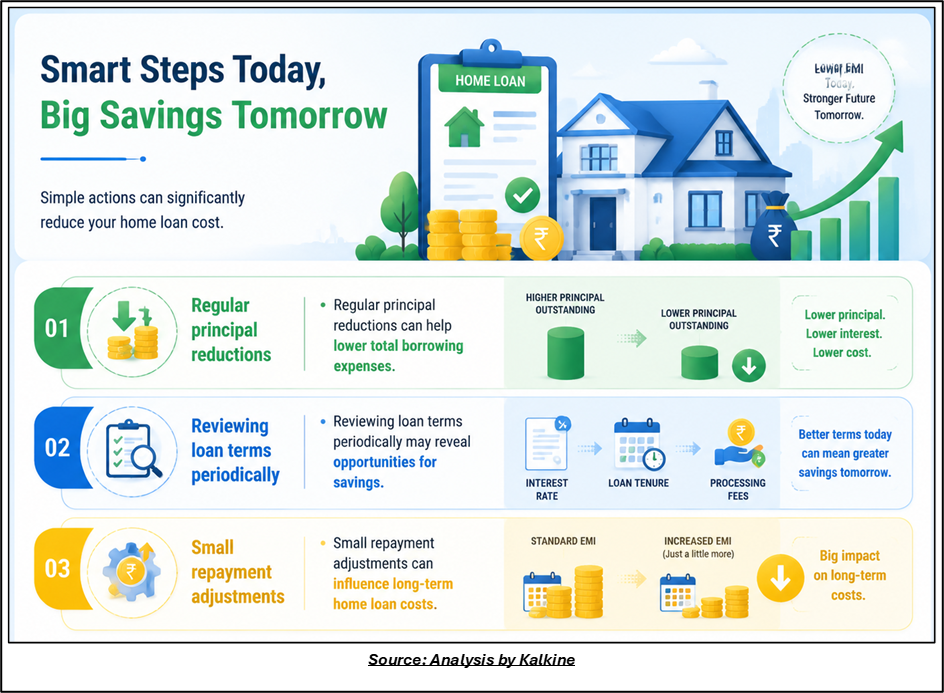
Because of this structure, reducing the outstanding principal early in the loan cycle can have a greater effect on total interest costs than making similar payments near the end of the tenure. Borrowers who receive bonuses, incentives, or other lump-sum income may consider using part of those funds to reduce the loan balance.
Prepayments Can Lower The Interest Burden
One commonly used strategy involves making periodic prepayments in addition to regular EMIs.
Even occasional principal reductions can decrease the outstanding balance on which future interest is calculated. Depending on lender policies, borrowers may choose to reduce their loan tenure, lower their EMI, or pursue a combination of both after making a prepayment.
Over time, these additional payments can help reduce the total amount paid to the lender.
Increasing EMIs Gradually
Income levels often rise over the course of a borrower's career. However, many individuals continue paying the same EMI throughout the loan tenure despite improvements in earning capacity.
Incrementally increasing EMI payments whenever income rises can accelerate principal repayment. Even modest annual increases can reduce loan tenure and decrease cumulative interest expenses over the life of the loan.
Reviewing Interest Rates Periodically
Interest rate cycles change over time, and lending rates may move higher or lower depending on economic conditions.
Borrowers who have held loans for several years may benefit from periodically reviewing whether their existing rate remains competitive. In some situations, lenders revise rates for new borrowers while existing customers continue at older rates unless they request a review or opt for revised terms.
Understanding the current rate applicable to the loan can help borrowers make informed decisions.
Loan Balance Transfers Need Careful Evaluation
Some borrowers explore transferring their outstanding loan to another lender offering lower interest rates.
While a reduced rate may generate savings, the decision should be assessed carefully. Processing fees, legal charges, administrative expenses, and the remaining tenure of the loan can influence whether the transfer is financially beneficial.
The potential savings should be weighed against all associated costs before proceeding.
Avoid Extending Tenure Unnecessarily
Extending repayment tenure can reduce monthly EMIs, making the loan appear more affordable in the short term. However, a longer tenure generally means interest is charged for a greater period.
While tenure extensions may provide temporary relief during financial stress, borrowers should understand the long-term impact on overall borrowing costs before choosing this option.
Maintaining A Balanced Financial Approach
Reducing interest costs is important, but borrowers should avoid directing all available savings toward loan repayment at the expense of emergency funds or other financial goals.
A balanced strategy that considers liquidity needs, insurance coverage, retirement planning, and debt management may provide greater financial flexibility over time.
Key Risks
- Aggressive prepayments may reduce emergency cash reserves.
- Balance transfer costs can offset expected savings.
- Longer tenures typically increase total interest payments.
- Rising interest rates can affect future borrowing costs.
Summary
The total cost of a home loan depends not only on the interest rate but also on repayment behaviour throughout the loan tenure. Strategies such as periodic prepayments, gradual EMI increases, interest-rate reviews, and careful evaluation of balance transfer opportunities can help borrowers reduce overall interest expenses. However, repayment decisions should be balanced with broader financial priorities to maintain long-term financial stability.
FAQs
Q: Why do prepayments have a greater impact during the early years of a home loan?
A: Early repayments reduce principal when interest forms a larger portion of the outstanding loan balance.
Q: Can increasing EMI amounts reduce total interest costs?
A: Yes. Higher EMIs can accelerate principal repayment and potentially shorten the loan tenure.
Q: Should borrowers always transfer loans to lower-rate lenders?
A: Not necessarily. Associated fees and remaining tenure should be evaluated before making a decision.