

Highlights
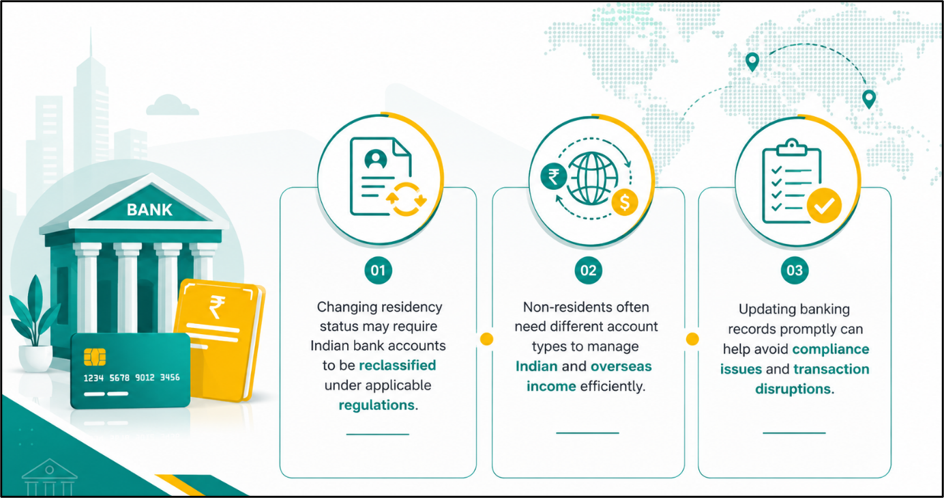
- A change in residency status can affect how Indian bank accounts are operated.
- Different account categories are available for managing domestic and overseas funds.
- Updating banking records promptly can help avoid compliance and transaction issues.
For many Indians relocating abroad for employment, higher education, business opportunities, or long-term settlement, banking arrangements often become an afterthought. However, once an individual becomes a non-resident, existing banking relationships in India may need to be reviewed to ensure they align with regulatory requirements.
While moving overseas does not mean severing financial ties with India, it does require a reassessment of how money is received, held, and transferred through Indian banking channels.
 Source: Analysis by Kalkine
A Change in Address Is Not the Only Change
Many people assume that informing their bank about a new overseas address is sufficient. In reality, banks also consider a customer's residential status when determining the type of account that can be maintained.
Once an individual qualifies as a non-resident under applicable regulations, the banking framework applicable to residents may no longer be appropriate. This is why banks typically ask customers to notify them when they move abroad for an extended period.
The objective is to ensure that account structures reflect the customer's revised financial and regulatory position.
Managing Income That Continues to Come From India
Even after relocation, many individuals continue to earn money from India. Rental receipts, pension payments, dividends, interest income, and other domestic cash flows often continue long after a person settles overseas.
To facilitate the management of such earnings, dedicated banking arrangements are available for non-residents. These accounts allow incoming domestic funds to be received and managed within the Indian banking system while maintaining compliance with applicable rules.
For many overseas Indians, these accounts become the primary channel for handling India-based financial commitments.
Handling Earnings Generated Abroad
Relocation often results in a shift where most income originates outside India. Salaries, business receipts, and overseas savings may need to be transferred to India for investments, family support, or future financial goals.
Specialised account options allow overseas earnings to be deposited and managed efficiently. These accounts are commonly used by individuals who wish to retain a financial presence in India while continuing to earn abroad.
Choosing the right account type often depends on the source of funds and future financial plans.
The Currency Factor
Another consideration for non-residents is currency exposure. Some individuals are comfortable converting foreign earnings into Indian rupees, while others prefer retaining balances in foreign currencies for a period of time.
Banking products designed for non-residents offer different approaches to managing this choice. The decision may depend on future spending plans, exchange-rate considerations, and overall financial objectives.
Investments Usually Remain Intact
Relocating overseas does not automatically affect ownership of investments held in India. Bank deposits, mutual funds, insurance policies, shares, and other financial assets can generally continue to be held, although account details and residential status records may need updating.
Investors often find it beneficial to review nominee information, contact details, and compliance documentation at the same time. Keeping records current can reduce administrative complications in the future.
Why Early Action Matters
Delays in updating banking information can create avoidable challenges. Transactions may require additional verification, documentation requests can increase, and certain services may be interrupted until records are updated.
Addressing these requirements soon after relocation can make ongoing financial management considerably smoother. Maintaining communication with financial institutions also helps ensure that important notifications and regulatory updates reach the account holder without delay.
Key Risks
- Failure to update status may lead to compliance concerns.
- Incorrect account classification can affect banking operations.
- Outdated records may delay financial transactions.
- Documentation gaps can create administrative complications.
Summary
Moving abroad involves more than travel documents and relocation planning. Banking arrangements in India often require attention once an individual's residential status changes. Reviewing account structures, updating records, and understanding available banking options can help overseas Indians continue managing their finances efficiently while remaining aligned with applicable regulations.
FAQs
Q: Does moving abroad automatically close Indian bank accounts?
A: No, accounts are generally not closed, though updates and conversions may be required.
Q: Why should banks be informed after relocation overseas?
A: Banks need updated records to ensure accounts comply with applicable regulatory requirements.
Q: Can investments in India be retained after moving abroad?
A: Yes, many investments can continue, although residential status updates may be necessary.