

Highlights
- Fixed-rate loans provide predictable EMIs throughout the repayment period.
- Floating-rate loans can benefit borrowers when benchmark rates decline.
- Borrowers now have greater flexibility to switch between rate structures.
Choosing between a fixed and floating interest rate remains one of the most important decisions for personal loan borrowers in 2025 and 2026. The selection directly affects monthly repayments, total borrowing costs, and long-term financial planning.
As lending rates continue to respond to broader economic conditions and policy decisions, borrowers are evaluating whether payment certainty or potential savings should guide their borrowing strategy. While both options have distinct advantages, the suitability of either depends on individual financial circumstances and risk tolerance.
Fixed Rates: The Comfort of Predictability
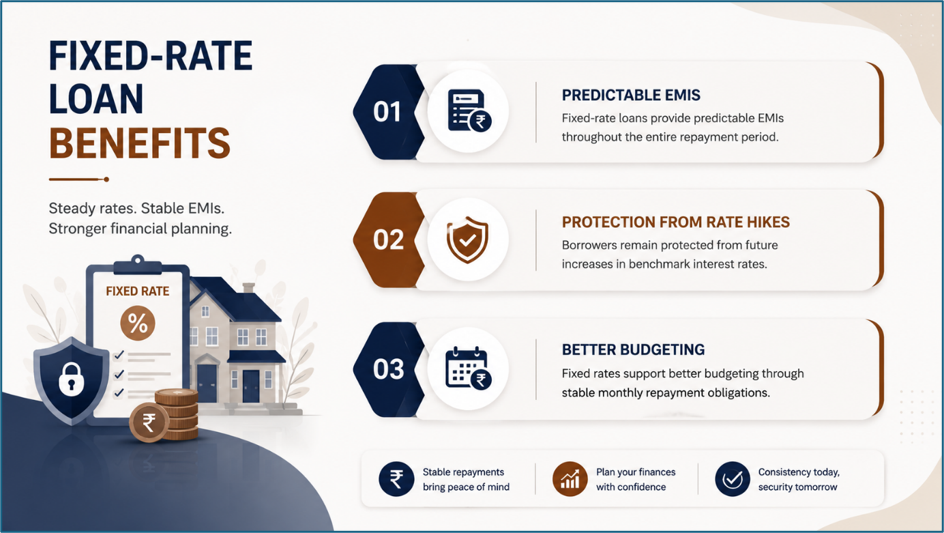
A fixed interest rate remains unchanged throughout the loan tenure. This means borrowers pay the same Equated Monthly Installment (EMI) from the beginning of the loan until the final repayment.
The biggest advantage of a fixed-rate loan is predictability. Borrowers can plan their monthly budgets without worrying about fluctuations in interest rates. This can be particularly useful for salaried individuals or households with limited flexibility in monthly cash flows.
Fixed-rate loans also shield borrowers from unexpected increases in benchmark rates. Even if market interest rates rise during the tenure, the borrower's EMI remains unaffected.
However, this certainty often comes at a cost. Fixed rates are generally higher than floating rates at the time of loan sanction. Borrowers may also miss out on savings if lending rates decline during the repayment period.
 Source: Analysis by Kalkine
Floating Rates: Flexibility Linked to Markets
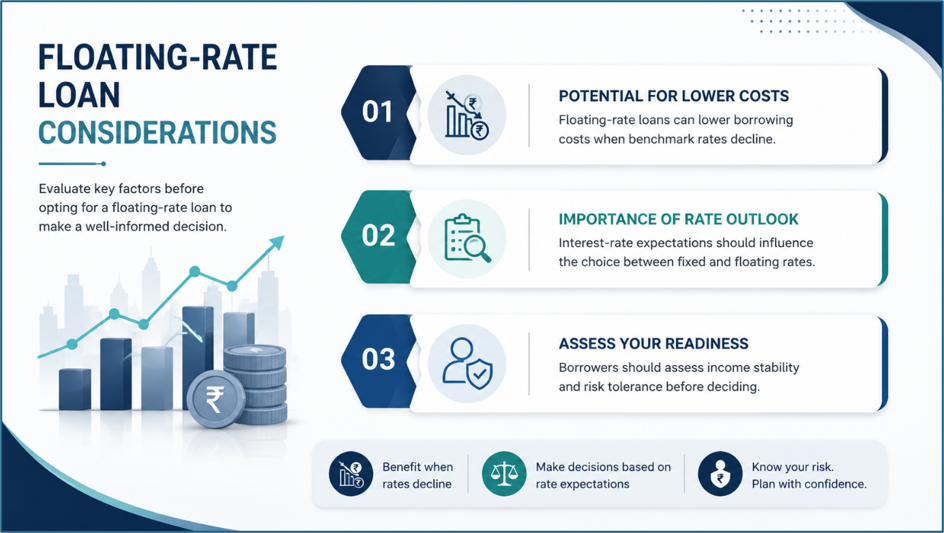
Floating interest rates move in line with benchmark rates such as the Reserve Bank of India's repo rate or other lending benchmarks used by financial institutions.
When benchmark rates decline, borrowers can benefit through lower EMIs or reduced loan tenure. This feature makes floating-rate loans attractive during periods when interest rates are expected to soften. Another benefit is that floating rates often begin at a lower level than fixed rates, potentially reducing the initial repayment burden.
The trade-off is uncertainty. Since rates can move upward as well, monthly repayment obligations may increase if benchmark rates rise. For borrowers with tight budgets, such changes can create financial pressure over time.
 Source: Analysis by Kalkine
Market Conditions Matter
Interest-rate expectations play a major role in deciding between the two structures.
Borrowers expecting stable or declining rates may find floating-rate loans more appealing because of the possibility of lower borrowing costs. On the other hand, those concerned about future rate increases may prefer locking in a fixed rate to avoid surprises.
Financial experts often recommend evaluating income stability, emergency savings, and repayment capacity before selecting a loan structure.
RBI Measures Offer More Flexibility
Recent regulatory measures have improved flexibility for borrowers. Lenders are required to provide clearer communication regarding interest-rate changes and their impact on loan repayments.
Borrowers may also have opportunities to switch between fixed and floating structures under certain conditions, allowing them to respond to changing market environments.
The changes are intended to help customers make informed decisions and better manage interest-rate risks over the life of their loans.
How Borrowers Can Decide
The choice between fixed and floating rates ultimately depends on personal financial priorities. A borrower seeking repayment certainty may lean toward fixed rates despite the possibility of paying slightly higher interest. Meanwhile, someone comfortable with market-linked changes and interested in potential savings may prefer a floating-rate structure.
Loan tenure is another important factor. Short-term borrowers may prioritize stability, while longer-term borrowers may evaluate the benefits of rate-linked adjustments over time.
Key Risks
- Rising benchmark rates can increase floating-rate loan EMIs.
- Fixed-rate borrowers may miss savings during falling-rate cycles.
- Longer tenures can increase overall interest outgo significantly.
- Budget planning may become difficult with variable repayments.
Summary
The decision between fixed and floating interest rates remains a key consideration for borrowers in 2025 and 2026. Fixed rates provide predictable repayments and protection from future rate hikes, while floating rates offer the possibility of lower borrowing costs when benchmark rates decline. Borrowers should assess their income stability, financial goals, and risk appetite before selecting the most suitable loan structure.
FAQs
Q: What is the primary benefit of a fixed-rate loan?
A: A fixed-rate loan offers predictable EMIs throughout the tenure, helping borrowers manage monthly budgets more effectively.
Q: When can a floating-rate loan be beneficial?
A: Floating-rate loans can reduce borrowing costs when benchmark interest rates decline during the loan repayment period.
Q: Can borrowers switch between fixed and floating rates?
A: Depending on lender policies and applicable regulations, borrowers may have options to switch interest-rate structures.