

Highlights
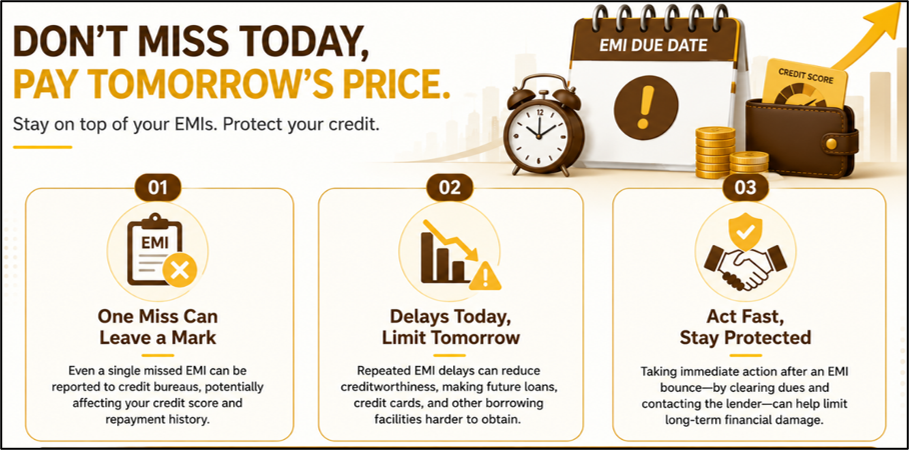
- Even a single missed EMI can affect your repayment history and credit profile.
- Delayed payments may make future loans and credit cards harder to obtain.
- Acting quickly after an EMI bounce can help limit long-term financial damage.
Many borrowers assume that missing a single Equated Monthly Instalment (EMI) is a minor issue that can be corrected later without consequences. However, repayment behaviour is one of the most closely monitored aspects of a borrower’s financial profile, and even one missed payment can have wider implications than many people realize.
While a single EMI bounce does not automatically destroy a credit score overnight, its impact depends on how quickly the payment is regularized and whether missed payments become a recurring pattern. Lenders and credit bureaus closely track repayment behaviour, making timely payments an important factor in maintaining a healthy credit profile.
Source: Analysis by Kalkine
Why Repayment History Matters So Much
Credit scores are built using several factors, but repayment history remains one of the most important. Lenders assess whether borrowers consistently meet their payment obligations before approving new loans or extending additional credit.
When an EMI remains unpaid beyond the reporting cycle, lenders may report the delay to credit bureaus. Once recorded, the missed payment becomes part of the borrower’s credit history and may be visible to future lenders reviewing loan applications.
A Single Delay May Not Cause Severe Damage
Not every missed EMI has the same impact. If the payment failure occurs because of a temporary cash-flow issue or an auto-debit problem and is corrected quickly, the long-term effect may be limited.
Several borrowers in community discussions have reported that payments cleared within a short grace period did not result in major credit score damage, although bounce charges or penalties may still apply. However, outcomes can vary depending on the lender’s reporting practices.
Repeated EMI Misses Raise Red Flags
The situation becomes more serious when delayed payments occur repeatedly. Multiple missed EMIs can signal financial stress to lenders and may lower a borrower’s creditworthiness.
Banks and financial institutions review repayment patterns when evaluating applications for home loans, personal loans, vehicle financing, and credit cards. A history of repeated delays can result in stricter lending terms, lower approved amounts, or even loan rejections.
Auto-Debit Failures Are a Common Cause
Many EMI defaults occur because auto-debit instructions fail rather than because borrowers intentionally skip payments. Insufficient balances, changes in bank accounts, or technical issues can all lead to failed transactions.
Financial planners often recommend maintaining a buffer balance in EMI-linked accounts and regularly monitoring repayment schedules to reduce the risk of accidental defaults.
What To Do Immediately After Missing an EMI
Borrowers who miss an EMI should act promptly instead of ignoring reminders from lenders. Clearing the overdue amount quickly can help prevent the issue from escalating.
It is also advisable to contact the lender if repayment difficulties are temporary. Some lenders may discuss repayment arrangements or provide short-term relief options depending on the borrower’s payment history and circumstances.
Long-Term Effects Can Extend Beyond Loans
A credit score influences more than borrowing costs. Financial institutions often use credit reports to assess overall financial discipline. A weaker credit profile may affect future access to credit products and could lead to higher borrowing costs when financing major purchases.
Building and maintaining a healthy credit profile generally depends on consistent repayment habits over time rather than short-term fixes.
Key Risks of Missing an EMI
- Credit score may decline if delays are reported.
- Future loan approvals could become more difficult.
- Lenders may impose penalties and additional charges.
- Repeated defaults can trigger recovery actions.
Summary
Missing a single EMI may appear insignificant, but repayment history remains a critical factor in credit assessment. While a quickly corrected payment delay may have limited long-term consequences, repeated missed EMIs can affect credit scores, future borrowing opportunities, and lending terms. Maintaining sufficient account balances, monitoring auto-debits, and addressing payment issues immediately can help protect a borrower’s financial profile.
FAQs
Q: Can one missed EMI reduce a credit score?
A: Yes, if reported to credit bureaus, a missed EMI can negatively affect a borrower’s credit profile.
Q: Will an EMI bounce automatically lead to loan rejection?
A: Not necessarily, but repeated delays can make future loan approvals more difficult.
Q: What should borrowers do after missing an EMI payment?
A: Clear the overdue amount quickly and contact the lender if repayment difficulties are temporary.