

Highlights
- Synchronising policy renewals can simplify premium tracking and financial planning.
- Policyholders may align renewal dates during purchase, renewal, or policy modifications.
- Insurer approval, policy terms, and coverage continuity must be considered.
Managing multiple insurance policies can become complicated when renewal dates are spread throughout the year. Health insurance, life insurance, motor insurance, and personal accident policies may all have different due dates, increasing the risk of missed payments.
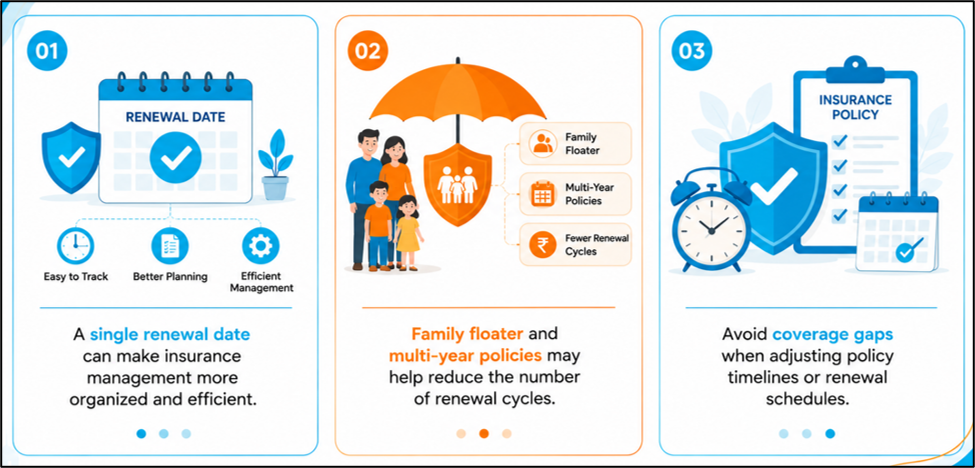
Aligning insurance policies to a single renewal date can make premium management easier, improve record keeping, and help households plan annual financial commitments more efficiently.
 Source: Analysis by Kalkine
Is It Possible To Align Insurance Renewals?
In many cases, yes. However, the process depends on the type of insurance policy, insurer guidelines, and the remaining tenure of existing policies.
Policyholders generally cannot arbitrarily change policy expiry dates. Instead, alignment is often achieved through adjustments made during renewal, short-term extensions, policy restructuring, or by purchasing new policies with dates that fit a desired renewal cycle. The exact options available vary across insurers and product categories.
Methods To Align Insurance Premium Payments
Choose A Common Date For New Policies
The easiest way to align renewals is when purchasing a new policy. Policyholders can select a start date that helps match the renewal schedule of existing policies. Over time, this approach can gradually bring multiple policies under a common renewal cycle.
Use Renewal Opportunities
When existing policies approach renewal, policyholders can discuss alignment options with their insurers. Depending on the policy type and insurer practices, certain adjustments may be available to help synchronize future renewals.
Consider Multi-Year Policies
Some insurance products offer multi-year coverage options. When appropriately timed, these policies may help bring future renewal dates closer together and reduce the frequency of premium payments.
Review Family Floater Options
For health insurance, consolidating individual policies into a family floater plan may reduce the number of separate renewal dates that need to be monitored. However, suitability depends on coverage requirements, age profiles, and family circumstances.
Important Factors Before Aligning Policies
Avoid Coverage Gaps
Policyholders should ensure that efforts to synchronize renewal dates do not result in a break in coverage. Even a short lapse can affect benefits, waiting periods, or continuity advantages in certain insurance products. Most health insurance policies provide grace periods, but coverage conditions during such periods may vary.
Check Insurer Rules
Not all insurers allow modifications that alter policy timelines. Before making changes, policyholders should confirm available options and their implications directly with the insurer.
Evaluate Cost Implications
Short-term extensions, revised policy periods, or restructuring arrangements may affect premium calculations. Understanding these costs beforehand can help avoid surprises.
Maintain Policy Benefits
For health insurance policies, preserving accumulated benefits such as waiting-period credits and continuity benefits is often important when considering renewal-related changes. Renewing within applicable grace periods can help maintain these benefits.
Creating A Practical Renewal Calendar
Even if complete alignment is not possible, policyholders can simplify management by creating a consolidated insurance calendar. This may include:
Annual Renewal Tracker
Maintaining a list of all policy numbers, renewal dates, premium amounts, and insurer contact details.
Automated Reminders
Using mobile applications, email alerts, calendar notifications, or insurer reminder services to avoid missed renewals.
Premium Budget Planning
Setting aside funds throughout the year can make annual premium payments easier to manage when multiple policies renew around the same period.
When Alignment May Not Be Necessary
While a common renewal date offers convenience, it may not always be the best option. Some policyholders prefer staggered renewal schedules to spread premium payments across the year and reduce the impact on cash flow.
The decision should therefore balance administrative convenience with affordability and financial planning preferences.
Key Risks To Consider
- Policy changes could affect coverage continuity if not managed carefully.
- Insurers may not permit renewal date adjustments.
- Premium calculations may change after restructuring.
- Missing renewal deadlines can lead to policy lapses.
Summary
Aligning multiple insurance premiums to a single renewal date can simplify financial planning and reduce the risk of missed payments. Policyholders may achieve this through careful timing of new policy purchases, renewal adjustments, multi-year plans, or policy consolidation strategies. However, insurer rules, premium implications, and continuity of coverage should be evaluated before making any changes. A well-maintained insurance calendar can also improve policy management even when complete alignment is not feasible.
FAQs
Q: Can I change the renewal date of an existing insurance policy?
A: It depends on the insurer and policy type. Some adjustments may be possible during renewal discussions.
Q: Will aligning insurance renewals affect policy benefits?
A: It can if changes create coverage gaps. Continuity benefits should be protected during any restructuring.
Q: Is having one renewal date always better?
A: Not necessarily. Some policyholders prefer staggered renewals to distribute premium payments throughout the year.