

Highlights
- A Demat account stores securities electronically, replacing physical share certificates.
- Investors need a Demat account to buy, sell, and hold listed securities.
- Demat accounts help streamline transactions, record-keeping, and portfolio management.
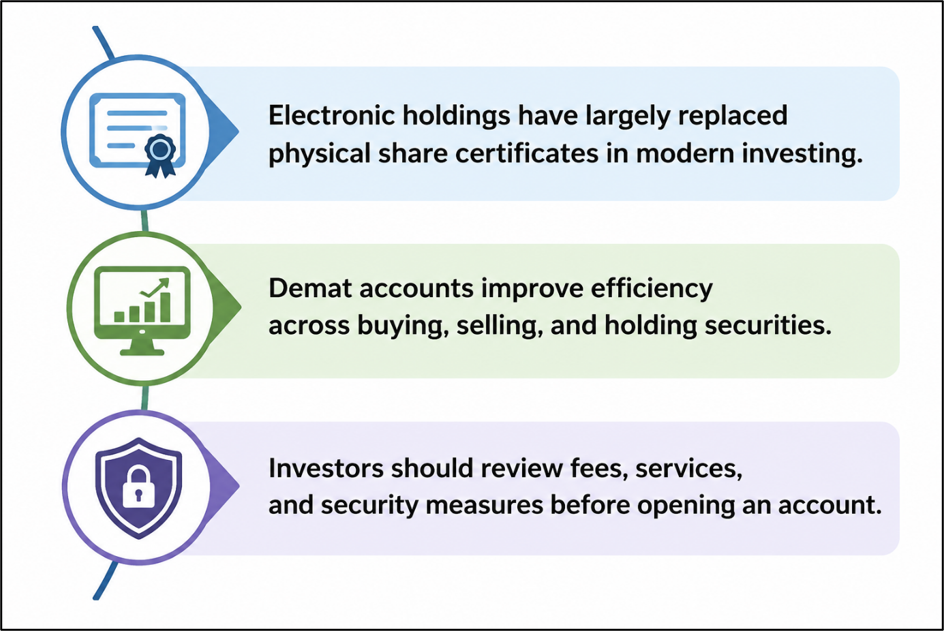
Investing in the stock market has become significantly more accessible with the digitisation of financial services. One of the most important requirements for participating in the securities market is a Demat account. Short for “dematerialised account,” it allows investors to hold shares and other securities in electronic form, eliminating the need for physical certificates.
For individuals entering the stock market for the first time, understanding how a Demat account works is an essential step toward making informed investment decisions.
Source: Analysis by Kalkine
What Is a Demat Account?
A Demat account functions as a digital repository for securities such as shares, bonds, exchange-traded funds (ETFs), mutual fund units, government securities, and other financial instruments. Instead of receiving paper certificates as proof of ownership, investors hold these assets electronically in their Demat accounts.
The introduction of the Demat system has reduced paperwork, simplified transfers, and lowered the risks associated with loss, theft, or damage of physical certificates.
How Does a Demat Account Work?
A Demat account acts as a secure electronic vault for an investor’s holdings. When an investor purchases shares through a trading platform, the purchased securities are credited to the Demat account after settlement. Similarly, when shares are sold, the securities are debited from the account.
The account records all holdings and transactions, allowing investors to track their investments efficiently. This digital structure helps maintain transparency and improves operational efficiency across the securities market.
Key Participants in the Demat Ecosystem
Several entities work together to facilitate Demat account operations:
Depositories: The Backbone of Electronic Holdings
Depositories are institutions that hold securities in electronic form. They maintain records of ownership and facilitate the transfer of securities between investors.
Depository Participants: The Investor Interface
Depository Participants (DPs) act as intermediaries between investors and depositories. Banks, brokerage firms, and financial institutions commonly serve as DPs, providing account-opening and account-management services.
Trading Accounts: The Transaction Gateway
While a Demat account stores securities, a trading account is used to place buy and sell orders in the market. Investors typically link their Demat and trading accounts to enable seamless transactions.
Benefits of Having a Demat Account
Convenience and Easy Access
Investors can view and manage their holdings online from a single platform, making portfolio monitoring more efficient.
Faster Settlement Process
Electronic transfers reduce settlement timelines and simplify the process of buying and selling securities.
Reduced Paperwork
The shift from physical certificates to electronic records significantly lowers documentation requirements.
Enhanced Security
Electronic holdings minimise risks related to loss, forgery, theft, or damage of physical share certificates.
Simplified Corporate Actions
Dividends, bonus shares, stock splits, and other corporate actions are generally processed electronically and credited directly to eligible investors.
Opening a Demat Account
Opening a Demat account typically involves selecting a registered Depository Participant, completing the account-opening process, submitting identity and address documents, and fulfilling applicable verification requirements.
Many institutions now offer digital onboarding, enabling investors to complete the process online. Once approved, the Demat account can be linked to a trading account and bank account for investment transactions.
Things Investors Should Consider
While Demat accounts offer several advantages, investors should compare account-related charges, annual maintenance fees, transaction costs, and service quality before choosing a provider.
Understanding the fee structure and available services can help investors select an account that aligns with their investment objectives and transaction frequency.
The Growing Importance of Digital Investing
As financial markets continue to embrace digital infrastructure, Demat accounts remain central to the investment process. They simplify ownership tracking, facilitate transactions, and support participation across a wide range of financial instruments.
For new investors, understanding how a Demat account operates can provide a stronger foundation for navigating the stock market and managing investments effectively.
Key Risks to Consider
- Account maintenance and transaction charges may affect overall investment costs.
- Cybersecurity threats remain a concern for digital financial platforms.
- Operational errors can lead to transaction delays or discrepancies.
- Inactive accounts may attract penalties or additional charges.
Summary
A Demat account enables investors to hold securities electronically and serves as a core component of modern stock market participation. It simplifies ownership management, supports efficient transactions, reduces paperwork, and enhances security compared with physical certificates. Understanding how Demat accounts function can help first-time investors navigate the market more effectively and make informed investment decisions.
FAQs
Q: What is the primary purpose of a Demat account?
A: A Demat account stores securities electronically, allowing investors to hold and manage investments without physical certificates.
Q: Can I invest in stocks without a Demat account?
A: For most listed securities transactions, a Demat account is required to hold shares electronically after settlement.
Q: Is a trading account the same as a Demat account?
A: No. A trading account executes transactions, while a Demat account stores securities purchased through those transactions.