

Highlights
- Form 10C helps EPS members claim benefits or preserve pension eligibility.
- Incorrect handling of Form 10C may affect future pension entitlements.
- Service history and EPS records should be verified before filing claims.
Many Employees’ Provident Fund (EPF) subscribers focus primarily on their provident fund balance while overlooking the pension component linked to the Employees’ Pension Scheme (EPS).
However, for workers changing jobs, leaving employment or planning retirement, Form 10C can become one of the most important documents they file. The form plays a key role in preserving pension benefits, claiming eligible withdrawals and maintaining continuity of pensionable service under the EPS framework.
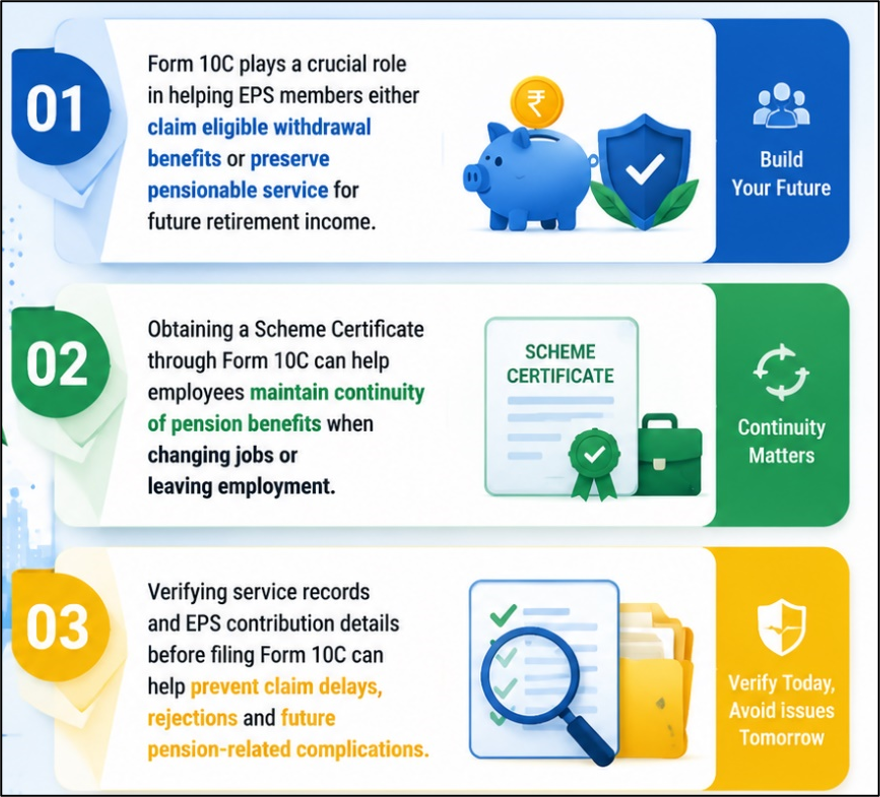
Source: Analysis by Kalkine
Understanding the Purpose of Form 10C
Form 10C is used by members of the Employees’ Pension Scheme to either claim a withdrawal benefit or obtain a Scheme Certificate. The choice available to a member depends largely on age and total pensionable service. While many employees are familiar with EPF withdrawals, fewer understand that the pension component follows different rules and requires separate action through Form 10C.
The form helps ensure that pension contributions accumulated during employment are properly accounted for rather than remaining inactive within the pension system.
Why Service Length Matters
The importance of Form 10C is closely linked to the number of years an employee has contributed to the pension scheme. Employees with less than 10 years of eligible service may be able to claim a withdrawal benefit under specific conditions. Those who have completed 10 years or more of pensionable service generally need to preserve their service history through a Scheme Certificate rather than withdrawing benefits.
Because pension eligibility under EPS is tied to service duration, maintaining accurate records becomes critical. A missing employment period or incorrect service history can affect future pension claims.
The Value of a Scheme Certificate
A Scheme Certificate serves as evidence of pensionable service and allows employees to carry forward their accumulated service when they change jobs. This document can become particularly important for individuals who move between employers several times during their careers.
By preserving service history, a Scheme Certificate helps ensure that eligible service years are counted toward future pension benefits. Employees who fail to secure the certificate when required may encounter difficulties establishing their pension records later.
Many Employees Overlook Their EPS Contributions
A common misconception among employees is that the entire employer contribution goes into the EPF account. In reality, a portion of the employer’s contribution is directed towards the Employees’ Pension Scheme. As a result, pension benefits accumulate separately from the provident fund balance.
Because the EPS portion is not reflected in the same manner as EPF savings, many workers become aware of it only when they approach retirement or attempt to withdraw benefits after leaving employment.
Data Accuracy Is Essential
Errors in pension records can create complications during claim processing. Incorrect dates of joining or exit, missing EPS contributions, name mismatches and incomplete service records may delay pension claims or result in rejections. Industry experts frequently advise employees to review their EPFO records periodically to ensure accuracy.
Even minor discrepancies can create administrative hurdles when filing Form 10C or applying for pension benefits later in life.
Filing the Form at the Right Time
The timing of Form 10C submission can affect the type of benefit available. Employees leaving service before completing 10 years of pensionable service may have withdrawal options, while those with longer service histories may need to preserve benefits through a Scheme Certificate. Understanding eligibility rules before filing can help prevent mistakes that may affect retirement planning.
Members can generally submit the form through EPFO's online platform or follow offline procedures where applicable.
Why Form 10C Deserves Attention
Retirement planning often focuses on investment returns and savings accumulation, but pension benefits can also contribute to long-term financial security. Form 10C acts as a bridge between employment history and future pension eligibility. Proper filing helps ensure that pension contributions are either withdrawn under applicable rules or preserved for future retirement income.
For many EPF subscribers, the form may determine whether years of pensionable service remain recognised when they eventually become eligible for pension benefits.
Key Risks
- Incorrect service records may delay pension claim processing.
- Missing EPS contributions can affect pension eligibility calculations.
- Failure to obtain a Scheme Certificate may complicate future claims.
- Data mismatches can result in claim rejection or verification requests.
Summary
Form 10C is an important document under the Employees’ Pension Scheme that helps members either claim eligible withdrawal benefits or preserve pensionable service through a Scheme Certificate. The form becomes especially significant when changing jobs, leaving employment or planning retirement. Ensuring accurate EPS records and understanding eligibility rules can help employees protect future pension benefits and avoid claim-related complications.
FAQs
Q: What is Form 10C used for under the EPS system?
A: It is used to claim withdrawal benefits or obtain a Scheme Certificate for pensionable service.
Q: Why is a Scheme Certificate important for employees?
A: It preserves pensionable service history and helps establish future pension eligibility.
Q: Can incorrect EPFO records affect pension claims?
A: Yes, errors in service history or contribution records may delay or disrupt pension processing.