

Highlights
- Revised ITR forms include additional disclosure requirements for certain taxpayers.
- Changes aim to simplify reporting for some taxpayers while expanding information capture.
- Accurate reporting of income and assets remains essential during tax filing.
Every assessment year brings procedural and reporting changes that taxpayers must understand before filing their income tax returns. The latest set of Income Tax Return (ITR) forms introduces several modifications aimed at improving disclosures, simplifying compliance for some categories of taxpayers, and enhancing information available to tax authorities.
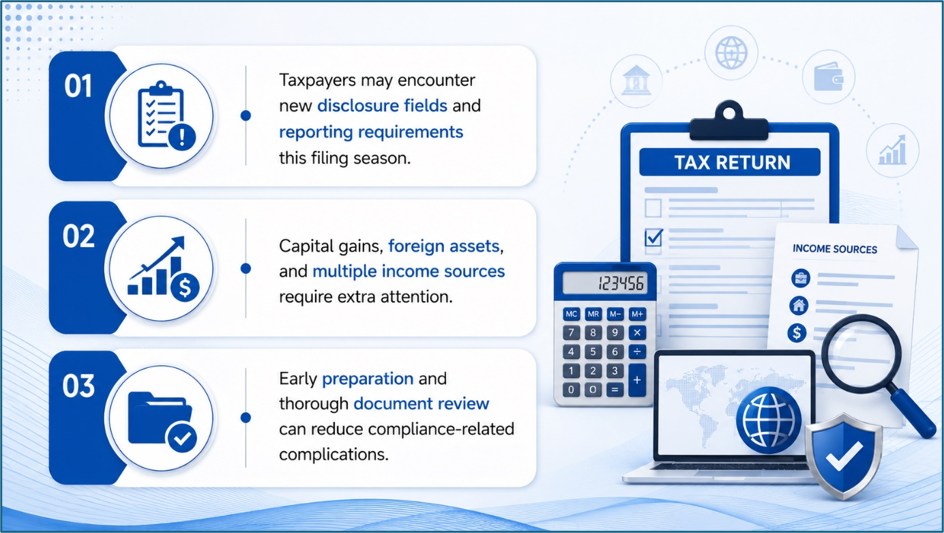
While the basic purpose of filing returns remains unchanged, taxpayers may notice new reporting fields and revised disclosure requirements depending on their income sources and filing category.
Understanding these changes before beginning the filing process can help reduce errors and avoid last-minute complications.
 Source: Analysis by Kalkine
Why ITR Forms Are Updated Periodically
Income tax return forms are revised periodically to align with amendments in tax laws, administrative requirements, and evolving reporting standards.
Changes may be introduced to capture additional information, improve transparency, streamline compliance procedures, or accommodate new categories of income and deductions.
As financial transactions become increasingly digital and interconnected, tax reporting frameworks continue to evolve to reflect these developments.
Expanded Disclosure Requirements
One of the notable trends in recent ITR updates is the expansion of disclosure requirements.
Taxpayers may be required to provide more detailed information regarding income sources, deductions, exemptions, investments, and financial transactions. Additional disclosures help ensure consistency between taxpayer declarations and information available through various reporting mechanisms.
Individuals should carefully review each section of the applicable ITR form to determine whether any newly introduced reporting fields apply to their financial situation.
Greater Focus on Capital Gains Reporting
Investors earning income from shares, mutual funds, bonds, property transactions, or other capital assets may encounter more detailed reporting requirements.
The tax treatment of capital gains often depends on factors such as holding period, asset class, and transaction date. As a result, taxpayers should maintain accurate transaction records and supporting documentation before filing returns.
Proper classification of short-term and long-term gains remains an important aspect of tax compliance.
Simplified Eligibility for Certain Taxpayers
While some reporting requirements have expanded, recent ITR revisions have also sought to simplify filing for eligible taxpayers.
Certain categories of individuals may benefit from broader eligibility criteria under specific return forms, potentially reducing the need to shift to more complex filing formats.
However, taxpayers should verify eligibility carefully before selecting an ITR form, as incorrect form selection can lead to return defects and processing delays.
Importance of Accurate Financial Reporting
Taxpayers should ensure that information reported in their returns aligns with supporting documents such as Form 16, Annual Information Statement (AIS), Tax Deducted at Source (TDS) certificates, and investment records.
Discrepancies between reported income and available tax records may result in notices, clarification requests, or delays in processing refunds.
Reviewing all financial information before submission can help improve accuracy and reduce compliance issues.
Common Areas Taxpayers Should Review
Before filing returns, taxpayers may consider reviewing the following areas:
Income Sources
Ensure that salary, interest income, rental income, business income, and investment-related income have been reported correctly.
Deductions and Exemptions
Verify claims made under applicable sections and maintain supporting documentation where required.
Capital Market Transactions
Review transaction statements carefully to ensure proper reporting of gains and losses.
Foreign Assets and Income
Taxpayers with overseas assets or foreign-source income should review applicable disclosure requirements thoroughly.
Preparing for a Smoother Filing Experience
Early preparation can help taxpayers navigate revised filing requirements more efficiently.
Collecting relevant documents, reconciling income details, reviewing tax statements, and understanding applicable disclosure requirements before filing may reduce the likelihood of errors.
Taxpayers with multiple income streams or complex financial arrangements may also consider seeking professional guidance where necessary.
Key Risks to Consider
- Incorrect ITR form selection may delay return processing.
- Incomplete disclosures can result in compliance-related queries.
- Errors in capital gains reporting may affect tax calculations.
- Mismatched income details can trigger verification requirements.
Summary
The latest ITR forms introduce a combination of expanded disclosures and filing-related adjustments. Taxpayers should pay close attention to reporting requirements relating to income, capital gains, deductions, and financial transactions. Proper documentation, accurate disclosures, and selection of the correct ITR form remain important for ensuring a smooth tax filing process and avoiding unnecessary compliance issues.
FAQs
Q: Why are ITR forms revised periodically?
A: Tax authorities update ITR forms to reflect legal changes, reporting requirements, and administrative improvements.
Q: Who should pay attention to new disclosure requirements?
A: Taxpayers with multiple income sources, investments, capital gains, or complex financial transactions should review them carefully.
Q: What is the biggest mistake taxpayers should avoid?
A: Filing with incorrect information or selecting the wrong ITR form can create processing and compliance issues.