

Highlights
- Understanding policy terms can help reduce unexpected medical expenses.
- Choosing the right hospital and room category can lower out-of-pocket costs.
- Careful review of bills and claim documents may prevent unnecessary payments.
Health insurance is designed to reduce the financial burden of medical treatment, but many policyholders are surprised when they still have to pay a portion of their hospital bill. Even when a claim is approved, expenses such as non-payable items, room rent restrictions, co-payments and policy exclusions can increase out-of-pocket spending. Understanding how health insurance claims work and taking a few precautionary steps can help patients avoid unpleasant surprises during hospitalization.
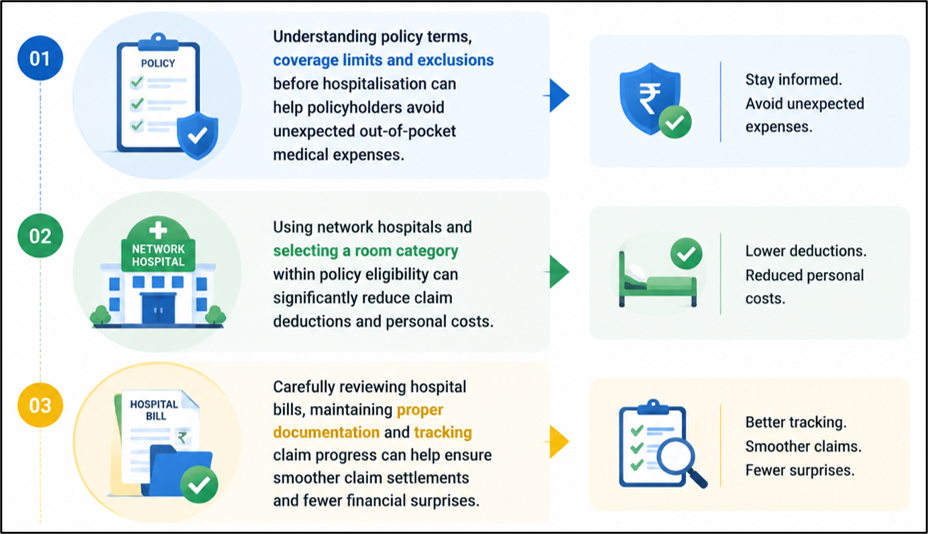
Source: Analysis by Kalkine
Know Your Policy Before Hospitalisation
Many claim-related expenses arise because policyholders are unfamiliar with the terms and conditions of their health insurance plans. Coverage limits, waiting periods, co-payment clauses, deductibles and treatment-specific restrictions can significantly affect the amount payable by the insurer.
Reviewing the policy document before a medical emergency occurs can help identify potential gaps in coverage. Understanding what is covered and what is excluded allows policyholders to prepare financially and avoid confusion during the claim process.
Use Network Hospitals Whenever Possible
Cashless treatment facilities are generally available at hospitals that are part of an insurer’s network. While cashless claims can simplify the settlement process, approval is not always automatic and may depend on policy terms and documentation.
Seeking treatment at a network hospital can reduce the need for large upfront payments and streamline communication between the hospital and insurer. However, policyholders should still verify coverage details before admission.
Pay Attention to Room Rent Eligibility
Room rent limits are among the most overlooked aspects of health insurance policies. Choosing a room category that exceeds the policy's eligibility may trigger proportionate deductions across multiple hospital charges, not just room expenses.
As a result, a decision to opt for a higher-category room can significantly increase the patient's share of the bill. Understanding room entitlement before admission can help keep costs under control.
Keep Track of Non-Payable Expenses
Not every item appearing on a hospital bill is covered by health insurance. Consumables, administrative charges, personal comfort items and certain miscellaneous expenses are often excluded from coverage.
These costs can accumulate during hospitalization and contribute to a larger-than-expected final bill. Maintaining a separate emergency fund for such expenses can provide additional financial flexibility when needed.
Review Bills Carefully Before Payment
Hospital billing errors are not uncommon. Duplicate charges, incorrect room classifications and services that were not provided can occasionally appear on bills.
Requesting an itemised statement and reviewing each charge before discharge may help identify discrepancies. Patients should also compare the hospital bill with claim settlement details provided by the insurer to understand what has been approved and what remains payable.
Maintain Proper Documentation
Claim settlements often depend on timely submission of documents such as admission records, discharge summaries, prescriptions, investigation reports and bills.
Missing or incomplete paperwork can delay approvals and reimbursement claims. Keeping both physical and digital copies of medical documents can help ensure smoother claim processing and reduce administrative complications.
Build a Health Emergency Fund
Even comprehensive health insurance policies may not cover every medical expense. Travel costs, follow-up consultations, medicines after discharge and excluded items can create additional financial pressure.
A dedicated emergency fund can help manage these expenses without disrupting long-term investments or forcing reliance on high-cost borrowing. Many financial planners consider emergency savings an important complement to health insurance coverage.
Stay Involved Throughout the Claim Process
Policyholders often assume that once a claim is submitted, the insurer and hospital will handle everything automatically. In practice, regular follow-ups may be necessary to track approvals, address queries and resolve discrepancies.
Monitoring claim progress and reviewing settlement details can help identify issues early and reduce the risk of unexpected financial obligations at discharge. Community discussions also indicate that active involvement often leads to smoother claim experiences.
Preparing Ahead Can Reduce Financial Stress
Medical emergencies are stressful enough without concerns about unexpected bills. Understanding policy conditions, choosing hospitals carefully, monitoring expenses and maintaining emergency savings can significantly reduce out-of-pocket spending during a health insurance claim.
While insurance remains an important financial safeguard, informed decision-making before and during hospitalization can help policyholders manage costs more effectively and avoid claim-related surprises.
Key Risks
- Selecting an ineligible room category can increase claim deductions.
- Non-payable expenses may raise out-of-pocket hospital costs.
- Incomplete documentation can delay claim settlement.
- Policy exclusions may reduce the insurer's final payout.
Summary
Health insurance can reduce the financial impact of hospitalization, but it may not eliminate all expenses. Room rent limits, non-payable items, co-payments and policy exclusions can increase personal spending during treatment. Understanding policy terms, using network hospitals, reviewing bills carefully and maintaining an emergency fund can help policyholders manage healthcare expenses and reduce financial surprises during the claim process.
FAQs
Q: Why do policyholders still pay part of the hospital bill despite insurance coverage?
A: Certain expenses such as exclusions, co-payments and non-payable items may not be covered.
Q: How can room selection affect a health insurance claim?
A: Choosing a room beyond policy eligibility may trigger proportionate deductions across multiple charges.
Q: Should policyholders maintain savings even if they have health insurance?
A: Yes, emergency funds can help cover expenses not reimbursed under the insurance policy.