

Highlights
- Unfiled income tax returns can attract scrutiny from tax authorities.
- Tax notices should not be ignored even if returns relate to older years.
- Timely response may help taxpayers avoid additional complications.
Many taxpayers assume that if they have missed filing Income Tax Returns (ITRs) for several years, the issue may eventually become irrelevant. However, receiving a tax notice can change that perception quickly.
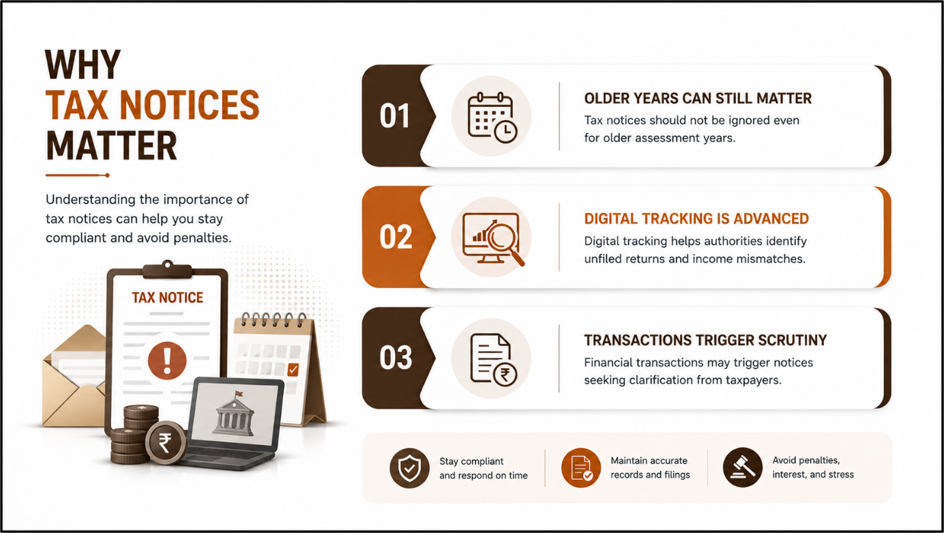
Tax authorities have increasingly relied on digital data matching and financial transaction tracking to identify discrepancies between reported income and actual financial activity. As a result, taxpayers who failed to file returns in previous years may receive notices seeking clarification regarding income, investments, or high-value transactions.
Ignoring such notices can create additional challenges and may lead to further proceedings.
Source: Analysis by Kalkine
Can You Ignore a Tax Notice for Old Returns?
A tax notice should not be ignored simply because it relates to an earlier assessment year. Tax authorities may issue notices when they identify potential mismatches, unreported income, or missing return filings based on available financial records.
Even if the taxpayer believes the issue pertains to an old period, responding within the prescribed timeline remains important. Failure to respond may result in the tax department proceeding based on available information.
The consequences can vary depending on the nature of the case and the specific provisions applicable to the assessment year involved.
Why Notices Are Being Issued
The tax department receives information from multiple sources, including banks, employers, mutual fund transactions, property registrations, securities transactions, and other financial records.
When reported financial activity appears inconsistent with tax filings or when no return has been filed despite significant transactions, the system may flag the case for review.
In some instances, notices may be issued seeking clarification rather than alleging any wrongdoing. However, taxpayers are generally expected to provide supporting documents and explanations when requested.
Understanding the Possible Consequences
Failure to address tax notices can lead to further scrutiny and potential tax demands. Depending on the circumstances, authorities may initiate assessment proceedings based on the information available to them.
Additional tax liabilities, interest charges, and penalties could arise if unreported income is identified. The exact outcome depends on the facts of each case and applicable tax provisions.
Taxpayers should therefore review the notice carefully and understand the specific information being sought before responding.
What Should Taxpayers Do?
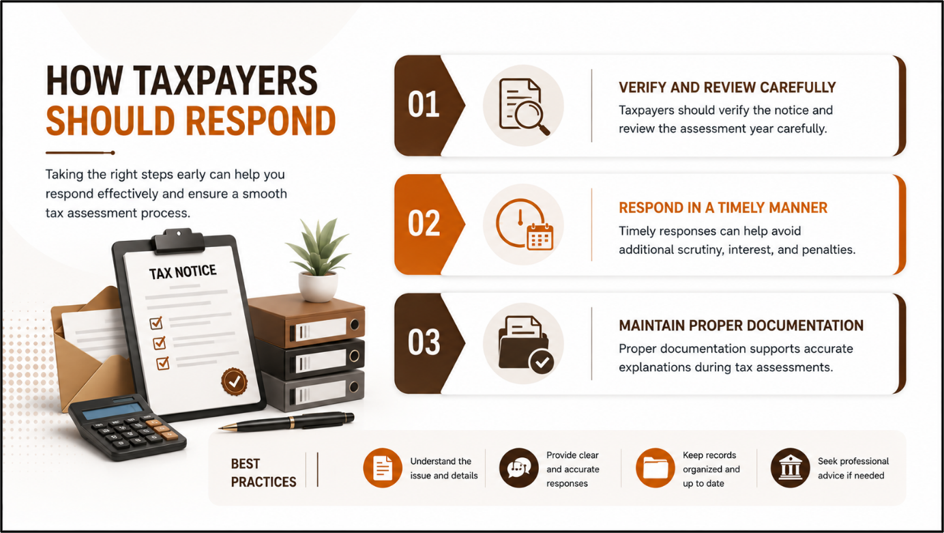
The first step is to verify the authenticity of the notice through the Income Tax Department's official channels. Taxpayers should then review the assessment year involved and gather relevant records, including income documents, bank statements, investment details, and previous tax filings.
Professional assistance may be useful in situations involving multiple years, complex transactions, or disputes regarding income reporting.
Maintaining complete documentation can help taxpayers respond accurately and reduce the possibility of misunderstandings during the assessment process.
Importance of Timely Compliance
Tax compliance requirements do not necessarily disappear with the passage of time. While statutory limitations and procedural provisions may apply in certain cases, taxpayers should not assume that old filing obligations can be ignored after receiving a notice.
Responding promptly and providing accurate information often helps ensure that issues are addressed through the appropriate legal process.
As tax administration becomes increasingly data-driven, maintaining proper records and filing returns on time remains an important aspect of financial compliance.
Digital Tracking Has Increased Transparency
Advancements in technology have enabled tax authorities to access and analyze a wider range of financial information than before. High-value transactions, investments, and income streams are increasingly linked through digital reporting systems.
This has reduced the likelihood that significant financial activity will remain outside the tax reporting framework for extended periods.
Consequently, taxpayers who have missed filings in previous years may find it beneficial to review their tax position and address outstanding compliance requirements when necessary.
Source: Analysis by Kalkine
Key Risks
- Ignoring notices may trigger additional tax proceedings.
- Interest and penalties can increase overall liabilities.
- Missing documents may complicate response submissions.
- Unreported income could attract further scrutiny.
Summary
Receiving a tax notice for unfiled or older Income Tax Returns should not be treated casually. Tax authorities increasingly use digital data and transaction records to identify discrepancies and compliance gaps. Ignoring notices may result in additional assessments, tax demands, interest, or penalties. Taxpayers should verify the notice, gather relevant documents, and respond within the prescribed timeline to address the matter appropriately and avoid further complications.
FAQs
Q: Can a taxpayer ignore a notice related to an old ITR year?
A: No. Tax notices should be reviewed and addressed within the prescribed timeline regardless of the assessment year involved.
Q: Why might someone receive a notice despite not filing returns?
A: Financial transactions reported by institutions may indicate taxable activity requiring clarification from the taxpayer.
Q: What documents are useful when responding to a tax notice?
A: Income records, bank statements, investment details, and previous tax documents can help support the response.