

Highlights
- Incorrect information in credit reports can affect loan approval decisions.
- Borrowers should review credit records regularly for reporting errors.
- Even small inaccuracies may influence creditworthiness assessments.
A credit report plays a significant role in determining whether a lender approves a loan application. Banks and financial institutions rely on credit information to evaluate a borrower's repayment history, existing obligations and overall credit behaviour.
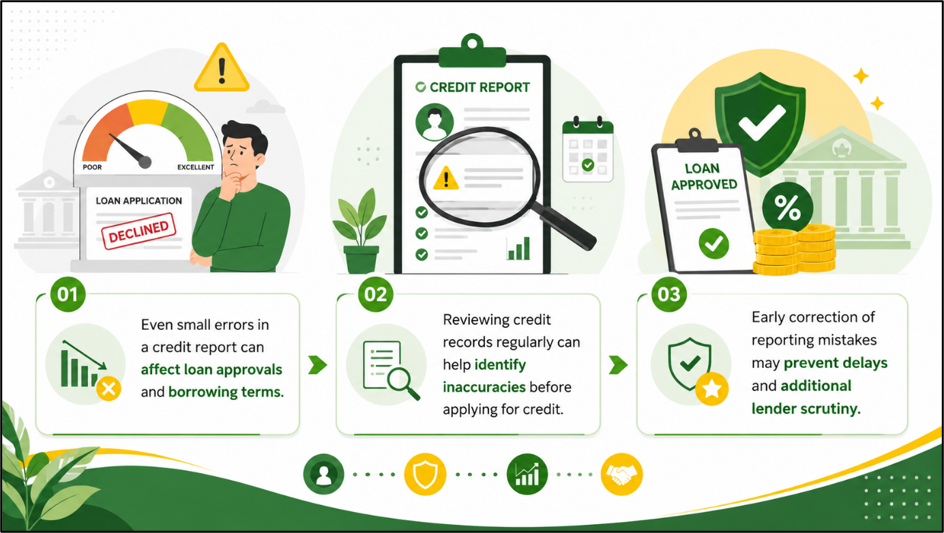
Because lenders use this information extensively, even a minor error in a credit report can potentially affect borrowing prospects. Regularly reviewing credit reports can help identify inaccuracies before applying for a loan, credit card or other financial product.
Source: Analysis by Kalkine
The Common Mistake Many Borrowers Overlook
One of the most overlooked issues is failing to check credit reports for incorrect entries. Borrowers often assume that the information reported by lenders and credit bureaus is accurate.
However, errors can occur due to:
- Incorrect personal information.
- Duplicate loan entries.
- Wrong account status updates.
- Delayed payment reporting corrections.
- Loans incorrectly linked to an individual.
If left unaddressed, such inaccuracies may affect a lender's assessment during the loan approval process.
How Errors Can Impact Loan Applications
Lenders review credit reports to understand a borrower's financial obligations and repayment track record. Incorrect information may create a misleading picture of financial health.
For example, a report showing an outstanding loan that has already been repaid could increase perceived debt levels. Similarly, an incorrectly reported missed payment may affect the lender's evaluation of repayment behaviour.
As a result, borrowers may face:
- Delayed approvals.
- Additional verification requests.
- Reduced loan eligibility.
- Higher borrowing costs in some cases.
Reviewing Your Credit Report Before Applying
Checking a credit report before submitting a loan application can help identify potential issues early.
Borrowers should verify:
- Personal details.
- Active loan accounts.
- Closed loan records.
- Credit card information.
- Repayment history entries.
Any discrepancy should be reviewed carefully and addressed through the relevant credit bureau or financial institution.
Why Early Detection Is Important
Correcting credit report errors can take time. If a borrower discovers an issue only after applying for a loan, the approval process may be delayed while the matter is investigated. By reviewing records in advance, individuals can initiate corrections before lenders begin assessing their applications.
This proactive approach may reduce the risk of unexpected complications during the borrowing process.
Maintaining Healthy Credit Records
Apart from identifying errors, borrowers can support their credit profile by:
- Paying dues on time.
- Monitoring outstanding balances.
- Avoiding unnecessary credit applications.
- Keeping records of loan closures.
- Reviewing credit reports periodically.
These practices can help ensure that credit reports accurately reflect financial behaviour.
What to Do If You Find an Error
If an inaccuracy is identified, borrowers should gather supporting documents and contact the relevant credit bureau or lender. Documentation such as loan closure certificates, repayment records and account statements may help support correction requests.
Following up until the issue is resolved can help ensure that future lenders receive updated information.
Key Risks to Watch
- Incorrect repayment records may affect credit assessments.
- Duplicate loan entries can inflate apparent debt levels.
- Unresolved report errors may delay loan approvals.
- Outdated account information can create borrowing challenges.
Summary
Credit reports are an important part of the loan approval process, making accuracy essential. Errors such as incorrect repayment records, duplicate accounts or outdated loan information can affect a lender's assessment of a borrower's financial profile. Reviewing credit reports regularly and addressing discrepancies before applying for credit can help reduce approval delays and improve the overall borrowing experience.
FAQs
Q: Why is a credit report important for loan applications?
A: Lenders use credit reports to evaluate repayment history, existing debt obligations and overall credit behaviour.
Q: Can a reporting error affect loan approval?
A: Yes. Incorrect information may influence how lenders assess creditworthiness and repayment capacity.
Q: How often should borrowers check their credit reports?
A: Periodic reviews, especially before applying for a loan, can help identify and correct inaccuracies.