

Highlights
- Life insurance policies remain active during the applicable grace period.
- Missing a premium does not automatically result in policy termination.
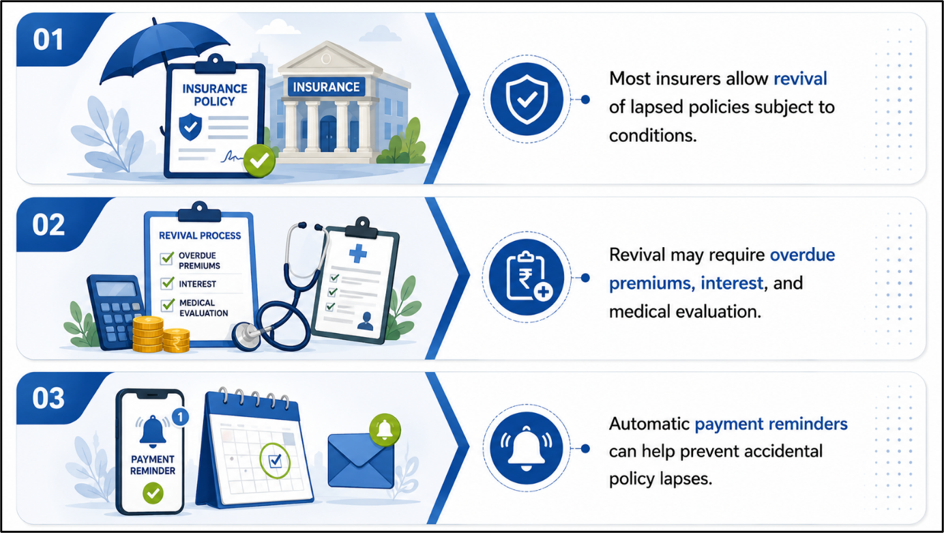
- Most insurers allow revival of lapsed policies subject to conditions.
Life insurance provides financial protection to policyholders and their families, but maintaining that protection depends on timely premium payments. Missing a premium can create concern among policyholders who fear that their coverage may end immediately.
However, a missed premium payment does not usually result in an instant policy lapse. Insurers generally provide a grace period during which the policy remains active, allowing policyholders additional time to make the payment without losing coverage.
Understanding how grace periods, lapses, and revival provisions work can help policyholders avoid unintentionally losing valuable insurance protection.
 Source: Analysis by Kalkine
The Role of the Grace Period
When a premium is not paid by the due date, insurers typically offer a grace period before taking further action.
For policies with monthly premium payments, the grace period is generally 15 days. For quarterly, half-yearly, or annual premium payment modes, insurers usually provide a 30-day grace period. During this period, the policy continues to remain in force despite the missed payment.
This means the life cover generally remains available, giving policyholders time to regularize the payment without affecting their policy benefits.
When Does a Policy Actually Lapse?
A life insurance policy is typically considered lapsed when the premium remains unpaid even after the grace period expires.
Once a policy lapses, the insurer may terminate or suspend coverage depending on the type of insurance plan. In pure term insurance plans, a lapse generally results in the loss of life cover until the policy is revived. Claims arising during the lapse period are usually not payable.
Therefore, policyholders should not assume that missing multiple premiums is necessary before a lapse occurs. In many cases, failing to pay even a single premium beyond the grace period can trigger a lapse.
Different Policies May Be Treated Differently
The impact of non-payment can vary depending on the type of life insurance policy.
For traditional savings-oriented life insurance plans, policies may acquire a paid-up status if a minimum number of premiums have already been paid. Under a paid-up policy, the insurance cover continues but at a reduced level.
If the minimum premium payment requirement has not been met, the policy may lapse completely, resulting in the loss of benefits associated with the plan.
Term insurance policies generally offer less flexibility because they are designed primarily for risk protection rather than savings accumulation.
Can a Lapsed Policy Be Revived?
In many cases, insurers allow policyholders to revive a lapsed policy after it has become inactive.
The revival process usually involves paying overdue premiums along with applicable interest or charges. Depending on the insurer's requirements and the duration of the lapse, policyholders may also need to submit health declarations or undergo medical examinations.
Industry experts note that revival windows often extend for several years from the date of the first unpaid premium, although the exact period varies across insurers and products.
Reviving a policy can restore the original benefits, making it an important option for those who have missed payments due to temporary financial difficulties.
Why Policyholders Should Monitor Payments Carefully
Missed premium payments often occur because of overlooked reminders, bank mandate failures, account changes, or temporary financial constraints.
Setting up automatic payments, monitoring bank mandates, and keeping contact information updated with the insurer can help reduce the risk of accidental lapses. Regularly reviewing policy status also helps ensure that coverage remains uninterrupted.
Given the financial protection life insurance provides, maintaining continuity is generally preferable to dealing with policy lapses and revival procedures later.
Key Risks
- Coverage may terminate after the grace period expires.
- Claims during a lapse period may be rejected.
- Revival may require medical evaluation and additional costs.
- Reduced benefits may apply under paid-up policies.
Summary
Missing a life insurance premium does not usually lead to an immediate policy lapse. Most insurers provide a grace period of 15 to 30 days depending on the payment frequency. If the premium remains unpaid after this period, the policy may lapse or become paid-up, depending on the policy type. Many insurers allow policy revival through payment of overdue premiums and compliance with specified conditions.
FAQs
Q: Does a life insurance policy lapse immediately after missing a premium?
A: No, insurers generally provide a grace period during which the policy remains active despite non-payment.
Q: How long is the grace period for life insurance premiums?
A: It is typically 15 days for monthly premiums and 30 days for other payment frequencies.
Q: Can a lapsed life insurance policy be restored?
A: Yes, many insurers allow policy revival after payment of overdue premiums and fulfillment of applicable requirements.