

Highlights
- Cash loans above INR 20,000 can attract significant tax penalties.
- Informal borrowing may create legal and repayment complications.
- Proper documentation helps avoid future disputes and scrutiny.
When financial emergencies arise, many people turn to friends or relatives for immediate assistance. Borrowing from someone you know often appears easier than approaching a bank because there is usually no lengthy approval process, paperwork, or interest burden.
However, while borrowing money from a friend may seem harmless, the transaction can create financial, legal, and tax-related complications if it is not structured properly. In certain situations, the cost of non-compliance may exceed the value of the loan itself.
Why Informal Loans Can Become Problematic
Personal loans between friends are generally based on trust rather than formal agreements. Although this may simplify the transaction initially, it can create uncertainty later.
Lack Of Clear Repayment Terms
Unlike banks and regulated lenders, friends may not specify repayment schedules, interest obligations, or consequences for delays. What appears to be a simple understanding can later become a source of disagreement if both parties have different expectations regarding repayment timelines.
Without written records, resolving disputes may become difficult.
Financial Stress Does Not Disappear
Borrowing from a friend does not eliminate the underlying financial challenge. It simply replaces one obligation with another. If the borrower continues facing financial difficulties, the new debt may strain both finances and personal relationships.
The INR 20,000 Cash Loan Rule
One of the most overlooked aspects of borrowing from friends is the tax treatment of cash transactions.
Cash Loans Above INR 20,000 Can Trigger Penalties
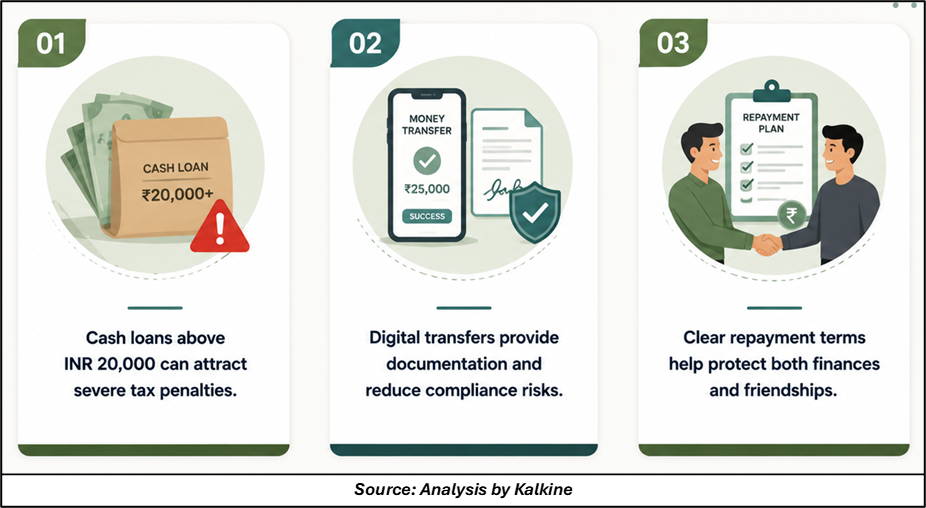
Under the Income Tax Act, accepting or repaying a loan of INR 20,000 or more in cash is generally prohibited. The rule applies even when the transaction takes place between friends or family members. Tax authorities encourage such transactions to occur through banking channels including bank transfers, cheques, drafts, or electronic payment methods.
Penalty Can Equal The Loan Amount
A violation may attract a penalty equal to the amount of the loan involved. For example, accepting a cash loan of INR 1 lakh could potentially expose the borrower to a penalty of INR 1 lakh. This means the financial consequence can be as large as the amount borrowed.
Why Digital Transfers Are Safer
Better Documentation - Bank transfers, UPI transactions, and account-payee cheques create an audit trail that helps establish the nature of the transaction. Proper records can be useful if tax authorities seek clarification regarding fund movements.
Reduced Risk Of Misunderstanding - Digital records provide clarity regarding the loan amount, transfer date, and repayment details. This can help both parties avoid future disagreements and maintain transparency.
Legal Considerations Matter
Documentation Protects Both Parties - Experts often recommend preparing a simple written agreement when substantial amounts are involved. The agreement can include the amount borrowed, repayment schedule, and any other mutually agreed conditions. Such documentation can serve as evidence if disputes arise later.
Courts Have Examined Cash Loan Disputes
Judicial rulings have highlighted issues surrounding large cash loans that violate prescribed limits. Such cases demonstrate the importance of complying with statutory requirements and maintaining proper records.
Better Alternatives To Informal Borrowing
Before borrowing from friends, individuals may consider discussing repayment restructuring with existing lenders, exploring formal credit products, or seeking professional financial counselling. These alternatives may provide clearer terms and preserve personal relationships.
If borrowing from a friend remains necessary, both parties should prioritise transparency, documentation, and digital payment methods.
Protecting Friendships And Finances
Financial arrangements can affect personal relationships when expectations are not clearly communicated. Borrowers should ensure that repayment plans are realistic and agreed upon in advance.
A properly documented loan transferred through recognised banking channels can help minimise misunderstandings and reduce compliance risks. The objective should be to address the financial need without creating additional legal or tax complications.
Key Risks
- Cash loans above INR 20,000 may attract 100% penalties.
- Lack of documentation can create repayment disputes.
- Informal borrowing may strain personal relationships.
- Non-compliant transactions can invite tax scrutiny.
Summary
Borrowing money from a friend may provide quick access to funds, but it is not always risk-free. Cash loans above INR 20,000 can attract substantial tax penalties, while undocumented arrangements may lead to misunderstandings and legal complications. Using banking channels, maintaining proper records, and clearly defining repayment terms can help borrowers manage emergencies without creating larger financial problems later.
FAQs
Q: Can I legally borrow money from a friend in India?
A: Yes, borrowing is permitted, but large transactions should be conducted through banking channels and properly documented.
Q: What happens if I accept a cash loan above INR 20,000?
A: The transaction may violate income tax provisions and attract penalties equal to the loan amount.
Q: Is money borrowed from a friend treated as taxable income?
A: Genuine loans are generally not taxable income, provided they are properly documented and repayable.