

Highlights
- Income tax refunds are usually issued after successful ITR processing.
- Verification and data mismatches can delay refund credit timelines.
- Taxpayers can track refund status through official tax portals.
The income tax return (ITR) filing season often raises one common question among taxpayers: how long does it take to receive an income tax refund after filing a return? While many taxpayers expect refunds soon after filing, the actual timeline depends on several procedural and compliance-related factors.
An income tax refund arises when the tax paid by a taxpayer through Tax Deducted at Source (TDS), advance tax, self-assessment tax, or other mechanisms exceeds the actual tax liability for the financial year. Once the Income Tax Department processes the return and confirms the excess payment, the refund is credited to the taxpayer's bank account.
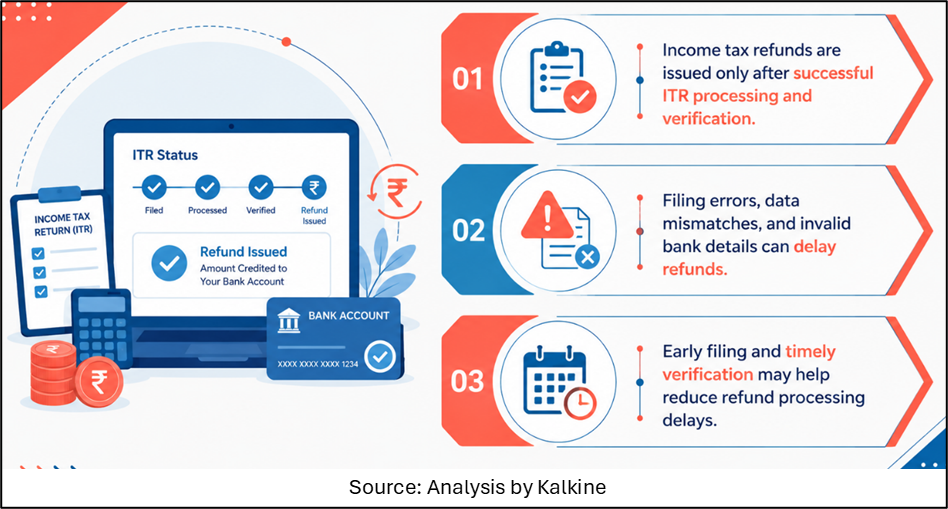
Understanding The Refund Process
The refund process begins after a taxpayer files an ITR and completes the mandatory verification process. Verification can be done electronically through various approved methods or by submitting a signed physical verification form where applicable.
After successful verification, the Income Tax Department processes the return by reviewing income details, deductions claimed, tax payments, and information available from various reporting sources. If the department determines that excess tax has been paid, the refund is approved and issued.
The refund amount is generally transferred electronically to the bank account linked and validated with the taxpayer's PAN details.
Typical Refund Timeline
There is no fixed statutory timeline applicable to every taxpayer. However, refunds are generally issued after the return has been processed successfully.
In many cases, taxpayers may receive refunds within a few weeks after filing and verification. However, the timeline can vary depending on factors such as return complexity, filing accuracy, verification status, and the volume of returns being processed during the filing season.
Returns filed early and with accurate information may experience faster processing compared to those requiring additional checks or clarifications.
Factors That Can Affect Refund Speed
Several factors influence how quickly a refund reaches a taxpayer's account.
Filing Accuracy Matters
Incorrect income reporting, mismatched TDS details, errors in bank account information, or inconsistencies between the return and tax records can result in additional scrutiny and delays.
Taxpayers are advised to cross-check information available in Form 26AS, Annual Information Statement (AIS), and Taxpayer Information Summary (TIS) before filing.
Verification Is Essential
A return is not considered complete until it has been verified. Delays in verification can directly postpone processing and refund issuance.
Prompt verification after filing can help ensure that the return enters the processing queue without unnecessary delay.
Peak Filing Season Pressure
Processing timelines may increase during periods when a large number of taxpayers submit returns close to filing deadlines. Higher filing volumes can lead to longer processing queues.
Bank Account Validation
Refunds are credited only to pre-validated bank accounts linked with the taxpayer's PAN. If account details are incorrect or not validated, the refund may be delayed or rejected.
How To Track Your Refund Status
Taxpayers can monitor the status of their refund through the income tax e-filing platform. Various status updates are available during the process, including return filed, return verified, return processed, refund issued, and refund credited.
Tracking status periodically can help taxpayers identify issues that may require attention, such as verification pending or bank account validation problems.
In cases where a refund has been issued but not received, taxpayers should review bank account details and any communication received from the tax authorities.
What To Do If The Refund Is Delayed?
A delay does not always indicate a problem. Processing may take additional time due to routine verification checks or high filing volumes.
However, taxpayers should consider the following steps if a refund is delayed:
- Confirm that the ITR has been successfully verified.
- Check whether the bank account is pre-validated.
- Review tax credit statements for mismatches.
- Monitor communications from the Income Tax Department.
If discrepancies are identified, taxpayers may need to respond to notices or submit clarifications to facilitate processing.
Why Early Filing Can Help
Filing returns well before the deadline may reduce the chances of processing delays associated with peak filing periods. Early filers also have additional time to correct errors, respond to notices, and address documentation issues if required.
While early filing does not guarantee a faster refund, it can help avoid delays caused by last-minute submissions and heavy system workloads.
Key Risks
- Incorrect bank account details may delay refund credit.
- Unverified returns cannot proceed for processing.
- TDS mismatches can trigger additional review.
- High filing volumes may extend processing timelines.
Summary
Income tax refunds are issued after the Income Tax Department processes and verifies a taxpayer's return. While many refunds are credited within weeks, timelines vary based on filing accuracy, verification completion, tax data consistency, and seasonal processing volumes. Ensuring correct information, timely verification, and validated bank account details can help reduce delays and support smoother refund processing.
FAQs
Q: How soon can I receive my income tax refund after filing ITR?
A: Refund timelines vary, but many taxpayers receive refunds within weeks after successful verification and return processing.
Q: Can refund processing begin without ITR verification?
A: No. The return must be verified before processing starts and refund determination can proceed.
Q: Why has my refund not been credited despite filing the return?
A: Delays may arise from verification issues, data mismatches, invalid bank details, or processing backlogs.