

Highlights
- Ownership rights differ significantly between joint ownership and co-ownership structures.
- Property sale rights depend on the nature of ownership and ownership share.
- Selling a jointly held property without consent may face legal restrictions.
Property ownership involving more than one individual is common in India, particularly among spouses, family members, business partners, and legal heirs. However, many property owners use the terms "joint ownership" and "co-ownership" interchangeably, even though the legal implications may differ.
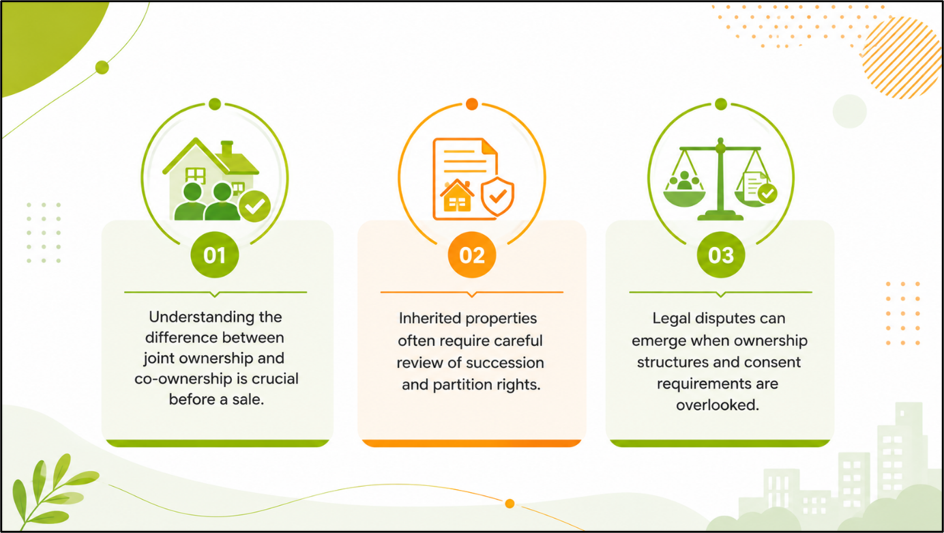
Understanding the distinction becomes important when one owner wishes to sell, transfer, or otherwise deal with the property independently.
 Source: Analysis by Kalkine
What Is Joint Ownership?
Joint ownership generally refers to a situation where two or more individuals collectively own a property. The rights and obligations of the owners are usually defined by the ownership structure and title documents.
In many joint ownership arrangements, all owners possess equal rights in the property unless specified otherwise. Decisions involving sale, transfer, mortgage, or significant alteration of the property often require participation or consent from all joint owners.
As a result, one owner may not be able to transfer the entire property without the approval of the other owners.
What Is Co-Ownership?
Co-ownership refers to a property arrangement where multiple individuals hold identifiable ownership interests or shares in a property.
The ownership share may be equal or unequal, depending on the purchase agreement, inheritance arrangement, or title documentation. Each co-owner typically has rights relating to their respective share of the property.
The extent of these rights depends on applicable laws, ownership records, and the specific circumstances of the property arrangement.
Can One Owner Sell The Property Alone?
In Joint Ownership Cases
Where property is jointly owned and ownership rights are inseparable, one owner generally cannot sell the entire property independently without the consent of the other joint owner or owners.
Since all owners have a legal interest in the property, a complete transfer typically requires execution of the sale transaction by all parties whose names appear on the title.
Any attempt to transfer ownership without required consent may lead to legal disputes and challenges regarding the validity of the transaction.
In Co-Ownership Arrangements
A co-owner may, in certain situations, transfer or sell their individual share in the property.
However, such a transaction does not usually permit the sale of the entire property without the consent of other co-owners. The buyer generally acquires only the share held by the selling co-owner, subject to the rights of the remaining owners.
Practical challenges may arise because prospective buyers often prefer acquiring clear ownership rather than an undivided share in a property.
Importance Of Ownership Documents
The ability to sell a property interest depends significantly on title documents and ownership records.
Documents such as sale deeds, gift deeds, partition deeds, succession records, and property agreements can clarify:
Ownership Structure
Whether the property is jointly owned, inherited, partitioned, or held in specified ownership shares. Whether each owner's stake is equal or defined in a specific proportion.
Transfer Restrictions
Whether contractual conditions or legal obligations restrict transfers without the approval of other owners.
Before initiating a transaction, property owners often review these documents carefully to understand their rights and obligations.
Property Inherited By Legal Heirs
Inherited properties frequently create co-ownership arrangements among legal heirs.
In such cases, each heir may have an undivided interest in the property until a formal partition takes place. Selling inherited property without addressing the rights of other heirs can lead to disputes and delays.
Partition or family settlement agreements are often used to clearly define ownership rights before a sale is undertaken.
Practical Challenges In Selling A Share
Even where a co-owner is legally entitled to transfer an ownership interest, finding a buyer can be difficult.
Potential purchasers may be reluctant to acquire a partial interest in a property where possession, usage rights, and future partition remain uncertain. This can affect marketability and transaction timelines.
As a result, many co-owners prefer reaching a mutual agreement regarding sale or partition before proceeding with a transaction.
Why Legal Advice Is Important
Property ownership structures can vary significantly depending on the acquisition method, title records, succession laws, and contractual arrangements.
Before attempting to sell a jointly held or co-owned property, owners may benefit from obtaining legal advice to understand transfer rights, documentation requirements, and potential risks associated with the transaction.
Key Risks To Consider
- Selling without required consent may trigger legal disputes.
- Ownership documents may impose transfer restrictions.
- Buyers may avoid purchasing undivided property shares.
- Inherited property transactions can face succession-related challenges.
Summary
Whether one owner can sell a property without another owner's approval depends largely on the ownership structure. In joint ownership arrangements, consent from all owners is generally required to sell the entire property. In co-ownership situations, an owner may be able to transfer their individual share, but not the entire property. Title documents, ownership records, and applicable legal provisions play a critical role in determining transfer rights, making legal review important before any transaction.
FAQs
Q: Can a joint owner sell an entire property without the other owner's consent?
A: Generally, no. Selling the entire jointly owned property usually requires participation and consent from all owners.
Q: Can a co-owner sell only their share in a property?
A: In many cases, yes. However, the sale typically applies only to that owner's share and rights.
Q: Why are ownership documents important in property sales?
A: They define ownership rights, share allocation, transfer conditions, and legal authority to undertake transactions.