

Indian investors continued to increase exposure to gold-backed exchange traded funds in April 2026, extending the sector’s inflow streak to eleven consecutive months despite heightened volatility in bullion prices.
India’s Gold ETF Rally Continues Despite Price Swings
Investor appetite for gold-backed exchange traded funds remained resilient in April 2026, with Indian gold ETFs extending their inflow streak to eleven straight months. The sustained buying trend highlights growing investor preference for defensive assets even as bullion prices witnessed heightened volatility during the month.
Gold prices experienced sharp fluctuations globally, briefly retreating after witnessing a steep correction in March one of the largest monthly declines seen in more than a decade. However, the temporary pullback failed to dampen long-term investor sentiment toward gold-linked investment products.
Market participants increasingly used gold ETFs as a portfolio hedge against inflation concerns, geopolitical uncertainty, and fluctuating equity market conditions.
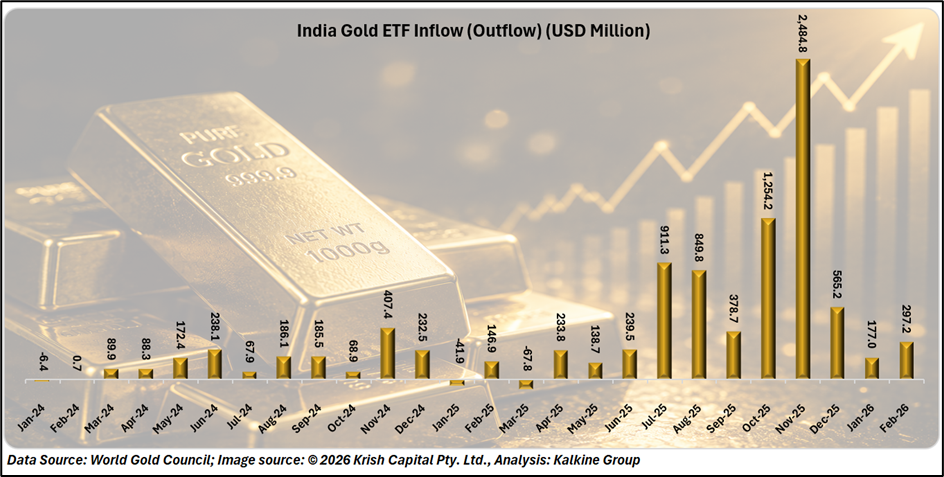
Global ETF Demand Pushes Assets to Fresh Highs
Worldwide demand for gold-backed ETFs also strengthened considerably during April. According to industry estimates, global gold ETFs attracted inflows worth nearly $6.6 billion during the month, supported primarily by strong buying activity from European and Chinese investors.
The renewed inflows helped lift total assets managed by global gold ETFs to nearly $615 billion, reflecting rising institutional and retail participation in precious metal investments.
Analysts believe investors continue to favour gold exposure due to ongoing concerns surrounding interest-rate trajectories, currency movements, and slowing global growth expectations.
Why Investors Are Turning to Gold ETFs
Gold ETFs have emerged as a preferred investment avenue for modern investors because they combine the benefits of gold ownership with the convenience of stock market trading. Unlike physical gold, ETFs eliminate concerns related to storage, purity verification, and making charges.
Financial advisors note that many investors are now increasing portfolio allocation toward gold as part of diversification strategies. The trend has become more visible amid elevated market volatility across global equities and commodities.
Additionally, expectations of central bank policy shifts and persistent geopolitical tensions have strengthened gold’s role as a traditional safe-haven asset.
Volatility Fails to Shake Long-Term Sentiment
Although bullion prices corrected during parts of March and April, the broader investment trend remained constructive. Market experts suggest that temporary price declines often encourage incremental accumulation through ETFs, particularly among long-term investors.
The continuation of inflows into Indian gold ETFs signals that investors are looking beyond short-term price movements and focusing on gold’s ability to preserve value during uncertain economic cycles.
If global macroeconomic risks remain elevated, analysts expect demand for gold-linked investment products to remain firm over the coming quarters.
Conclusion
Despite short-term corrections in bullion prices, investor confidence in gold ETFs remains strong both in India and globally. The consistent inflow trend highlights gold’s enduring appeal as a portfolio diversifier and safe-haven asset. With macroeconomic uncertainty and geopolitical risks still elevated, gold ETFs may continue attracting steady investor interest ahead.
FAQs
- Why are investors investing in gold ETFs despite price volatility?
Investors view gold ETFs as a defensive asset class that can help protect portfolios during economic uncertainty, inflationary pressure, and geopolitical instability.
- What are the advantages of investing in gold ETFs?
Gold ETFs offer easy liquidity, transparent pricing, exchange-based trading, and eliminate storage or purity concerns associated with physical gold.
- Can gold ETFs benefit from global economic uncertainty?
Yes. Gold historically performs well during periods of financial instability and risk aversion, which often leads investors toward safe-haven assets like gold ETFs.