

Indian pharmaceutical companies are stepping up contingency measures as geopolitical tensions in West Asia continue to disrupt global trade routes and increase logistics uncertainty. Drug manufacturers are now focusing on building inventory buffers, renegotiating supply contracts, and securing alternate shipping channels to reduce the impact of the ongoing Iran-related conflict.
Industry executives indicate that while the disruption remains manageable for now, a prolonged escalation could increase freight, fuel, and raw material costs, potentially affecting operating margins across the sector.
Supply Chain Risks Emerging for Pharma Sector
The pharmaceutical industry heavily depends on smooth global supply chains for the movement of active pharmaceutical ingredients (APIs), intermediates, packaging materials, and finished formulations. Rising tensions near key shipping routes have increased transportation costs and delivery timelines.
Companies are now prioritizing supply continuity instead of aggressive cost optimization strategies, particularly for exports to regulated markets such as the US and Europe.
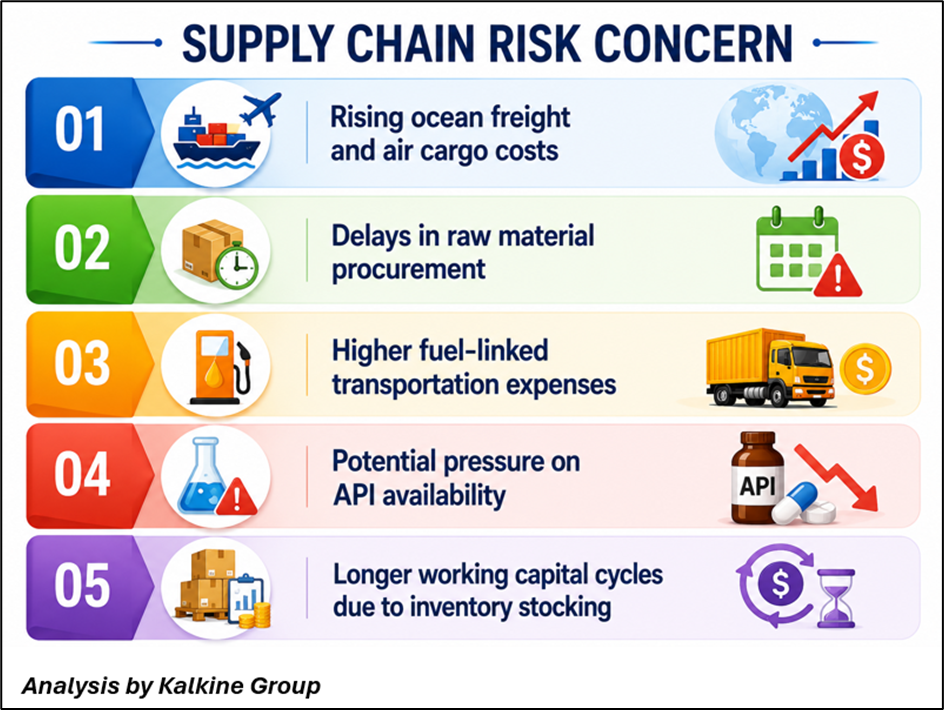
Executives believe sustained geopolitical instability could gradually compress profitability if shipping disruptions intensify further.
Pharma Companies Strengthen Defensive Strategies
To minimize operational disruptions, Indian pharmaceutical firms are adopting several preventive measures:
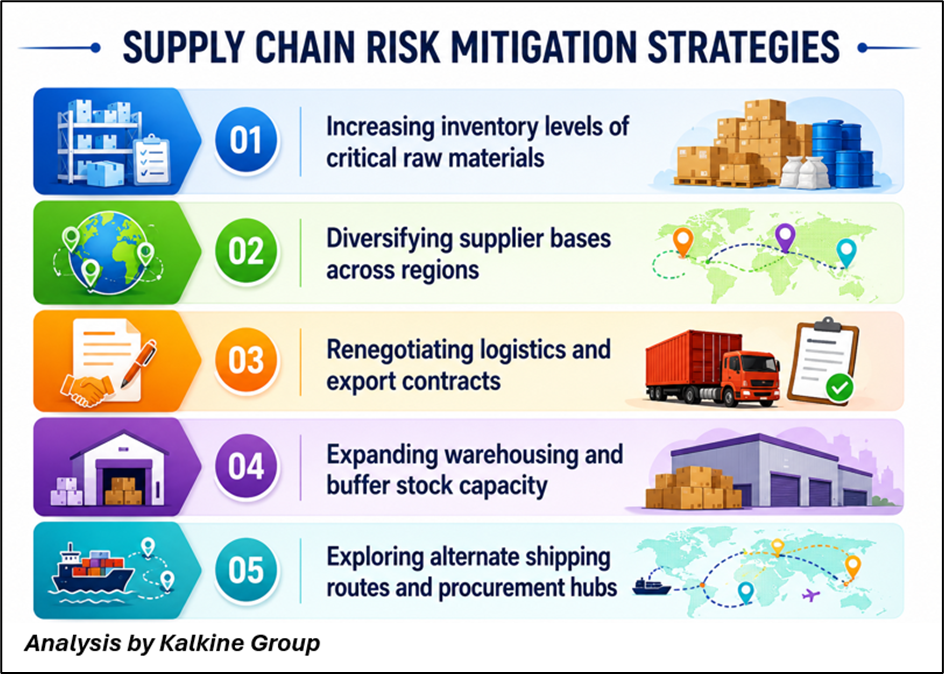
Large pharmaceutical companies with diversified manufacturing operations and stronger balance sheets are expected to remain relatively better positioned during extended disruptions.
Margin Pressure Could Emerge if Conflict Prolongs
Industry experts estimate that if geopolitical tensions continue for an extended period, operating margins for pharmaceutical companies could witness pressure ranging between 50 to 150 basis points due to elevated logistics and input costs.
While many companies may initially absorb part of the cost increase, persistent inflation in freight and raw materials could eventually impact profitability and pricing flexibility.
Export-oriented companies with significant exposure to regulated international markets may remain particularly sensitive to prolonged shipping disruptions.
Indian Pharma Stocks Likely to Stay in Focus
Investors may closely track pharmaceutical companies with strong export businesses and global supply chain exposure, including:
- Sun Pharmaceutical Industries Limited (NSE:SUNPHARMA)
- Reddy's Laboratories Limited (NSE:DRREDDY)
- Cipla Limited (NSE:CIPLA)
- Lupin Limited (NSE:LUPIN)
- Zydus Lifesciences Limited (NSE:ZYDUSLIFE)
- Aurobindo Pharma Limited (NSE:AUROPHARMA)
- Torrent Pharmaceuticals Limited (NSE:TORNTPHARM)
Market participants are expected to monitor freight cost trends, crude oil prices, geopolitical developments, and supply-chain stability for further sector direction.
India’s Pharma Industry Remains Structurally Strong
Despite short-term geopolitical risks, India’s pharmaceutical sector continues to benefit from strong global generic demand, expanding specialty portfolios, and increasing healthcare spending worldwide.
Many Indian companies have also strengthened backward integration and diversified sourcing strategies after previous global supply disruptions, improving their resilience against external shocks.
Conclusion
India’s pharmaceutical sector is entering a phase of heightened operational caution amid geopolitical uncertainty in West Asia. While current disruptions remain manageable, prolonged conflict could pressure margins through rising logistics and raw material costs. However, strong global demand, diversified supply chains, and strategic inventory planning may help leading Indian pharma companies navigate near-term challenges effectively.
FAQs
- Why is the Iran conflict affecting Indian pharmaceutical companies?
The conflict is increasing freight costs, disrupting shipping routes, and creating supply chain uncertainty for raw materials and exports.
- How are pharma companies responding to the disruption?
Companies are increasing inventory buffers, diversifying suppliers, and renegotiating logistics contracts to ensure uninterrupted supply.
- Which pharma stocks could be impacted?
Export-focused pharmaceutical companies such as Sun Pharma, Dr. Reddy’s, Cipla, Lupin, Zydus, and Aurobindo Pharma may remain in focus.