

Mahindra & Mahindra Limited (NSE:M&M) witnessed selling pressure on June 1, 2026, with its shares declining over 2% despite reporting stronger-than-anticipated May sales. While the company's automotive and farm equipment businesses continued to deliver healthy volume growth, investors remained focused on rising crude oil prices and their potential impact on profitability across the automobile sector.
The market reaction highlights the growing influence of macroeconomic factors on auto stocks, where input-cost concerns can sometimes overshadow strong operational performance.
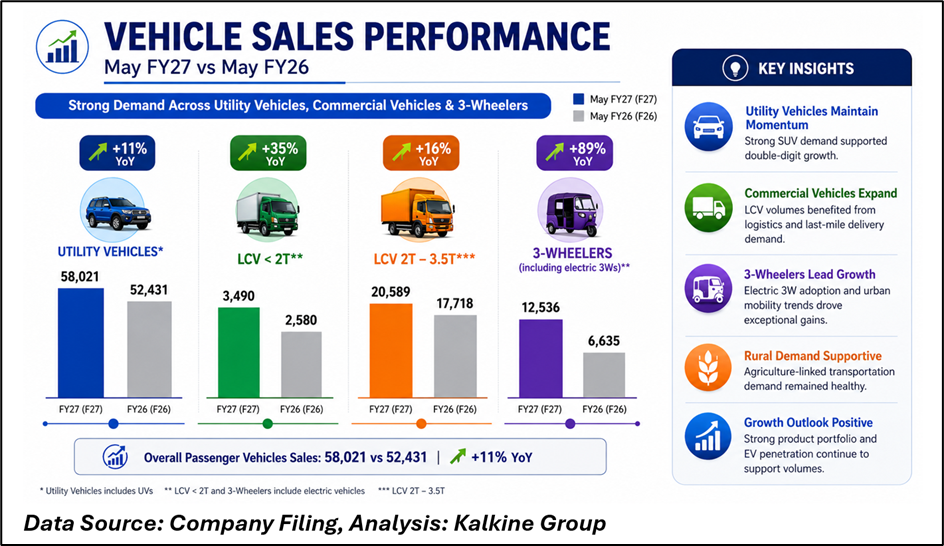
Strong Sales Momentum Continues
Mahindra & Mahindra delivered an impressive sales performance in May 2026, driven by resilient demand across its SUV and tractor portfolios. The company recorded robust growth in both automotive and farm equipment segments, reinforcing its position as one of India's leading mobility and agricultural equipment manufacturers.
Demand remained healthy for the company's popular utility vehicle lineup, while strong rural activity and favorable agricultural conditions supported tractor sales growth. The performance exceeded market expectations and reflected the company's ability to capitalize on both urban and rural demand trends.
Why Did Investors Turn Cautious?
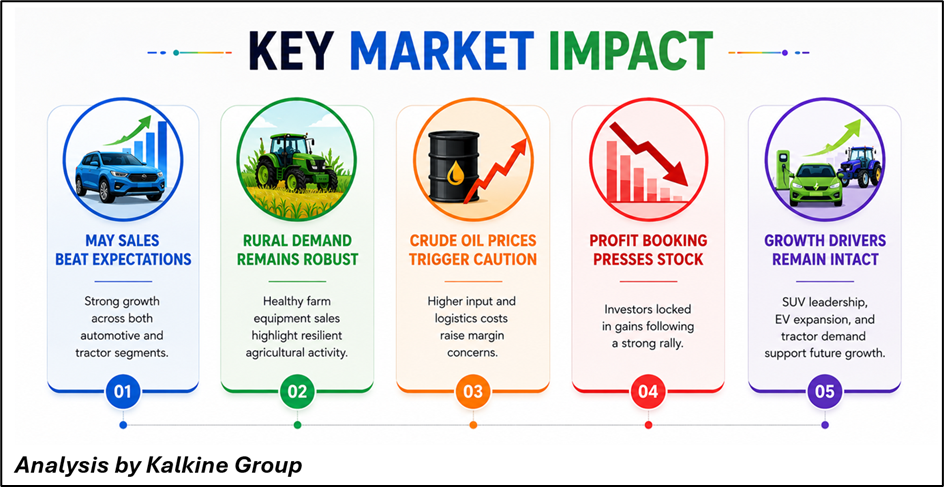
Despite the encouraging sales numbers, investors chose to focus on external risks.
The primary concern stemmed from rising global crude oil prices, which have the potential to increase transportation, logistics, and manufacturing costs. Higher fuel prices can also affect consumer sentiment and vehicle affordability, creating uncertainty around future demand growth.
Additionally, Mahindra & Mahindra shares have generated substantial gains over the past year, prompting some investors to lock in profits amid broader market volatility.
SUV Leadership and Rural Strength Remain Key Advantages
Mahindra & Mahindra continues to benefit from its strong presence in India's fast-growing SUV market. Popular models such as the Scorpio-N, Thar, XUV700, and Bolero continue to attract strong customer interest, helping the company maintain healthy order books.
The Farm Equipment Sector (FES) remains another major growth pillar. Strong tractor demand, improving rural income levels, government support for agriculture, and favorable monsoon expectations continue to support long-term prospects for the segment.
These dual growth engines provide Mahindra & Mahindra with a diversified business model that is relatively resilient across economic cycles.
Technical Summary
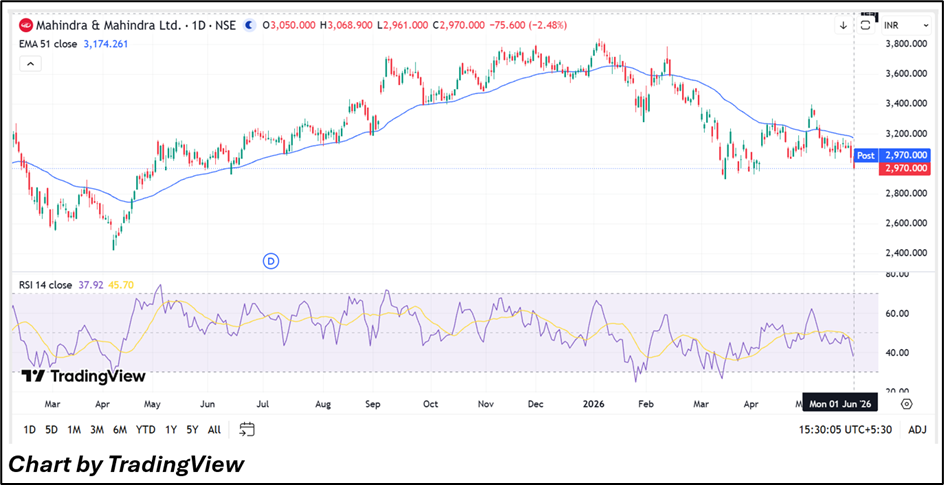
From a technical perspective, the stock remains under short-term pressure after slipping below its 51-day Exponential Moving Average (EMA), indicating weakening momentum. The Relative Strength Index (RSI) has moved below the neutral zone, suggesting cautious sentiment among traders.
Immediate support is visible around the ₹2,900 level, while resistance remains near ₹3,150–₹3,200. A sustained move above key resistance levels could improve near-term sentiment, whereas further weakness may lead to additional consolidation.
Long-Term Growth Story Intact
Although rising crude oil prices have triggered short-term concerns, Mahindra & Mahindra's long-term fundamentals remain supported by:
- Leadership in India's SUV segment.
- Strong rural and tractor demand.
- Expanding electric vehicle portfolio.
- Continued capacity enhancements.
- Growing focus on premium mobility solutions.
- Strong brand positioning across automotive and farm equipment markets.
The company's diversified business structure and execution capabilities continue to position it favorably within India's evolving mobility landscape.
Conclusion
The recent decline in Mahindra & Mahindra shares appears to be driven more by macroeconomic concerns and profit booking than by any deterioration in business fundamentals. While crude oil prices remain a near-term risk, the company's strong sales momentum, SUV leadership, and resilient farm equipment business continue to support its long-term growth outlook.
FAQs
- Why did Mahindra & Mahindra shares fall despite strong sales?
The decline was primarily driven by concerns over rising crude oil prices and profit booking after the stock's strong performance over recent months.
- What supported Mahindra & Mahindra's May sales growth?
Strong demand for SUVs and tractors, along with healthy rural activity, contributed to better-than-expected sales performance.
- What are the key long-term growth drivers for M&M?
SUV market leadership, rural demand strength, electric vehicle expansion, capacity additions, and premium product offerings remain key growth catalysts.