

Highlights
- Accurate bank account information is essential for successful tax refund processing.
- Invalid or outdated account details may result in refund payment failure.
- Verifying banking information before filing can help minimise avoidable delays.
Many taxpayers focus on calculating their taxable income correctly but pay less attention to the bank account selected for receiving a refund. Even if an Income Tax Return (ITR) is filed accurately and a refund becomes payable, the payment process may not be completed if the registered bank account does not satisfy the required verification conditions.
As a result, ensuring that banking information is current and correctly recorded has become an important part of the tax filing process.
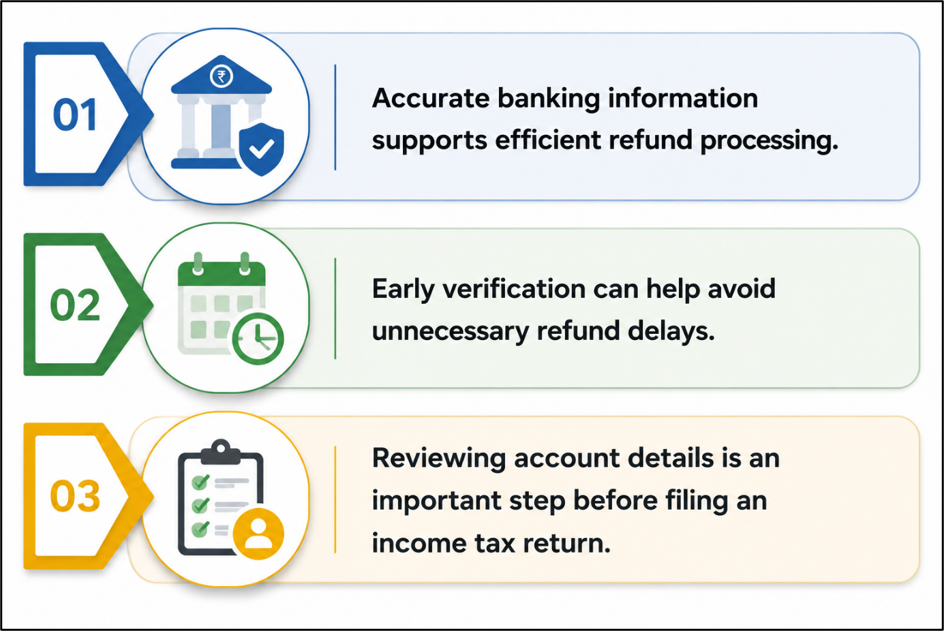
Source: Analysis by Kalkine
Why Refund Payments Sometimes Fail
A tax refund is transferred electronically only after the designated bank account is successfully verified. If the account information contains errors or no longer matches the taxpayer's records, the transfer may not be completed.
Several situations can interrupt the refund process, including the use of a closed bank account, incorrect account information, outdated banking records or differences between the taxpayer's PAN details and the information maintained by the bank.
Instead of being credited automatically to another account, the refund generally remains pending until the issue is resolved.
Understanding Bank Account Verification
Before a refund is released, the nominated bank account undergoes a verification process to establish that it belongs to the taxpayer and is eligible to receive electronic payments.
This verification also confirms that the account remains operational and that the relevant identification details correspond with the records available to the tax authorities. Once these checks are completed successfully, the account becomes available for refund credit whenever applicable.
Why It Is Better to Check Details Before Filing
Many taxpayers realise that their banking information requires updating only after their refund has failed. Reviewing these details before filing an ITR can help avoid unnecessary delays later.
It is advisable to confirm that the preferred bank account is active, the account number has been entered correctly, the IFSC information is accurate and the account reflects the latest information maintained by the taxpayer. Individuals who have changed banks or recently opened a new account should ensure that their records are updated before submitting their return.
Taking these precautions in advance can help make the refund process smoother.
What Happens After a Failed Refund Attempt?
If a refund cannot be transferred because the registered bank account does not meet the required conditions, the payment is not redirected automatically.
After correcting the banking information, taxpayers generally need to complete the prescribed process for requesting the refund again. Only after the revised details are verified can the refund be processed for electronic transfer.
This means that correcting bank information promptly may help reduce additional waiting time.
Other Details Worth Reviewing
While checking bank information, taxpayers may also benefit from reviewing other sections of their return before submission.
Verifying personal details, confirming tax deducted at source, comparing income with available tax statements and reviewing bank account information together can improve the accuracy of the return. Careful verification before filing may also reduce the possibility of future queries arising during processing.
Key Risks to Consider
- Incorrect banking information may delay refund processing.
- Closed accounts cannot receive electronic tax refunds.
- Record mismatches may interrupt refund verification.
- Updating details after filing can extend processing timelines.
Summary
Correct bank account information is an essential part of the income tax filing process. Even when a taxpayer is eligible for a refund, payment cannot be completed if the nominated account does not satisfy the required verification conditions. Reviewing and updating banking information before filing an ITR can help minimise delays and improve the likelihood of timely refund credit. A few simple checks before submission may prevent avoidable processing issues later.
FAQs
Q: Can an income tax refund fail because of incorrect bank details?
A: Yes. Incorrect or outdated banking information may prevent the refund from being credited successfully.
Q: Should taxpayers verify their bank account before filing an ITR?
A: Reviewing bank account information before filing can help reduce the possibility of refund-related delays.
Q: Will the refund automatically reach another account if one account is invalid?
A: No. Taxpayers generally need to update their banking information before the refund can be processed again.