

Highlights
- The government has outlined key tax policy changes introduced during the past 12 years.
- The publication highlights changes in tax relief, compliance and digital tax administration.
- Growth in the taxpayer base and technology-driven reforms are among the developments discussed.
The Central government has published a review of tax and governance initiatives implemented over the last twelve years. The document summarises various policy measures relating to taxation, public administration and economic reforms that have been introduced during this period.
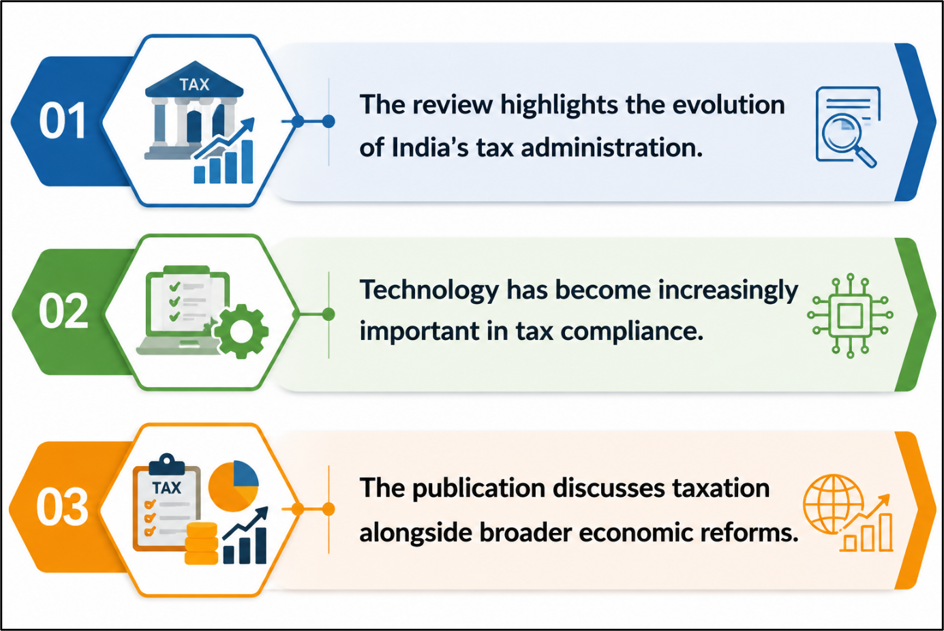
According to the publication, successive changes in tax policy have focused on simplifying compliance, expanding the taxpayer base and improving the overall efficiency of tax administration. The document presents these developments as part of a broader effort to modernise India's taxation framework.
Source: Analysis by Kalkine
Focus on Changes in Personal Income Tax
One of the major themes discussed in the publication is the gradual modification of personal income tax provisions over the years.
The document notes that changes in exemption limits, tax slabs and relief measures have been introduced through successive Union Budgets. According to the government, these revisions were intended to reduce the tax burden for eligible taxpayers while making the tax structure easier to understand.
The publication also points to higher income thresholds for certain taxpayers under the prevailing tax framework.
Expansion of the Taxpayer Base
The government states that the number of registered taxpayers has increased considerably during the review period.
According to the publication, this growth has been supported by wider use of technology, improved compliance mechanisms and increasing participation in the formal economy. The document suggests that digital initiatives have made tax filing more accessible while encouraging greater voluntary compliance.
Greater Use of Technology in Tax Administration
The review places significant emphasis on technology-led reforms within the taxation system.
Over the years, several online services have been introduced to reduce paperwork and improve interaction between taxpayers and the Income Tax Department. These include electronic filing systems, digital verification processes and faceless assessment mechanisms intended to simplify administrative procedures.
The publication notes that these initiatives aim to improve transparency and reduce processing time for taxpayers.
Tax Reforms Alongside Wider Economic Measures
Apart from direct taxation, the government also refers to broader economic reforms implemented during the same period.
The review highlights initiatives relating to indirect taxation, digital governance, banking reforms and infrastructure development. According to the document, these measures collectively contributed to improving administrative efficiency and strengthening public service delivery across multiple sectors.
The publication presents tax reforms as one element of a wider programme of economic policy changes.
Importance of Digital Compliance
Digital platforms have become increasingly important in India's tax administration over recent years.
Electronic return filing, online communication, digital verification and automated processing have reduced dependence on manual procedures. The government notes that these technological improvements have supported faster processing of tax-related services while making compliance more convenient for taxpayers.
As digital systems continue to evolve, technology is expected to remain an important part of tax administration.
Key Risks to Consider
- Tax rules may change through future policy decisions.
- Individual tax liability depends on personal circumstances.
- Eligibility for tax benefits varies under applicable provisions.
- Future Budget announcements may introduce additional reforms.
Summary
The government's review of the past twelve years outlines a range of policy initiatives relating to taxation and economic administration. The publication highlights revisions to personal income tax provisions, increased use of digital technology, expansion of the taxpayer base and administrative reforms intended to simplify compliance. While tax policies continue to evolve, the document presents these measures as part of an ongoing effort to modernise India's tax system and improve service delivery.
FAQs
Q: What is the main focus of the government's twelve-year review?
A: The publication summarises tax reforms, digital initiatives and administrative measures introduced over the past twelve years.
Q: Does the review discuss only income tax changes?
A: No. It also refers to broader economic, digital governance and administrative reforms introduced during the same period.
Q: Why does the publication emphasise digital tax administration?
A: It highlights technology as an important tool for improving compliance, transparency and taxpayer services.