

Highlights
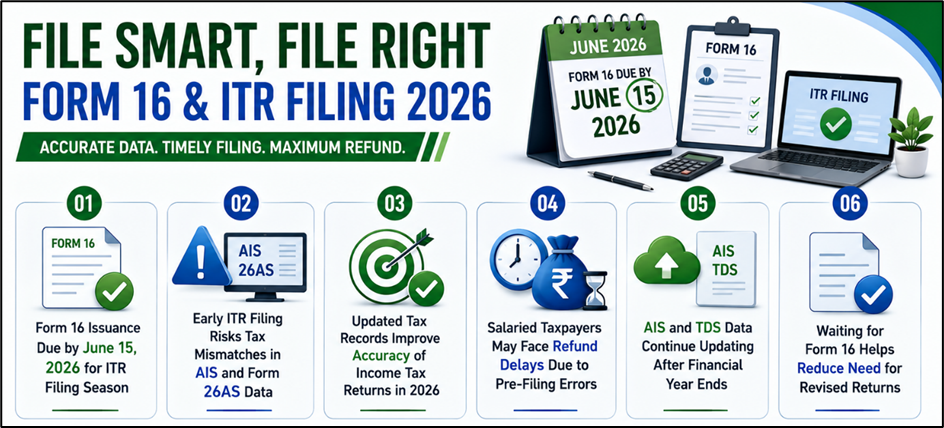
- Form 16 issuance by employers is due by June 15, 2026.
- Early ITR filing may lead to mismatches in tax credit records.
- Updated AIS and Form 26AS data can help improve filing accuracy.
With the income tax return filing season underway for Assessment Year 2026-27, many salaried individuals are preparing to submit their returns at the earliest opportunity. However, tax professionals suggest that waiting until Form 16 becomes available may help avoid unnecessary complications.
Although taxpayers can legally file returns without the document, filing before key tax records are updated may increase the possibility of errors and future corrections.
Source: Analysis by Kalkine
Why Form 16 Remains a Useful Document
Form 16 serves as a summary of an employee's salary income and taxes deducted during the financial year. It typically includes details of taxable income, exemptions claimed, deductions available under various provisions, and tax deposited with the government.
Since the document consolidates information in one place, it allows taxpayers to cross-check figures before filing their returns. For many salaried individuals, Form 16 acts as the primary reference document while preparing tax returns, reducing the need to compile information from multiple sources.
Tax Data Updates Continue Into June
Several tax-related records undergo updates during the weeks following the end of the financial year. Employers and other deductors are required to submit quarterly TDS statements, after which the information begins appearing in tax records maintained by the Income Tax Department.
As a result, details relating to salary income, bank interest, dividend earnings and tax deductions may not immediately appear in Form 26AS or the Annual Information Statement (AIS). Waiting until mid-June allows taxpayers additional time to verify whether all relevant information has been reflected correctly.
Potential Issues With Filing Too Early
Submitting a return before tax records are fully updated can create reconciliation challenges. If income details or TDS credits appear later in official records, taxpayers may discover differences between the filed return and information available with the tax authorities.
Such discrepancies could result in refund delays, requests for clarification, rectification filings or the need to submit a revised return. As tax processing systems increasingly rely on automated matching of information, ensuring consistency across documents has become more important.
Alternatives Are Available if Form 16 Is Delayed
Taxpayers are not legally required to possess Form 16 before filing their returns. In cases where the document has not yet been issued, information can be gathered from salary slips, bank statements, investment records, interest certificates, AIS, Form 26AS and other financial documents.
However, experts generally recommend verifying that all income sources and tax credits have been accurately reported before completing the filing process.
Importance of Reviewing Tax Records
Before filing an income tax return, taxpayers may consider reviewing salary details, tax deductions, interest income, dividend receipts, capital gains and other reportable transactions against official tax records. A careful review can help identify missing entries or inconsistencies and reduce the possibility of future compliance issues.
For salaried individuals, waiting for Form 16 and updated tax statements may provide a more complete picture of their financial information before submitting returns.
Key Risks
- Missing TDS entries may create tax credit mismatches.
- Incomplete AIS data can affect income reporting accuracy.
- Refund processing may be delayed due to discrepancies.
- Revised returns may become necessary after later updates.
Summary
While taxpayers can file their income tax returns without Form 16, waiting until the document is issued and tax records are updated may help improve accuracy. Information appearing in AIS and Form 26AS often continues to be updated after the financial year ends. Reviewing these records before filing can reduce the likelihood of mismatches, refund delays and additional compliance requirements.
FAQs
Q: Is Form 16 mandatory for filing an income tax return?
A: No. Taxpayers can file returns using salary records, AIS, Form 26AS and other supporting documents.
Q: When are employers expected to issue Form 16?
A: Employers are generally required to provide Form 16 to employees by June 15 each year.
Q: Why do tax experts recommend waiting before filing?
A: Additional time allows taxpayers to verify updated income and TDS information appearing in official tax records.