

Highlights
- Tax filing utilities and key return forms are already available.
- The tax department has activated filing facilities earlier than in previous years.
- Taxpayers may need to prepare for the existing deadline rather than expect an extension.
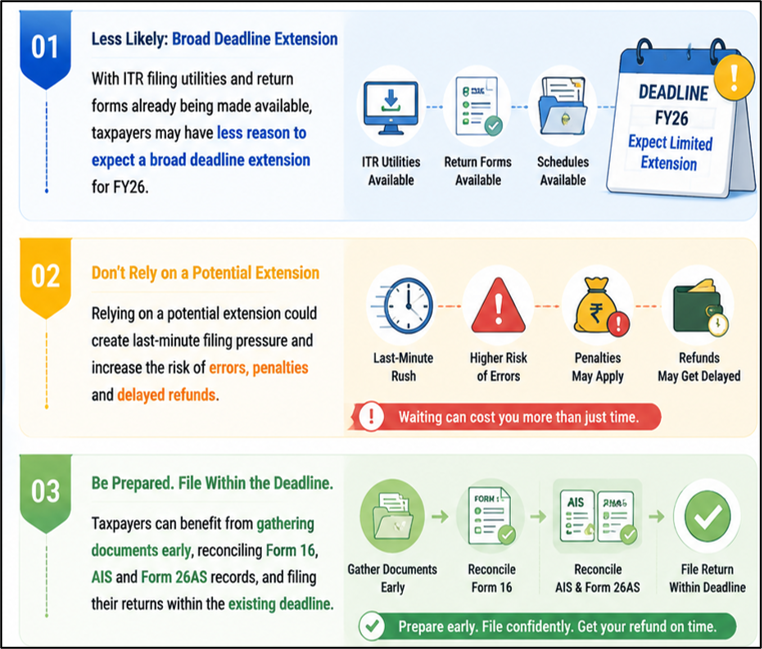
As the Income Tax Return (ITR) filing season progresses, some taxpayers are hoping that authorities may extend the filing deadline as seen in certain previous years. However, current developments suggest that such expectations may not materialise for FY26. With filing utilities already operational and return forms becoming available in phases, the compliance calendar appears to be moving largely as planned, reducing the likelihood of a broad extension.
Source: Analysis by Kalkine
Early Availability of Filing Infrastructure
One of the primary reasons taxpayers often seek deadline extensions is the delayed release of return forms or filing utilities. This year, however, the Income Tax Department has progressively enabled online filing and utility access for several key ITR forms. The availability of these facilities provides taxpayers with a longer preparation window compared with situations where technical tools are released close to the due date.
The gradual rollout of filing systems also indicates that authorities have attempted to provide sufficient time for taxpayers to complete compliance requirements before the deadline arrives.
Standard Deadlines Continue to Apply
For most salaried individuals and taxpayers not subject to audit requirements, the current filing deadline remains July 31, 2026. Different categories of taxpayers may have separate due dates depending on the nature of their income and reporting obligations, but no general extension has been announced so far.
Historically, deadline extensions have often been linked to exceptional circumstances such as technical challenges, delayed utility releases or major compliance changes. In the absence of such widespread issues, authorities may see less need to provide additional filing time.
Taxpayers Still Have Time to Prepare
Experts continue to advise taxpayers to focus on accuracy rather than speed when filing returns. Important documents such as Form 16, Form 26AS and the Annual Information Statement (AIS) should be reviewed carefully before submission. Waiting until all relevant information becomes available can help minimise errors and reduce the possibility of notices or revised filings later.
For salaried taxpayers, mid-June is often considered an important milestone because employers are generally expected to issue Form 16 by then. Filing after these records have been updated allows better reconciliation of income and tax deductions.
Compliance Focus Has Increased
Tax authorities now have access to a broader range of financial information through reporting systems, making accurate disclosure increasingly important. Income details, tax deductions, investments and other financial transactions are routinely cross-verified against official records. This emphasis on data matching means taxpayers may benefit more from careful preparation than from waiting for a possible extension.
The growing use of technology and pre-filled information has also streamlined portions of the filing process, reducing some of the challenges that previously contributed to deadline-related concerns.
Why Relying on an Extension Could Be Risky
Assuming that the filing deadline will be extended may create unnecessary pressure later in the season. If no extension is announced, taxpayers who postpone preparation could face a last-minute rush, increasing the likelihood of mistakes or incomplete disclosures.
Missing the applicable due date can also result in interest liabilities, late filing fees and other compliance consequences. Filing within the prescribed timeline remains the safest approach for most taxpayers.
Planning Ahead May Be the Better Strategy
Rather than waiting for an announcement that may never come, taxpayers may find it more practical to gather documents, reconcile records and complete their returns well before the deadline. Early preparation provides additional time to correct discrepancies and address any missing information.
With filing systems operational and return forms becoming available, the focus for FY26 appears to be on timely and accurate compliance rather than on expectations of deadline relief.
Key Risks
- Waiting for an extension could lead to last-minute filing pressure.
- Missing deadlines may attract interest and late fees.
- Incomplete records can result in filing errors.
- Delayed filing may postpone eligible tax refunds.
Summary
Expectations of an ITR filing deadline extension for FY26 may be premature given the current pace of return form releases and filing utility availability. Authorities have already enabled several filing facilities, while standard deadlines remain in place for most taxpayers. Instead of relying on a possible extension, taxpayers may benefit from reviewing documents early, reconciling income records and completing returns within the prescribed timelines.
FAQs
Q: Has the Income Tax Department announced an ITR deadline extension for FY26?
A: No general extension has been announced and existing filing deadlines currently remain unchanged.
Q: Why do taxpayers often expect filing deadline extensions?
A: Extensions are sometimes granted during exceptional circumstances such as technical issues or delayed utilities.
Q: What should taxpayers do instead of waiting for an extension?
A: Gather documents, verify tax records and file accurately before the applicable due date.