

Highlights
- Airline stocks gained momentum as crude oil prices moved lower.
- Improving geopolitical sentiment reduced concerns around fuel supply disruptions.
- Lower aviation fuel costs could support margins in the coming quarters.
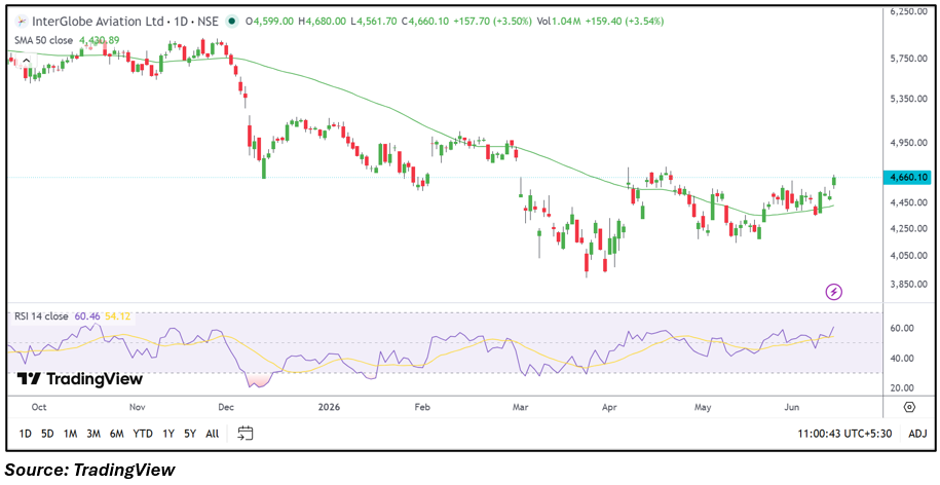
- The stock continues to trade above its 50-day SMA, reflecting improving price structure.
Market Sentiment Improves as Global Risks Ease
Airline stocks witnessed renewed interest after signs of easing tensions in the Middle East improved overall market sentiment. Expectations that diplomatic efforts could reduce the risk of further disruptions in global energy markets helped investors reassess sectors that are highly sensitive to fuel costs.
The possibility of smoother crude oil supply flows has reduced concerns about a prolonged energy shock, providing support to transportation and aviation-related counters.
Falling Crude Prices Offer Relief to Airlines
A key catalyst behind the recent rally has been the decline in crude oil prices. Fuel remains one of the largest operating expenses for airlines, making oil price movements an important factor in profitability.
As crude prices retreated from recent highs, investors began factoring in the potential for lower operating costs. If softer energy prices persist, airlines could benefit from improved cost efficiency and better earnings visibility over the coming quarters.
Route Rationalisation Reflects Operational Focus
Recent network adjustments across certain international destinations have highlighted the industry's focus on optimizing capacity and improving route profitability. While some services are being suspended, such decisions are often aimed at enhancing operational efficiency during periods of elevated costs and changing travel dynamics.
Market participants generally view these measures as part of a broader effort to balance growth with profitability.
Cost Management Remains a Key Theme
Apart from lower crude prices, investors are closely monitoring measures aimed at protecting margins amid a volatile operating environment. Airlines continue to focus on managing fuel expenses, optimizing fleet utilization, and maintaining disciplined capacity deployment.
These initiatives become particularly important during periods of geopolitical uncertainty and fluctuating energy prices.
Technical Structure Shows Improving Strength
From a technical perspective, the stock is trading around ₹4,661.90 and remains comfortably above its 50-day SMA of ₹4,430.89. The recent move higher suggests improving price action after several months of consolidation.
The ability to sustain above the medium-term moving average indicates that market sentiment has improved compared with earlier phases of weakness.
Momentum Indicator Supports the Recovery
The RSI is currently near 60.46, indicating strengthening momentum. The indicator remains above the neutral zone while staying below extreme levels, suggesting room for further movement if broader market conditions remain supportive.
Momentum readings currently favour the continuation of the ongoing recovery phase.
Key Technical Levels
At the current price of ₹4,661.90, the immediate downside zone is placed near ₹4,428.81, followed by a broader support area around ₹4,195.71. On the upside, the stock may face resistance near ₹4,894.99, while a stronger advance could bring ₹5,128.09 into focus.
Key Risks
- Sudden rebound in global crude oil prices.
- Escalation of geopolitical tensions affecting energy markets.
- Weakness in passenger traffic demand.
- Currency fluctuations impacting operating costs.
- Higher-than-expected industry competition.
Final Take
The recent rally reflects improving investor confidence as lower crude oil prices and easing geopolitical concerns enhance the outlook for airline profitability. While operational challenges remain, the combination of softer fuel costs, stable demand trends, and improving technical structure has helped sentiment recover. Going forward, crude oil prices and developments in the Middle East are likely to remain the most important factors influencing the sector's performance.
FAQs
Why are airline stocks rising?
Lower crude oil prices have improved expectations for fuel costs, which can positively impact profitability.
How do oil prices affect airlines?
Fuel is a major operating expense. Lower oil prices generally help reduce costs and support margins.
What are the key levels to watch?
Important downside zones are ₹4,428.81 and ₹4,195.71, while upside levels are ₹4,894.99 and ₹5,128.09.