

India’s financial landscape has transformed significantly with the rapid growth of digital finance. Mobile banking, online investment platforms, and fintech innovations are reshaping how individuals plan for retirement. These tools offer convenience, automation, and improved financial access, enabling individuals to build retirement wealth more efficiently. However, while digital finance simplifies investment management, it also introduces cybersecurity and operational risks that must be carefully managed. The increasing role of fintech tools in retirement systems globally highlights both accessibility benefits and emerging digital risks that investors must consider.
Rise of Fintech Platforms in Indian Retirement Planning
Digital finance platforms have made retirement planning more accessible across India, including in smaller cities and rural areas. Investors can now open accounts, invest funds, and monitor retirement portfolios using smartphones.
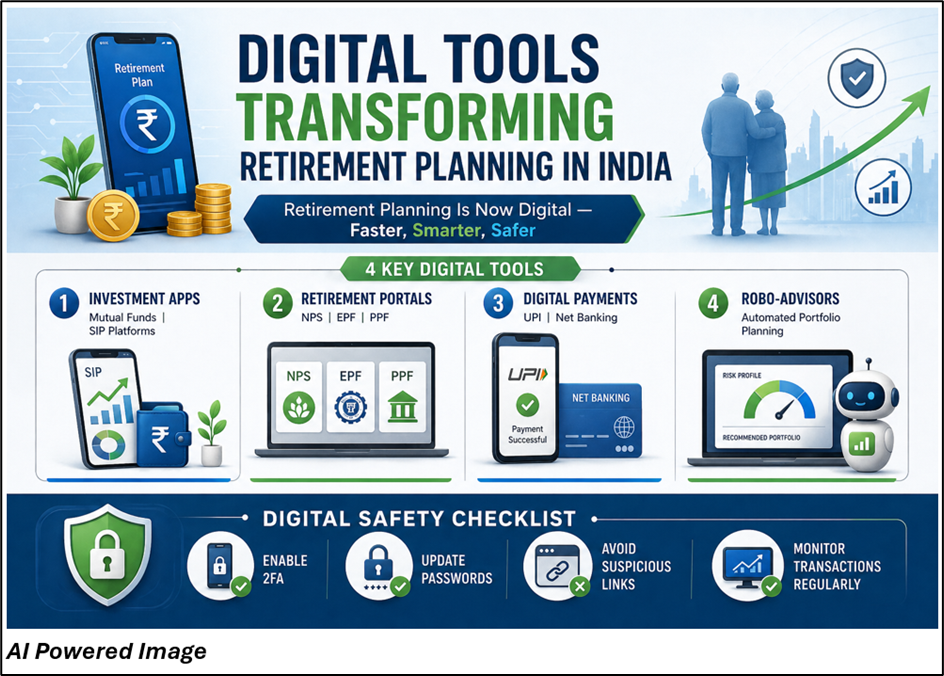
Key digital retirement tools commonly used in India include:
- National Pension System (NPS) online portals
- Mutual fund platforms offering Systematic Investment Plans (SIPs)
- Employee Provident Fund (EPF) digital tracking through UAN portals
- Public Provident Fund (PPF) online contributions via banks
- Digital gold and sovereign bond platforms
These platforms allow individuals to automate monthly investments and monitor long-term savings progress without requiring physical visits to financial institutions.
Robo-advisory services are also gaining popularity in India. These tools use algorithms to recommend asset allocation strategies based on age, risk tolerance, and retirement timeline. Such automation improves discipline and helps investors stay aligned with financial goals.
Benefits of Digital Finance for Retirement Planning
Digital finance provides several advantages that enhance retirement readiness.
- Convenience and Accessibility- Mobile applications allow retirees and working professionals to manage investments anytime. This is especially helpful for senior citizens who may prefer remote banking services.
- Cost Efficiency- Online platforms often charge lower fees compared to traditional advisory services. Reduced costs improve long-term investment returns, particularly for systematic investors.
- Real-Time Portfolio Monitoring- Investors can track investment performance, rebalance portfolios, and adjust strategies based on changing financial goals.
- Automated Saving Discipline- Features such as auto-debit SIPs encourage regular savings habits. Consistency is critical in building a retirement corpus capable of sustaining post-retirement income.
Cybersecurity Risks and Digital Safety Awareness
While digital finance enhances convenience, it also exposes users to cybersecurity risks. Fraudulent emails, phishing scams, and fake investment platforms have increased in recent years.
Indian retirees and investors should adopt safety measures such as:
- Using two-factor authentication (2FA)
- Avoiding suspicious links or unknown messages
- Regularly updating passwords
- Using trusted financial applications
- Monitoring bank and investment statements
Cybersecurity awareness is particularly important for senior citizens who may be less familiar with digital fraud techniques.
Digital Payments and Retirement Income Management
Digital payment systems such as UPI, net banking, and digital wallets enable retirees to manage expenses efficiently. Pension payouts, annuity payments, and investment withdrawals can be credited directly to bank accounts.
This shift toward digital payments supports:
- Faster transaction settlements
- Reduced reliance on physical cash
- Improved financial tracking
- Simplified budgeting and expense monitoring
For retirees managing multiple income streams, digital platforms improve transparency and control over finances.
Role of Diversification in the Digital Era
Digital finance platforms also provide access to diversified investment options such as:
- Equity mutual funds
- Debt mutual funds
- Government securities
- Exchange-Traded Funds (ETFs)
- Real Estate Investment Trusts (REITs)
Diversification reduces concentration risk and enhances long-term portfolio stability. Digital tools simplify portfolio allocation and periodic rebalancing.
Conclusion
Digital finance is transforming retirement planning in India by improving accessibility, automation, and financial transparency. From managing SIPs to tracking pension accounts, fintech solutions enable investors to take greater control of their retirement journey. However, cybersecurity awareness and disciplined financial habits remain essential. By combining digital convenience with prudent risk management, Indian retirees can build secure and sustainable retirement portfolios.
FAQs
- How can digital platforms help in retirement planning in India?
Digital platforms allow individuals to automate savings, monitor investments, and manage retirement accounts efficiently from mobile devices. - Are digital investment platforms safe for retirees?
Yes, provided users follow security practices such as two-factor authentication and use trusted platforms. - What digital tools are commonly used for retirement planning in India?
Popular tools include NPS portals, SIP investment apps, EPF tracking systems, and digital banking platforms.