

In India, many individuals’ approaching retirement are exploring entrepreneurship as a way to remain financially active or pursue long-held ambitions. With rising life expectancy and increasing healthcare and living expenses, late-career business ventures are becoming more common among professionals and retirees. However, starting a business close to retirement requires careful financial discipline to protect long-term retirement security.
One of the most significant risks is underestimating the capital required to sustain a new venture. Many individuals depend heavily on retirement savings accumulated through instruments such as the Employees’ Provident Fund (EPF), Public Provident Fund (PPF), National Pension System (NPS), and mutual fund investments. Allocating a large portion of these savings into a business without maintaining a financial safety net can expose retirees to financial vulnerability. Maintaining liquidity for essential expenses remains a critical element of retirement planning.
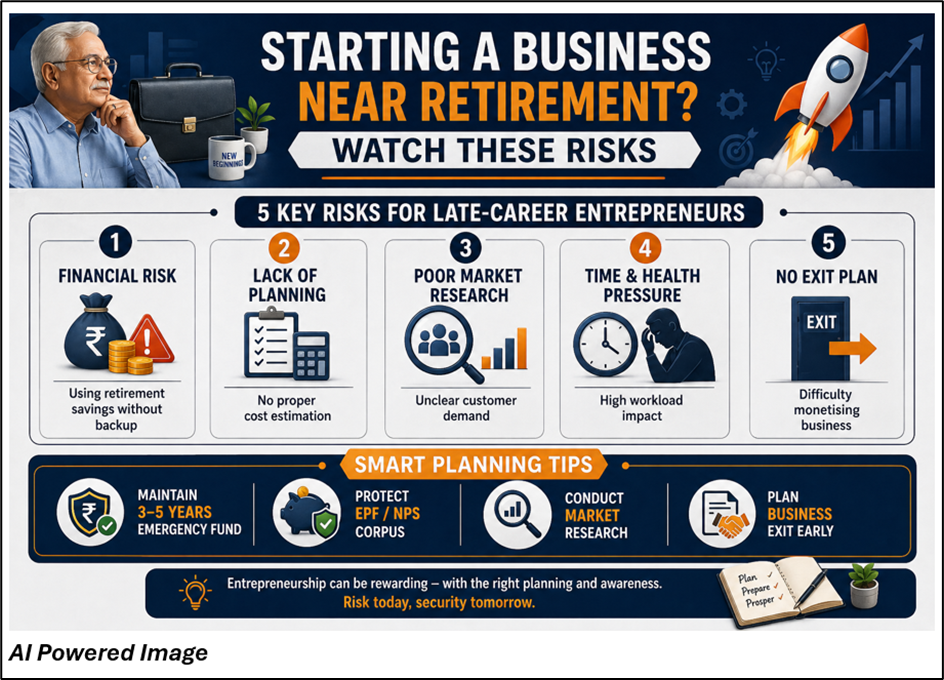
Financial Planning Before Starting a Business
Businesses often take longer than expected to generate stable profits. In India, compliance costs such as GST registration, licensing requirements, professional taxes, and regulatory filings can increase operational expenses. Without a structured financial plan, entrepreneurs may struggle to manage cash flow or recover from unexpected setbacks.
A detailed business plan should include:
- Startup capital estimation
- Operating expenses for at least 12–18 months
- Break-even projections
- Tax compliance costs
- Emergency reserve allocation
Financial advisors often recommend keeping at least 3–5 years of retirement expenses untouched, ensuring stability even if the business underperforms.
The Role of Market Research in Business Sustainability
Many late-career entrepreneurs rely on experience gained during their professional careers. However, market conditions change rapidly due to technology adoption and evolving consumer preferences.
In India, conducting market research should involve:
- Evaluating customer demand
- Identifying competitors
- Understanding digital marketing trends
- Assessing regional price sensitivity
Failure to validate business demand can lead to slow revenue growth and increased financial stress.
Managing Health, Time, and Retirement Goals
Entrepreneurship requires consistent effort and resilience. For individuals nearing retirement age, maintaining physical and mental health becomes equally important. Long working hours and unpredictable income streams can affect retirement lifestyle planning.
Retirement budgets should also account for:
- Health insurance premiums
- Medical emergencies
- Lifestyle and family commitments
- Contingency expenses
Balancing financial goals with health priorities supports long-term sustainability.
Exit and Succession Planning for Long-Term Stability
One of the most overlooked aspects of late-career entrepreneurship is exit planning. In India, many family-run businesses face challenges due to unclear succession strategies.
Common exit options include:
- Selling the business
- Passing ownership to family members
- Hiring professional management
- Gradual retirement from operations
Planning ahead ensures that business ownership supports retirement goals rather than creating long-term financial burdens.
Conclusion
Late-career entrepreneurship in India offers opportunities for financial independence and continued professional engagement. However, protecting retirement savings should remain the primary objective. Careful planning, diversified investments, and realistic expectations can help individuals build businesses without compromising long-term financial security.
FAQs
- Should retirees use their EPF or NPS savings to start a business?
It is advisable to avoid using the entire retirement corpus from EPF or NPS. Only surplus funds should be invested after maintaining a secure retirement reserve. - How much emergency savings should be maintained before starting a business?
Financial planners typically recommend maintaining funds equal to 3–5 years of retirement expenses. - Why is succession planning important in late-career entrepreneurship?
Succession planning ensures continuity of operations and helps protect financial value created through the business.