

In India, traditional employer-funded pensions are becoming less common, especially in the private sector. Unlike earlier generations that relied on defined-benefit pension schemes, many modern employees must build their own retirement corpus through disciplined saving and investment. This shift places greater responsibility on individuals to create sustainable income sources that support long-term financial independence.
Without guaranteed pensions, retirement planning depends on a mix of savings, investments, and government-supported schemes. Estimating future expenses, building diversified portfolios, and planning withdrawals are essential components of a successful retirement strategy. Individuals today increasingly rely on self-managed retirement planning, requiring proactive financial decision-making and diversified income sources.
Understanding Income Sources Beyond Employer Pensions
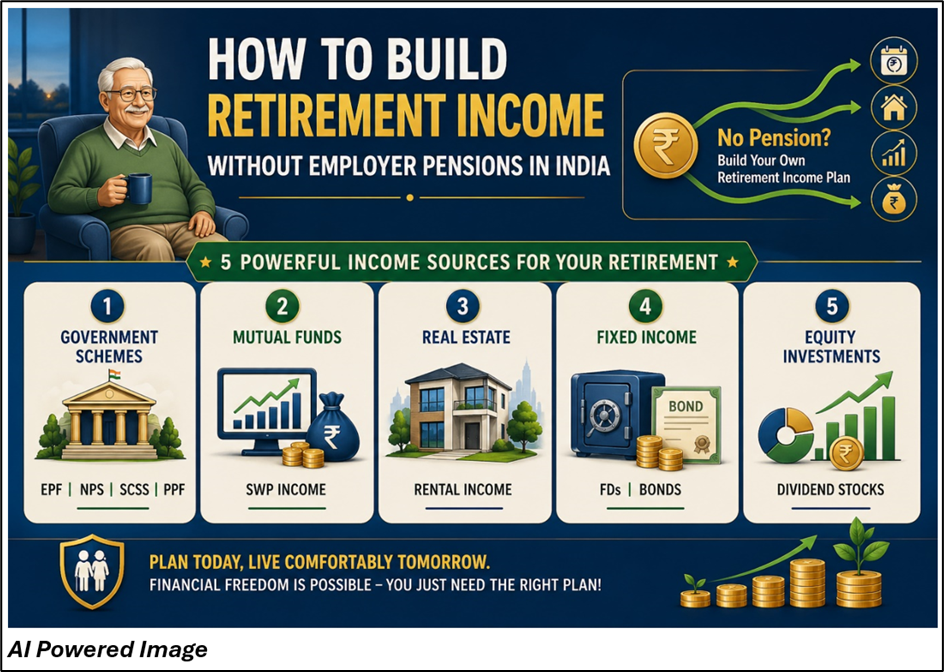
For individuals without employer pensions, retirement income must come from multiple sources. In India, the most common alternatives include:
Government-Supported Retirement Schemes
Government-backed schemes provide stability and predictable income streams.
Key schemes include:
- Employees’ Provident Fund (EPF): A compulsory savings scheme for salaried employees.
- National Pension System (NPS): A market-linked retirement scheme offering long-term growth potential.
- Senior Citizens’ Savings Scheme (SCSS): Designed specifically for retirees seeking regular income.
- Public Provident Fund (PPF): Long-term tax-efficient savings option.
These schemes form the foundation of retirement income planning.
Investment-Based Income Streams
In addition to government schemes, investment income plays a critical role in supporting retirement expenses.
Common sources include:
- Mutual fund Systematic Withdrawal Plans (SWPs)
- Dividend-paying stocks
- Fixed deposits and bonds
- Rental income from real estate
- Annuity plans
Diversifying income sources reduces reliance on any single investment and improves financial stability.
Estimating Retirement Expenses Realistically
One of the most important steps in retirement planning is estimating future living costs. Expenses typically change after retirement, with healthcare costs often rising significantly.
Common retirement expenses include:
- Housing costs (rent, maintenance, property tax)
- Healthcare and insurance premiums
- Daily living expenses
- Travel and leisure spending
- Emergency and contingency costs
Creating a detailed retirement budget helps individuals identify savings gaps and adjust investment strategies accordingly.
Building a Diversified Retirement Portfolio
Diversification is essential when retirement income depends on investments. A balanced portfolio helps manage risk while providing growth potential.
Typical retirement portfolios in India may include:
- Fixed-income investments (FDs, bonds, SCSS)
- Equity mutual funds for long-term growth
- Gold or sovereign gold bonds
- Real estate or REITs
- Cash reserves for short-term needs
Asset allocation should change over time, gradually shifting from growth-focused investments to income-focused assets as retirement approaches.
Developing a Sustainable Withdrawal Strategy
After retirement, accumulated savings must provide consistent income. Choosing the right withdrawal method ensures funds last throughout retirement.
Common strategies include:
- Systematic Withdrawal Plans (SWPs) from mutual funds
- Bucket strategy, dividing funds into short-term, medium-term, and long-term investments
- Dynamic withdrawals, adjusting spending based on market performance
Maintaining withdrawal discipline helps reduce the risk of exhausting savings too early.
Planning for Healthcare and Longevity Risk
Healthcare expenses represent one of the largest financial uncertainties during retirement in India. Rising medical inflation makes healthcare planning essential.
Important considerations include:
- Purchasing comprehensive health insurance
- Creating a dedicated medical emergency fund
- Considering long-term care expenses
- Reviewing insurance coverage periodically
Planning for longer life expectancy also ensures retirement funds remain sufficient for extended retirement periods.
Conclusion
Retirement planning beyond employer pensions requires discipline, diversification, and long-term financial awareness. By combining government-backed schemes, investment income, and structured withdrawal strategies, individuals in India can build independent retirement income streams. Proactive planning today helps ensure financial stability, lifestyle continuity, and peace of mind throughout retirement.
FAQs
- What are the best alternatives to employer pensions in India?
EPF, NPS, SCSS, mutual fund SWPs, annuities, and rental income are among the most reliable alternatives to employer pensions. - How much retirement corpus is needed without a pension?
The required corpus depends on lifestyle and expenses, but financial planners often recommend saving enough to cover at least 20–25 years of retirement expenses. - Why is diversification important in retirement planning?
Diversification reduces risk and ensures stable income by spreading investments across multiple asset classes.