

Inflation is one of the biggest threats to retirement security in India. While retirees often focus on accumulating savings, maintaining the purchasing power of those savings is equally important. Rising prices of healthcare, housing, and daily essentials can significantly reduce the value of fixed retirement income over time. Therefore, building an inflation-protected retirement strategy is essential for long-term financial stability.
Understanding Inflation Risk in Retirement
Inflation gradually erodes the real value of money. For retirees who depend on fixed income sources such as pension payouts, fixed deposits, or annuity income, rising prices can make it difficult to sustain their desired lifestyle.
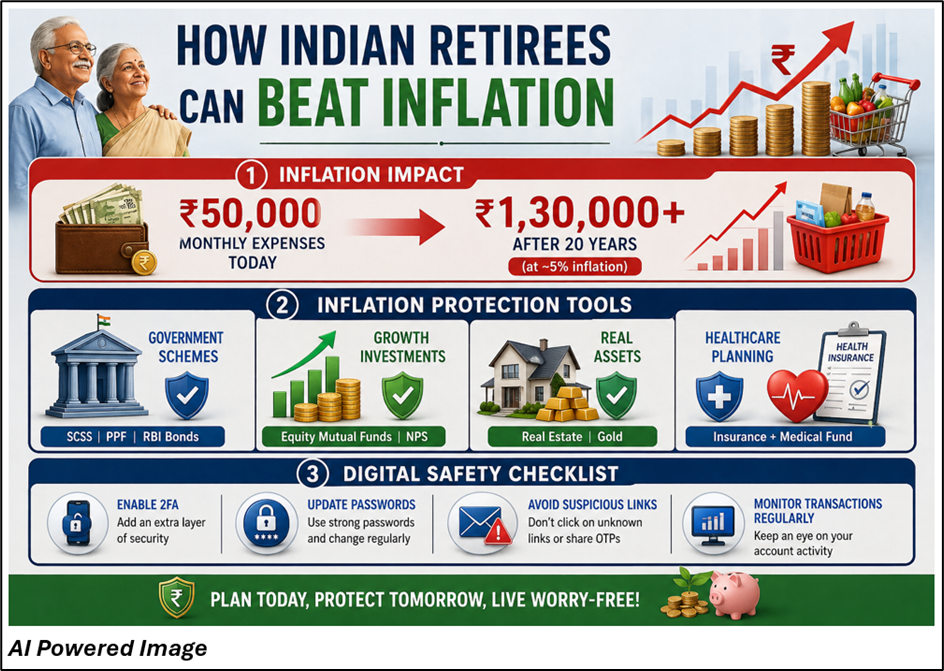
For example, even a moderate inflation rate of 5–6% annually can significantly increase living costs over a 20-year retirement period. Healthcare inflation in India often exceeds general inflation, making medical expenses one of the largest retirement concerns.
To counter inflation risk, retirees must shift from relying solely on traditional fixed-income instruments to adopting diversified investment strategies that provide inflation-adjusted returns. Inflation-linked investment instruments are specifically designed to protect long-term purchasing power.
Inflation-Protected Investment Options in India
India offers several investment avenues that can help retirees manage inflation risk effectively.
Government-Backed Instruments
Government-backed investments remain popular due to their reliability and relatively stable returns.
Some widely used options include:
- Senior Citizens’ Savings Scheme (SCSS): Offers regular interest income with government backing.
- Public Provident Fund (PPF): Long-term savings instrument suitable for pre-retirement accumulation.
- RBI Floating Rate Savings Bonds: Interest rates adjust periodically, helping manage inflation impact.
- National Pension System (NPS): Allows equity exposure that supports long-term growth.
These instruments provide a stable foundation for retirement portfolios while reducing market risk.
Equity and Mutual Fund Investments
Equities historically offer returns that outpace inflation over long periods. Indian retirees increasingly use:
- Equity mutual funds
- Hybrid mutual funds
- Systematic Withdrawal Plans (SWPs)
Such investments provide growth potential while generating periodic income.
However, allocation should align with risk tolerance and retirement stage.
The Role of Asset Diversification
Diversification is one of the most effective ways to manage inflation risk. A diversified retirement portfolio may include:
- Fixed-income instruments
- Equity-based investments
- Real estate or REITs
- Gold or sovereign gold bonds
By spreading investments across different asset classes, retirees can balance growth and stability while reducing exposure to inflation shocks.
Planning for Healthcare and Lifestyle Inflation
Healthcare costs in India have increased significantly over the past decade. Retirees should account for:
- Medical insurance premiums
- Hospitalisation costs
- Long-term care expenses
Lifestyle inflation, including travel, hobbies, and housing upgrades, should also be considered.
Maintaining a dedicated healthcare fund ensures that rising medical expenses do not disrupt retirement finances.
Periodic Review of Retirement Portfolios
Inflation patterns change over time, making regular portfolio reviews essential. Retirees should reassess investments annually to ensure they remain aligned with financial goals.
Key review areas include:
- Interest rate trends
- Inflation levels
- Asset allocation balance
- Income sustainability
Professional financial advice can help retirees optimize investment strategies in response to changing economic conditions.
Conclusion
Inflation protection is a critical component of retirement planning in India. Relying solely on fixed-income investments may not be sufficient to sustain long-term purchasing power. A diversified portfolio combining government-backed schemes, growth-oriented investments, and healthcare planning can help retirees manage inflation risks effectively and maintain financial independence throughout retirement.
FAQs
- Why is inflation a major concern for retirees in India?
Inflation increases the cost of living over time, reducing the value of fixed retirement income and savings. - Which investments help protect against inflation in India?
Equity mutual funds, NPS equity exposure, RBI floating rate bonds, and diversified portfolios help manage inflation risk. - How often should retirees review their investment portfolios?
Retirees should review their portfolios at least once a year to adjust for inflation and changing financial goals.